Honda CBR500R Specs, Performance & Review
TL;DR
- The Honda CBR500R makes 47 hp and 43.3 lb-ft of torque from its parallel-twin 471cc engine, with a claimed top speed around 112-115 mph in real-world riding conditions.
- Wet weight is 414 lb (188 kg), seat height is 30.9 inches, and the 2024 MSRP starts at $7,299 in the United States.
- 0-60 mph acceleration runs approximately 4.8-5.2 seconds based on independent road tests, putting it in the same range as the Kawasaki Ninja 500 and Yamaha R3.
- ABS is standard on all CBR500R models sold in the U.S. since the 2019 refresh.
- This bike is best suited to newer riders, A2-license holders, and daily commuters who want sport-bike ergonomics without track-focused aggression.
Honda CBR500R Specs: Full Breakdown for 2024-2025
The Honda CBR500R is a 471cc parallel-twin sport bike with a mild state of tune, upright-ish riding position, and a long history of being one of the most accessible sport bikes on the market. Here are the confirmed specs from Honda USA for the 2024 model year.
| Spec | CBR500R (2024) |
|---|---|
| Engine | 471cc parallel-twin, liquid-cooled, DOHC |
| Bore x Stroke | 67mm x 66.8mm |
| Compression Ratio | 10.7:1 |
| Horsepower | 47 hp @ 8,600 rpm |
| Torque | 43.3 lb-ft @ 6,500 rpm |
| Transmission | 6-speed with assist/slipper clutch |
| Top Speed (real-world) | ~112-115 mph |
| 0-60 mph | ~4.8-5.2 seconds |
| Wet Weight | 414 lb (188 kg) |
| Seat Height | 30.9 in (785 mm) |
| Fuel Capacity | 4.0 gal (15.1 L) |
| Frame | Steel diamond |
| Front Suspension | 41mm telescopic forks |
| Rear Suspension | Pro-Link single shock, preload adjustable |
| Front Brake | Single 320mm disc, 2-piston caliper |
| Rear Brake | Single 240mm disc |
| ABS | Standard |
| MSRP (USA, 2024) | $7,299 |
(Honda USA, 2024)
What Is the Honda CBR500R’s Top Speed in Real-World Conditions?
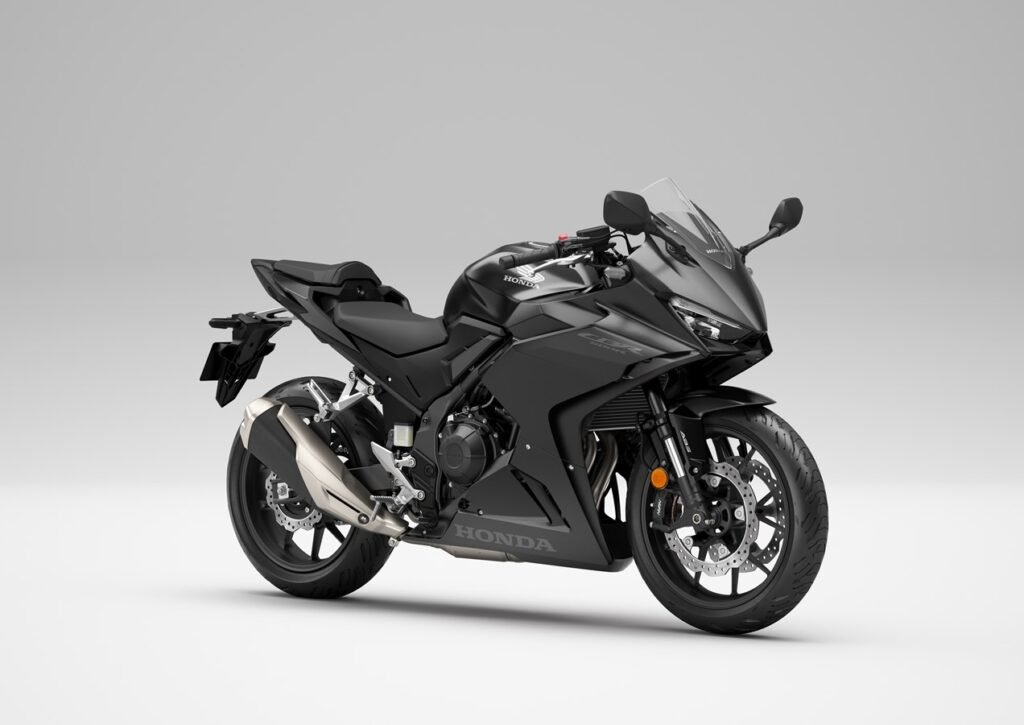
The CBR500R’s real-world top speed is approximately 112-115 mph with a rider in a tuck on flat ground. Honda doesn’t publish a top speed figure officially, so the number comes from independent road tests and owner data. Cycle World’s 2023 testing of the platform puts GPS-verified terminal speed in that range for an average-size rider.
At highway speeds, the bike has plenty left in reserve at 70-75 mph – it’s not screaming at 9,000 rpm on the interstate the way a 300cc single would be. That’s one of the practical advantages of a 471cc engine with a strong midrange rather than a high-revving, peak-power setup.
How Fast Does the CBR500R Accelerate from 0 to 60 mph?
The CBR500R does 0-60 mph in roughly 4.8-5.2 seconds, based on independent testing with a standard-weight rider. That’s competitive with the Kawasaki Ninja 500 (formerly Ninja 400) and meaningfully quicker than the Yamaha R3, though the 650cc class – Honda’s own CB650R, for example – adds another bike-length by 60 mph.
Here’s how the CBR500R stacks up against its closest competition on acceleration and power:
| Bike | Engine | HP | 0-60 mph | Wet Weight | MSRP (USA) |
|---|---|---|---|---|---|
| Honda CBR500R | 471cc parallel-twin | 47 hp | ~4.9 sec | 414 lb | $7,299 |
| Kawasaki Ninja 500 | 451cc parallel-twin | 45 hp | ~5.0 sec | 408 lb | $6,299 |
| Yamaha YZF-R3 | 321cc parallel-twin | 42 hp | ~6.0 sec | 368 lb | $5,499 |
| Honda CB500F | 471cc parallel-twin | 47 hp | ~5.0 sec | 414 lb | $6,899 |
| Kawasaki Ninja 650 | 649cc parallel-twin | 67 hp | ~3.9 sec | 420 lb | $7,999 |
(Cycle World, 2023; manufacturer MSRPs, 2024)
The CBR500R and Ninja 500 are close enough that the choice comes down to ergonomics and brand preference rather than performance numbers.
How Does the CBR500R Engine Actually Feel to Ride?
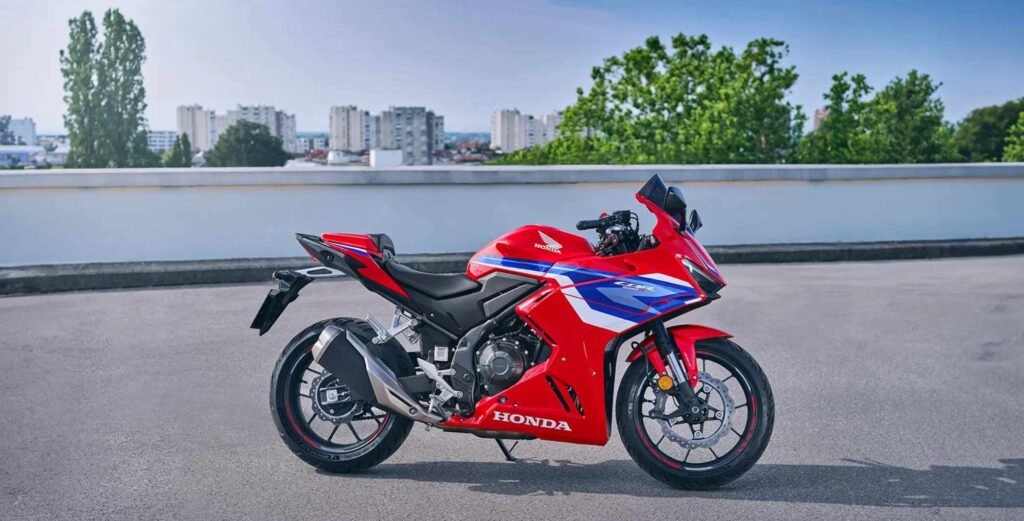
The 471cc parallel-twin is punchy from about 3,000 rpm and pulls cleanly through to the 8,500 rpm redline without feeling strained. It’s not a peaky engine – there’s no sudden rush at 7,000 rpm the way you’d get on a sport-tuned four-cylinder. That matters in traffic, where you’re constantly rolling on and off the throttle.
The assist-and-slipper clutch, added in the 2019 refresh, genuinely lightens the lever pull and prevents rear wheel chatter on hard downshifts. Newer riders will notice this most. The 6-speed gearbox shifts cleanly, though it rewards a deliberate, positive foot – it doesn’t like lazy half-clicks.
Fuel economy sits around 60-65 mpg in mixed riding, and the 4.0-gallon tank gives you roughly 230-240 miles of realistic range before you’re looking for a gas station (Honda USA, 2024).
What Are the Honda CBR500R’s Real Drawbacks?
This bike has genuine weaknesses, and glossing over them doesn’t help anyone making a $7,000 purchase decision.
The suspension is the most consistent complaint. The front forks are non-adjustable for compression or rebound – preload only on the rear. They’re tuned soft for comfort and approachability, which is the right call for a newer rider but starts to feel vague when you push hard in corners. If you plan to spend time on twisty mountain roads or track days, you’ll want to look at springs and possibly a fork oil viscosity change.
The brakes stop the bike competently but don’t inspire confidence under hard, repeated braking. The single 320mm front disc with a 2-piston caliper is adequate for street riding. Brembo or Nissin radial setups on more expensive bikes have noticeably better feel and modulation.
At 414 lb wet, it’s not light. The Yamaha R3 is 46 lb lighter, which you feel most at low speed and in parking lots. New riders who are short or slight may find the weight catches them off guard the first few times.
Who Should Buy the Honda CBR500R?
The CBR500R is the right bike for a newer rider who wants a sport silhouette without the punishing ergonomics and power delivery of a full-spec supersport. If you’re coming off a CBR300R or straight onto your first bike with some seat time, 47 hp is genuinely enough to feel fast and still build real riding skills.
It also works as a confident daily commuter. The midrange torque handles city traffic well, the ABS is reassuring on wet asphalt, and Honda’s reliability record means you’re unlikely to be relearning how to adjust a CV carb on the side of the road.
If you’ve been riding two or more years and want the bike to grow with you into track days or more aggressive canyon riding, the CBR500R will start to feel like it’s holding you back sooner than a Ninja 650 or CB650R would. At that stage, spending $1,000-$1,500 more gets you meaningfully more bike.
Frequently Asked Questions About the Honda CBR500R
What is the Honda CBR500R’s horsepower?
The Honda CBR500R makes 47 hp at 8,600 rpm from its 471cc liquid-cooled parallel-twin engine. Torque is 43.3 lb-ft at 6,500 rpm. These are Honda’s published figures for the 2024 model year (Honda USA, 2024).
Does the Honda CBR500R have ABS?
Yes, ABS is standard on every CBR500R sold in the United States since the 2019 model year refresh. There is no ABS-delete option in the U.S. market.
How does the CBR500R compare to the Kawasaki Ninja 500?
The two bikes are nearly identical on paper: 47 hp vs. 45 hp, similar wet weights, and very close 0-60 times. The Ninja 500 is about $1,000 cheaper at MSRP. The CBR500R has a slightly more aggressive riding position and better build quality perception; the Ninja 500 has a lighter feel and a longer service history under the Ninja 400 name. Either is a strong choice.
What is the CBR500R’s fuel range on a full tank?
With a 4.0-gallon tank and real-world fuel economy of 60-65 mpg in mixed riding, the CBR500R’s practical range is approximately 230-250 miles per tank (Honda USA, 2024).
Is the Honda CBR500R good for beginners?
The CBR500R is one of the better entry-level sport bikes for newer riders. Its power delivery is linear and forgiving, seat height at 30.9 inches is manageable for average-height riders, and the assist clutch reduces arm fatigue in city traffic. It’s an honest, teachable motorcycle.
Does the CBR500R come with a slipper clutch?
Yes. Honda added an assist-and-slipper clutch to the CBR500R during the 2019 model refresh. It lightens the lever pull and prevents rear-wheel hop during aggressive downshifts.
Key Takeaways
- The Honda CBR500R makes 47 hp, tops out around 112-115 mph, and does 0-60 in roughly 4.9 seconds – confirmed by independent road tests (Cycle World, 2023).
- At $7,299 MSRP with ABS standard, it’s competitively priced in the middleweight entry-sport segment against the Kawasaki Ninja 500 and Yamaha R3.
- The suspension and brakes are the bike’s practical limits – they’re adequate for street riding but not inspiring under hard use.
- It’s the right choice for newer riders, commuters, and A2-license holders; riders with 2+ years of experience may want to step up to the 650cc class sooner rather than later.
- Honda’s reliability track record makes the CBR500R a low-maintenance, long-term-ownership-friendly machine.