Honda Monkey 125 Specs, Top Speed and Review
TL;DR
- The 2025/2026 Honda Monkey 125 runs a 124cc air-cooled single-cylinder engine producing approximately 9.3 hp and 8.1 lb-ft of torque, paired with a five-speed manual gearbox.
- Real-world top speed is 55-60 mph on flat ground; 50-55 mph is a comfortable, sustainable cruise.
- The bike weighs 231 lb wet, has a 30.5-inch seat height, and starts at $4,399 MSRP before the $300 destination charge.
- IMU-controlled ABS, a 31mm inverted fork, and a #420 final drive chain are standard across the 2025 and 2026 model years.
- Best for urban commuting, new riders learning on a full manual clutch, and experienced riders wanting a short-haul fun bike with actual character.
What Is the Honda Monkey 125?
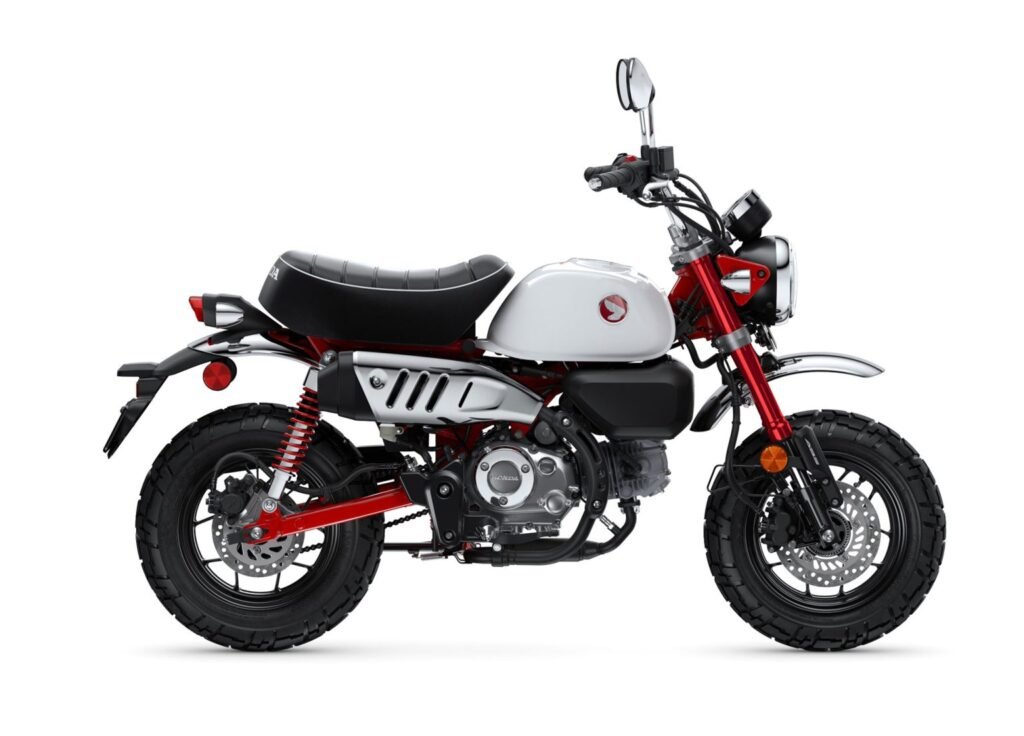
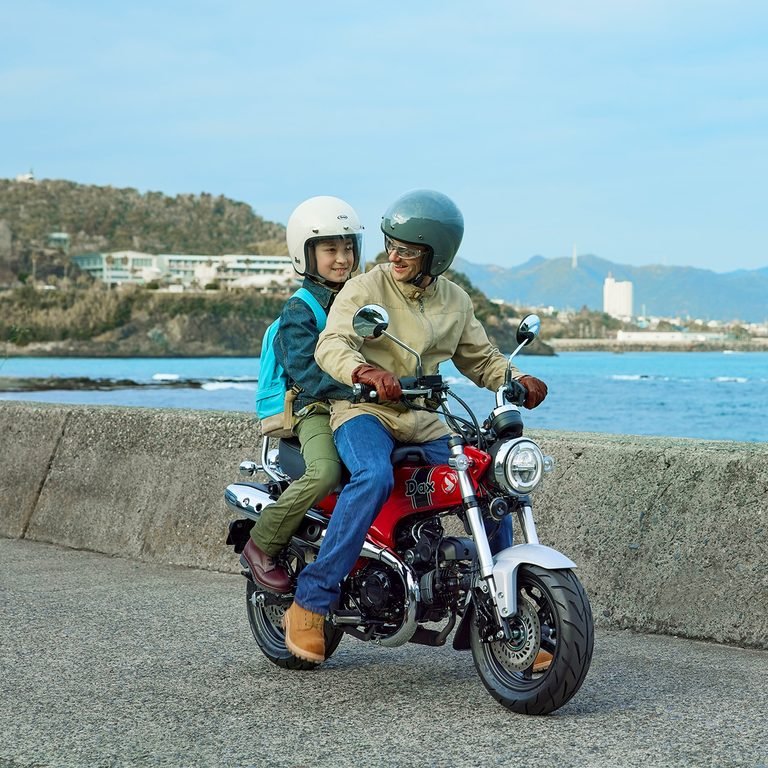
The Honda Monkey 125 is a retro-styled mini motorcycle built around a 124cc fuel-injected, air-cooled SOHC single. Honda reintroduced the modern version for 2019, drawing from the original 1961 Z100 that started life as an amusement park ride at Tama Tech in Tokyo. The current bike shares its engine and platform with the Honda Grom but gets a taller seat, chunkier 12-inch tires, chrome fenders, and a more upright stance.
It requires a full motorcycle endorsement in the US, uses a real manual clutch, and turns a 3-mile errand into something worth doing. For a new rider, it’s a low-stakes machine for building clutch and throttle control. For a garage veteran, it’s a cheap, reliable second bike.
Honda Monkey 125 Full Spec Sheet (2025/2026)
| Spec | Detail |
|---|---|
| Engine | 124cc air-cooled SOHC single-cylinder, four-stroke |
| Bore x Stroke | 50.0mm x 63.1mm |
| Compression Ratio | 10.0:1 |
| Power | ~9.3 hp (6.9 kW) at 6,750 rpm |
| Torque | 8.1 lb-ft (11 Nm) at 5,500 rpm |
| Fuel System | PGM-FI; 24mm throttle body |
| Transmission | Five-speed manual, hydraulic clutch |
| Final Drive | #420 chain; 14T/37T sprockets |
| Front Suspension | 31mm inverted fork; 4.3 in travel |
| Rear Suspension | Dual shocks; 4.0 in travel |
| Front Brake | 220mm disc, IMU-ABS |
| Rear Brake | 190mm disc |
| Tires | 120/80-12 front / 130/80-12 rear |
| Wheelbase | 45.0 in |
| Seat Height | 30.5 in (775mm) |
| Fuel Capacity | 1.5 gal (0.5-gal reserve) |
| Curb Weight | 231 lb |
| US MSRP (2026) | $4,399 base / $4,349 ABS + $300 destination |
(Honda Powersports, 2026; Honda News Europe, 2024)
Honda Monkey 125 Top Speed: What Riders Actually See
The Monkey 125 tops out at 55-60 mph on flat pavement. A road test at Ultimate Motorcycling put the ceiling at “about 60 mph if conditions are just right,” with 55 mph as the number you can reliably count on (Ultimate Motorcycling, 2025). That matches the ~90 km/h figure across independent European testing sources (Motoplanete, 2024).
Wind matters more here than on a bigger machine. A rider sitting upright on a 125 is essentially a small sail. Expect 3-5 mph off that ceiling on a gusty day. A lighter rider tucking down can occasionally see GPS readings of 62-63 mph, but that’s the outer edge, not the norm.
Sustained highway riding is a different question. The bike can reach 55 mph, but it’s working near its comfortable limit to hold that pace. For anything requiring extended freeway travel, step up to a 300cc or larger machine.
Acceleration: 0-60 mph and Quarter-Mile
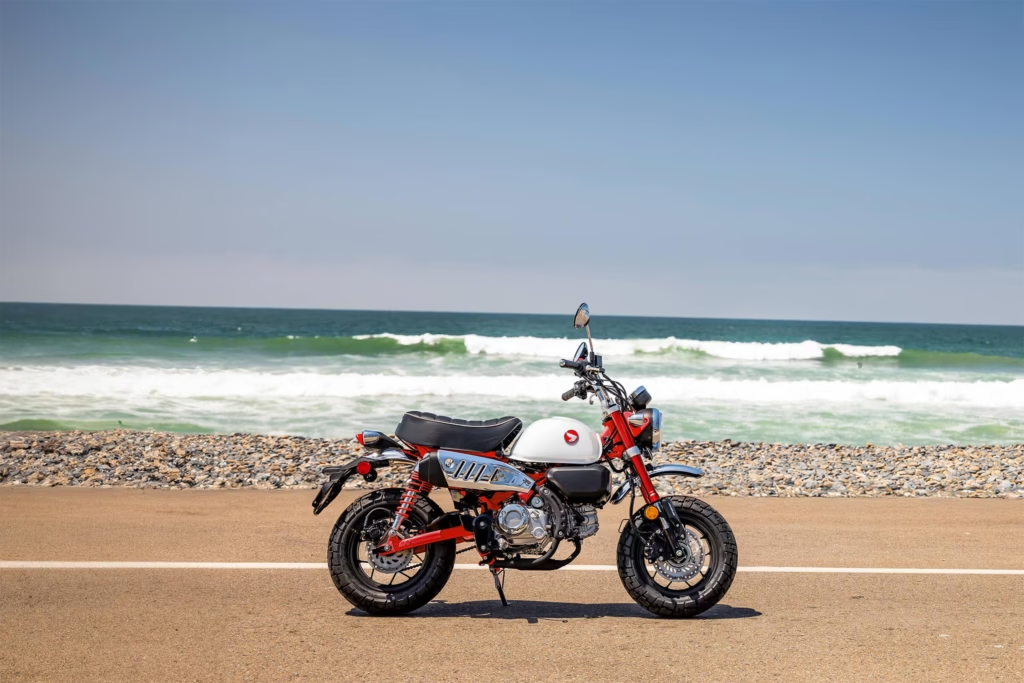
The Monkey is not a quick-accelerating motorcycle. Motorbikecatalog’s performance model estimates 0-60 mph at around 27.5 seconds and the quarter-mile at approximately 20.9 seconds (Motorbikecatalog, 2024). These are modeling estimates, not GPS-measured track runs, but they’re a fair ballpark.
What those numbers miss is how the engine behaves in the 0-30 mph range, where almost all your riding happens. The five-speed gearbox with a 37-tooth rear sprocket pulls through first and second gear with real enthusiasm. The torque peak arrives at 5,500 rpm and the useful band runs from about 3,500 through 8,000 rpm. Keep it in that range and the bike feels alive; lug it below 3,000 rpm and it becomes sluggish.
The 2022 revision that added the fifth gear also addressed the most common criticism of the early Monkey: it revved out too quickly and felt strained at anything approaching 50 mph. The extra gear fixed that.
How the Engine and Chassis Perform Day-to-Day
Honda retuned the 124cc mill for 2025 to meet Euro 5+ emissions requirements, which also applied to the US-market version (Honda News Europe, 2024). Cold starts are clean with no stumbling at low throttle, which matters on a bike you’ll use for short daily commutes where the engine rarely fully warms up.
The 31mm USD fork handles city imperfections better than its price category would suggest. Sharp edge bumps still transmit to your wrists on rough pavement, and the 4.3 inches of travel has a firm limit. The dual rear shocks are similar – adequate for solo riding at a sensible pace, but heavier riders will feel the suspension pushed earlier.
At 231 lb, the Monkey is genuinely manageable on foot. You can walk it backward into a parking spot one-handed. The IMU-based ABS is a real upgrade over older non-ABS versions: it accounts for chassis pitch under hard braking rather than reading wheel speed alone. In normal riding, you’ll never notice it. On rain-wet pavement during a panic stop, you will.
Honda Monkey 125 Maintenance Intervals
Like the rest of Honda’s miniMOTO range, the Monkey has a 4,000-mile service interval at which you change the oil and also inspect the spark plug and valve clearances. Yamaha
| Item | Interval |
|---|---|
| Engine oil change | Every 4,000 miles or annually |
| Spark plug inspection | Every 4,000 miles |
| Valve clearance check | Every 4,000 miles |
| Air filter replacement | Every 10,000 miles (5,000 in dusty conditions) |
| Drive chain slack | Check every ride; adjust as needed |
| Brake fluid | Inspect each season; replace every 2 years |
| Tire pressure | Before each ride (front: 29 psi, rear: 33 psi) |
(Honda Monkey 125 Owner’s Manual, 2019; MaintenanceSchedule.com, 2023)
Use a 10W-30 4-stroke oil meeting JASO MA or MA2 spec. Motul 5100 or Castrol Power1 both work well. Oil capacity is 0.75L with a filter change.
Verdict: Who Should Buy the Honda Monkey 125
The Monkey 125 is the right bike for a new rider learning on a real clutch without the intimidation of a bigger machine, or for an experienced rider who wants something fun for short urban hops. At 231 lb and a 30.5-inch seat height, nearly any adult can manage it physically. The ABS, USD fork, and five-speed gearbox justify the price premium over generic 125cc alternatives.
If you’re taller than 5’10” and regularly riding more than 30 miles at a stretch, the ergonomics will wear on you. If any of your routes involve sustained freeway speeds, the Monkey is the wrong tool. For everything else it’s designed to do, it does it well.
Frequently Asked Questions About the Honda Monkey 125
What is the top speed of the Honda Monkey 125?
The Honda Monkey 125 reaches 55-60 mph on flat ground under typical conditions. Plan on 55 mph as a reliable ceiling; wind and rider weight both reduce that. A lighter rider in a tuck can occasionally see 62-63 mph on GPS (Ultimate Motorcycling, 2025).
How much horsepower does the Honda Monkey 125 produce?
Approximately 9.3 hp (6.9 kW) at 6,750 rpm and 8.1 lb-ft (11 Nm) of torque at 5,500 rpm. Honda’s US spec sheet doesn’t publish a peak hp figure for the domestic market; the EU-specification figure of 6.9 kW comes from Honda News Europe’s 2024 model documentation.
Does the Honda Monkey 125 come with ABS?
Yes, ABS is standard on both the 2025 and 2026 US-market Monkey 125. The system is IMU-controlled, meaning it adjusts for chassis pitch during hard braking rather than relying solely on wheel-speed sensors (Honda Powersports, 2026).
Can the Honda Monkey 125 go on the highway?
Technically, yes. It can reach the 55 mph minimum required for most US highway on-ramps. In practice, it’s uncomfortable and near its sustainable limit at those speeds. Most Monkey riders route around freeways. For regular highway use, consider a 300cc or larger machine.
How often does the Honda Monkey 125 need an oil change?
Every 4,000 miles or annually, whichever comes first. After the initial 600-mile break-in, follow the 4,000-mile interval using a 10W-30 JASO MA-rated motorcycle oil. Capacity is 0.75L with a filter change. Check valve clearances at the same interval.
What is the 2026 Honda Monkey 125 price in the US?
The 2026 Monkey starts at $4,399 MSRP for the base model and $4,349 for the ABS variant, plus a $300 destination charge. Out-the-door before taxes and fees typically lands in the $4,700-$4,800 range (Honda Powersports, 2026). Used 2022-2024 examples in good shape generally trade between $3,000 and $3,800.