Honda Monkey ABS Specs, Horsepower & Performance Review
TL;DR
- The 2026 Honda Monkey ABS makes 9.25 hp and 7.9 lb-ft of torque from a 124cc air-cooled single, with front-wheel ABS standard.
- Real-world top speed sits around 55-60 mph depending on rider weight and road grade, not the flat 56 mph some spec sheets round to.
- 0-60 mph is a formula-derived estimate of about 27.5 seconds; nobody has published a GPS-instrumented 0-60 test for a bike this small.
- Curb weight is 231 lbs with a 30.5-inch seat height, and MSRP is $4,399 plus $300 destination for $4,699 total.
- It’s built for in-town errands and short hops, not sustained highway riding.
What Makes the Honda Monkey ABS Tick
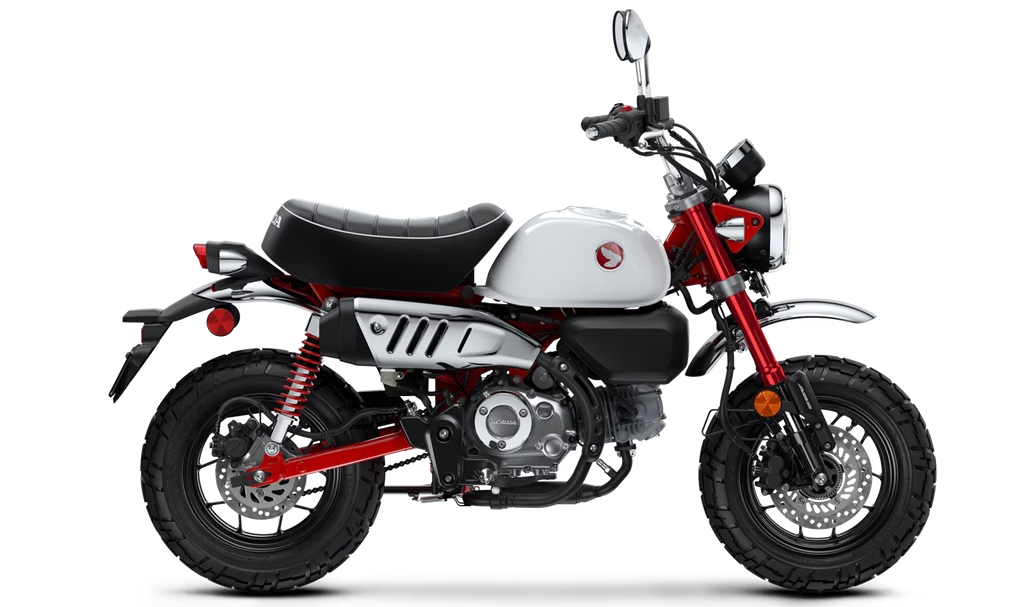
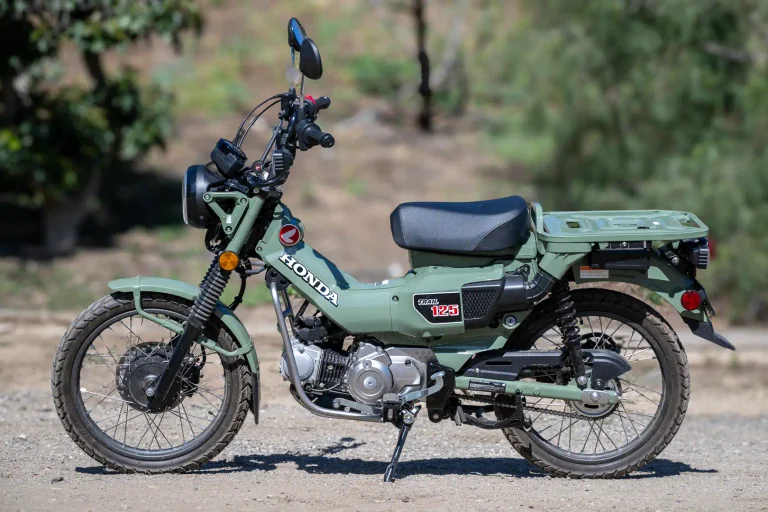
The Monkey ABS runs the same 124cc air-cooled single-cylinder engine Honda puts in the Grom, tuned for low-end grunt instead of top-end rush. It’s fuel-injected through a 24mm throttle body with a 10.0:1 compression ratio, and it’s paired with a five-speed manual gearbox and a #420 chain final drive (Honda Powersports, 2026).
That’s a real clutch and shifter, not a twist-and-go. Peak output is 9.25 hp at 6,750 rpm and 7.9 lb-ft of torque, numbers that sound tiny next to a 300cc commuter but feel adequate once you remember the whole bike weighs 231 lbs.
Power delivery is smooth and linear low in the rev range, which is exactly what you want on a bike this short and light. There’s no violent hit anywhere in the powerband to catch a new rider off guard.
Is the Honda Monkey ABS Fast?
No, and it was never meant to be. This is a bike built for stoplight-to-stoplight urban riding, not overtaking on a two-lane. Treat the numbers below as a starting point, not a promise, since actual results depend heavily on rider weight, wind, and road grade.
Independent road testing puts a realistic top speed around 55 mph on flat ground, with some riders seeing 60-63 mph downhill in ideal conditions with a lighter rider tucked in (Ultimate Motorcycling, 2025). Honda’s own EPA-style spec sheet doesn’t publish a top speed figure at all, which is normal for a bike in this class.
For 0-60 mph, there’s no GPS-instrumented test from a publication like MotoStatz on record for this bike, so the only figure available is a formula-derived estimate: roughly 27.5 seconds to 60 mph and a 20.9-second quarter mile.
That’s an estimate built from engine output and gearing, not a stopwatch run, and it should be labeled as such anywhere it gets repeated. Practically speaking, the Monkey ABS gets to 40 mph without much drama and then tapers off as wind resistance catches up with a 9-hp engine.
Handling, Weight, and Ride Comfort
The Monkey ABS handles like a bike a third its actual displacement class would suggest, thanks to a 45-inch wheelbase, 12-inch wheels, and a 231-lb curb weight. That combination makes it flickable at parking-lot speeds and genuinely fun in stop-and-go traffic, where bigger bikes feel like a chore.
The 31mm inverted fork gives 4.3 inches of front travel and real damping feel, a step up from the non-inverted fork on older Monkey generations. Dual rear shocks add 4.0 inches of travel. Combined with a 30.5-inch seat height, the ergonomics work for most adult riders, though anyone over about 5’10” will find the high-rise bars and short reach get cramped on rides past 20-30 minutes.
Small wheels mean the Monkey ABS reacts to road imperfections differently than a bike with 17-inch or 19-inch hoops. Potholes and expansion joints that a bigger bike shrugs off will get transmitted more directly through the chassis, so it pays to scan the road surface a bit further ahead than you would on a full-size commuter.
The tradeoff is a turning radius that makes U-turns in a single traffic lane genuinely easy, which matters more day to day in city riding than most riders expect going in.
ABS, Brakes, and Stopping Power
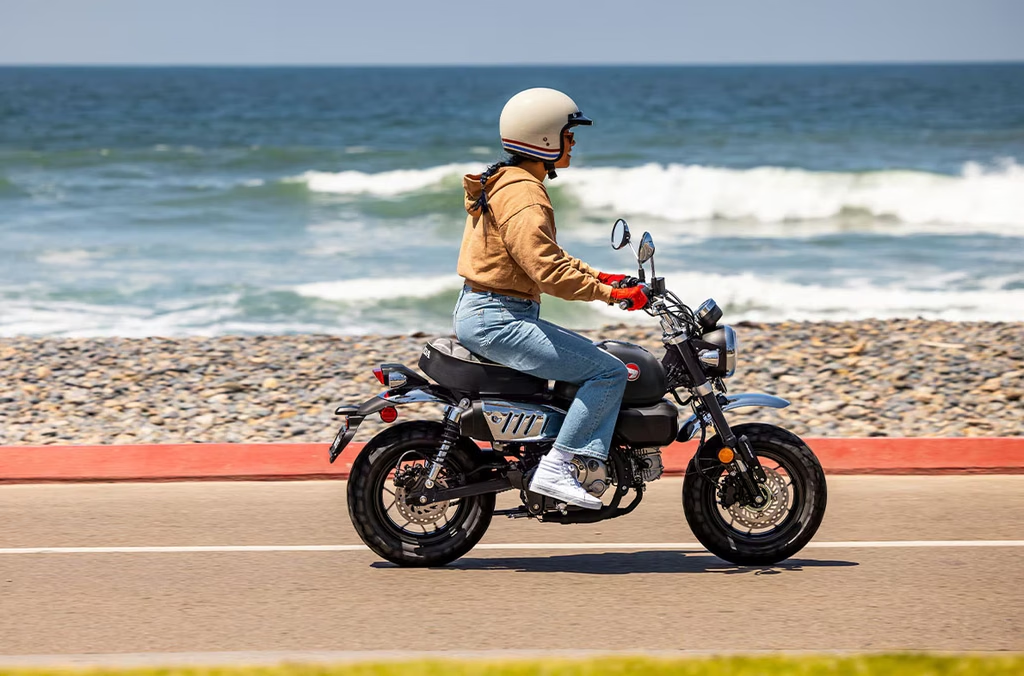
Front-wheel ABS is standard on every 2026 Monkey, paired with a single 220mm front disc and two-piston caliper, plus a 190mm rear disc with a single-piston caliper and no ABS on the rear wheel. The system uses IMU input to help manage rear-wheel lift during hard front braking, which matters more than it sounds on a bike this light and short.
Braking feel is soft and progressive rather than grabby, a deliberate choice for a bike aimed partly at newer riders. The ABS rarely intervenes under normal riding, but it’s there as a backstop on wet pavement or gravel-dusted city streets. Vee Rubber tires come stock and aren’t premium rubber, but they’re adequate for the loads and speeds this bike sees.
2026 Honda Monkey ABS Spec Table
| Spec | Figure |
|---|---|
| Engine | 124cc air-cooled SOHC single |
| Horsepower | 9.25 hp @ 6,750 rpm |
| Torque | 7.9 lb-ft |
| Transmission | 5-speed manual |
| Top speed (real-world) | ~55-60 mph |
| 0-60 mph (formula estimate) | ~27.5 sec |
| Curb weight | 231 lbs |
| Seat height | 30.5 in |
| Front brake | 220mm disc, ABS |
| Rear brake | 190mm disc, no ABS |
| Fuel capacity | 1.5 gal |
| Fuel economy | 162.6 MPG (EPA test) |
| MSRP | $4,399 + $300 destination |
Source: Honda Powersports, 2026
Who the Honda Monkey ABS Is Actually For
This bike is best for city commuters doing short trips, riders who want a low-stakes second bike for errands, and new riders learning on a manual clutch without the intimidation of a full-size machine. At 231 lbs and a 30.5-inch seat, nearly any adult can flat-foot it at a stop.
It’s the wrong tool if your commute involves sustained highway speeds or you’re regularly covering more than 20-30 miles at a stretch. The upright riding position and small wheels get tiring fast at speed, and there’s no reserve power for confident merging onto fast-moving traffic.
Pros: flickable handling, standard ABS, real five-speed gearbox, easy for short riders to manage, excellent fuel economy.
Cons: underpowered for anything beyond city streets, cramped for riders over 5’10” on longer rides, no rear-wheel ABS, small 1.5-gallon tank means frequent fill-ups if you ride it hard.
Frequently Asked Questions
What is the horsepower of the Honda Monkey ABS?
The 2026 Honda Monkey ABS makes 9.25 hp at 6,750 rpm and 7.9 lb-ft of torque from its 124cc single-cylinder engine.
What is the top speed of the Honda Monkey ABS?
Realistic top speed is around 55 mph on flat ground, with some riders seeing 60+ mph downhill in favorable conditions. Honda doesn’t publish an official top speed figure.
How fast is the Honda Monkey ABS 0-60?
There’s no independently GPS-tested 0-60 figure for this bike. The only available number is a formula-derived estimate of roughly 27.5 seconds, which should be treated as a rough approximation, not a measured result.
Does the Honda Monkey ABS have ABS on both wheels?
No. ABS is standard on the front wheel only. The rear 190mm disc brake does not have ABS.
How much does the Honda Monkey ABS weigh?
Curb weight is 231 lbs, including fluids and a full tank of fuel.
Is the Honda Monkey ABS good for highway riding?
Not really. It’s capable of reaching highway speeds briefly, but sustained freeway riding pushes the 9-hp engine and small wheels past what they’re comfortable doing. It’s built for city streets and short trips.