Honda Motorcycles: History, Manufacturer & Ownership
TL;DR
- Honda Motor Co., Ltd. was founded on September 24, 1948, by engineer Soichiro Honda and business strategist Takeo Fujisawa in Hamamatsu, Japan.
- Honda sold 19.6 million motorcycles worldwide in 2024, a new all-time record and roughly one-third of global motorcycle sales.
- The current lineup runs from beginner-friendly 125cc bikes and the Super Cub to the flat-six Gold Wing GL1800 and the MotoGP-derived CBR1000RR-R Fireblade SP.
- Consumer Reports places Honda tied for second among the most reliable motorcycle brands, with just 12% of bikes requiring serious repairs in the first four years of ownership.
- Honda parts are widely available and affordable, making the brand one of the cheapest in its class to maintain long-term.
How Honda Went from a Postwar Workshop to the World’s Largest Motorcycle Maker

Honda Motor Co., Ltd. started not in a gleaming factory but in a literal shack in Hamamatsu, Japan. In October 1946, Soichiro Honda founded the Honda Technical Research Institute on the proceeds from selling his war-ravaged piston-ring business to Toyota for ¥450,000 (Soichiro Honda, Wikipedia, 2024). His first product was stripped-down by necessity: surplus wartime generator motors bolted to bicycle frames, running on turpentine because gasoline was too expensive in postwar Japan.
The Honda Motor Co., Ltd. was formally incorporated on September 24, 1948. Soichiro Honda handled the engineering while his business partner Takeo Fujisawa ran the finances and distribution, a pairing that proved unusually durable. Their 1949 Dream D-Type was Honda’s first true motorcycle, a 98cc two-stroke with a pressed-steel frame, and it went into full production in Tokyo by 1950 (Automotive History, 2024).
Growth from there was not slow. By 1955 Honda was producing over 50,000 units annually. The 1958 Super Cub C100 changed the equation entirely: a step-through frame, centrifugal clutch, and engine reliability that made motorcycles accessible to people who had never ridden before. Cumulative Super Cub production surpassed 60 million units by 2017 (MatrixBCG, 2026), and the model is still in production today.
Honda entered Grand Prix motorcycle racing in 1959, won 125cc and 250cc World Championships in 1961, and took the Manufacturers’ Championship in five classes by 1966. That racing program wasn’t vanity spending: the engineering lessons fed directly into production bikes. The CB750 Four launched in 1969 with an inline-four engine, front disc brake, and electric start at a price point that made European and American manufacturers look out of step. It’s widely credited with establishing the template for the modern performance motorcycle.
Soichiro Honda stepped down as president in 1973 at 66, deliberately young by Japanese corporate standards, citing his belief that younger leadership needed room to operate. He passed away in August 1991 at 84. In 1989, he became the first Japanese person inducted into the Automotive Hall of Fame (Automotive Hall of Fame, 2024). The company he built is the only major Japanese automaker with no ties to pre-war manufacturers, a distinction that traces directly to how he chose to start: with his own money, his own designs, and no inheritance from the old industrial order.
Who Makes Honda Motorcycles and Where They Are Built
Honda Motor Co., Ltd. is a publicly traded Japanese multinational headquartered in Minato, Tokyo. It operates 37 production facilities across 23 countries, with an annual production capacity exceeding 20 million units (Honda Integrated Report, 2024). The motorcycle division is the company’s oldest business segment and, by unit volume, its largest.
| Region | Key Markets | Notable Production Sites |
|---|---|---|
| Asia/ASEAN | India, Vietnam, Thailand, Indonesia | Rajasthan (India), Hanoi (Vietnam) |
| North America | USA, Canada, Mexico | Marysville, Ohio (autos); Mexican assembly for some models |
| Latin America | Brazil, Argentina | Manaus, Brazil (announced ¥6B expansion, 2025) |
| Europe | Germany, Italy, UK | Assembly and distribution hubs |
Honda’s motorcycle segment generated approximately 3.2 trillion Japanese yen in revenue in fiscal year 2024, up 10.7% year-over-year (Statista, 2024). The brand has roughly 30,000 dealers worldwide. In the US market, American Honda Motor Co., Inc. handles distribution from its Torrance, California headquarters.
Honda is publicly owned, listed on the Tokyo Stock Exchange and the New York Stock Exchange (ticker: HMC). No single controlling shareholder holds a majority stake; institutional investors including The Master Trust Bank of Japan and Custody Bank of Japan hold the largest blocks.
Honda’s Current Motorcycle Lineup: What’s Available in 2026

Honda’s 2026 lineup covers more ground than almost any other manufacturer. Here’s how the range breaks down by category:
| Category | Key Models | Displacement Range |
|---|---|---|
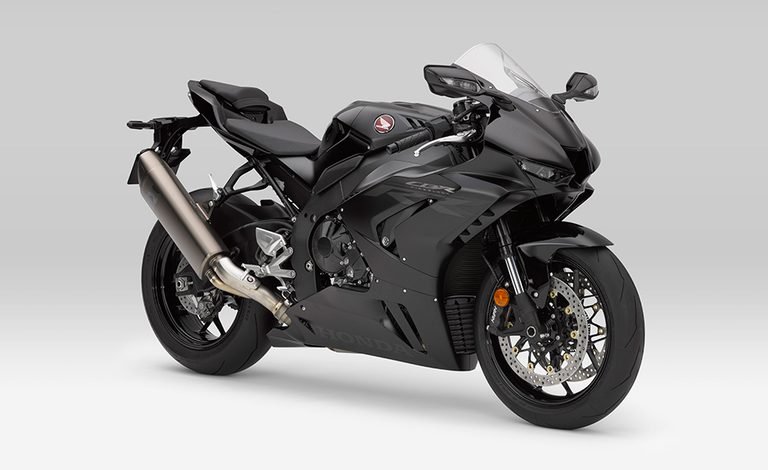
| Sport/Supersport | CBR1000RR-R Fireblade SP, CBR650R, CBR500R | 500–999cc |
| Naked/Streetfighter | CB1000 Hornet SP, CB750 Hornet, CB500F | 500–999cc |
| Adventure | CRF1100L Africa Twin, XL750 Transalp, NX500 | 500–1,084cc |
| Touring | Gold Wing GL1800, NT1100 DCT | 745–1,833cc |
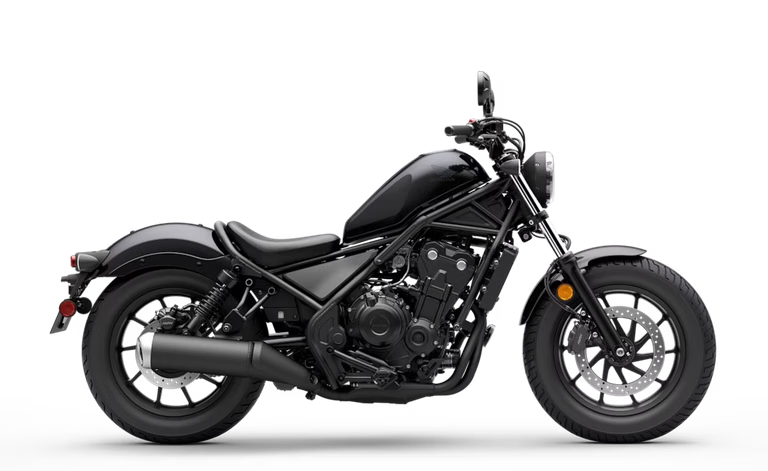
| Cruiser | CMX1100 Rebel, CMX500 Rebel | 471–1,084cc |
| Dual Sport / Off-Road | CRF300L, CRF300 Rally, XR650L | 149–649cc |
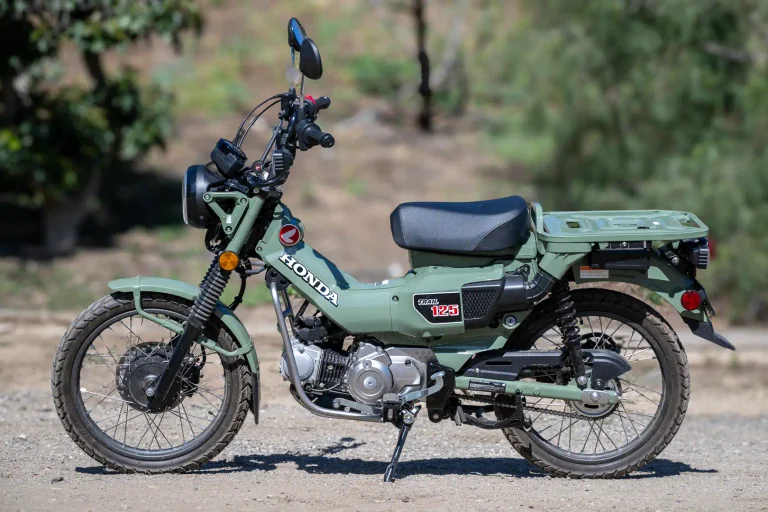
| Beginner / Commuter | Super Cub C125, Grom, Monkey 125, CB300R | 109–300cc |
| Electric (new) | WN7 (2026, select markets) | Electric |
The CB750 Hornet and CB1000 Hornet SP are new to the US market for 2025, following strong European sales (American Honda, 2025). The Africa Twin CRF1100L runs a 1,084cc parallel-twin with Honda’s optional Dual Clutch Transmission (DCT), widely regarded as the best automatic gearbox in the adventure segment (Bikenrider, 2026). The Gold Wing GL1800 uses a horizontally opposed flat-six producing around 125 horsepower, giving it a low center of gravity that makes a 833-lb touring bike handle better than it has any right to.
For new riders in the US, the CB300R, CBR500R, and CMX500 Rebel are the three most common entry points. All three have enough power to be useful on highways while staying manageable at lower speeds.
What Honda Motorcycle Ownership Actually Looks Like
Honda’s ownership story is one of the most consistent in motorcycling. Consumer Reports data shows just 12% of Honda motorcycles require serious repairs in the first four years, tied with Suzuki for second-best reliability among major brands (Federal Motorcycle Transport, 2025). For comparison, BMW’s failure rate in the same window is reported at 40%, and Harley-Davidson’s at 26%.
Parts availability is one area where Honda has a clear and practical advantage. Because Honda sells nearly 20 million units per year globally, the parts supply chain is deep and competitive. NGK spark plugs, K&N air filters, and DID chains fit Honda applications easily and are stocked at virtually every motorcycle shop in the country. Oil changes on most Honda bikes take standard 10W-40 motorcycle oil; Motul 5100 and Castrol Power1 are common choices among owners.
Valve clearance checks are one maintenance item that sometimes catches new Honda owners off guard. Many Honda engines, particularly DOHC four-cylinders in the CBR and CB series, specify valve checks every 16,000 miles. It’s not a weekend job for beginners, but a shop visit for a valve check typically costs $150 to $300 depending on the engine configuration and whether any adjustment is needed. On simpler engines like the Super Cub or XR series, the job is accessible with basic tools.
Older Honda Gold Wings, ST1300s, and older Shadow cruisers are well-documented long-haulers. Owners regularly report 100,000 to 150,000 miles with nothing beyond routine maintenance. The bikes that tend to develop issues are first-year models of new platforms, which is true of almost every manufacturer. Buying a Honda model in its second or third production year, once the early production bugs have been addressed, is the lower-risk play on the used market.
One practical note for buyers: Honda’s warranty on motorcycles sold in Europe extended to six years as of April 2025 (two years manufacturer, four years Honda Motor Europe). US warranty terms differ; American Honda currently offers a one-year limited warranty on new powersports products, with extended coverage available through dealers. Check current terms at powersports.honda.com before purchasing.
Resale value on Honda motorcycles tends to hold better than most. A well-maintained CB500 series or Africa Twin at five years old loses less value percentage-wise than a comparable European or domestic cruiser, largely because the reputation for reliability keeps used demand steady. If you plan to sell in three to five years, that’s worth factoring into the total cost calculation alongside insurance, tires, and consumables.
Frequently Asked Questions About Honda Motorcycles
Who owns Honda Motor Co., Ltd.?
Honda Motor Co., Ltd. is a publicly traded company listed on the Tokyo Stock Exchange and the New York Stock Exchange (ticker: HMC). It has no single majority shareholder. The largest institutional holders are The Master Trust Bank of Japan and Custody Bank of Japan. Soichiro Honda, the founder, died in 1991 and his family has no controlling interest in the company.
What was the first Honda motorcycle ever made?
Honda’s first motorized product was a bicycle fitted with a surplus wartime generator engine in 1946. The first vehicle Honda designed and built from scratch as a motorcycle was the 1949 Dream D-Type, a 98cc two-stroke with a pressed-steel frame producing three horsepower (Automotive History, 2024). It went into full production at a Tokyo factory in 1950.
Is Honda a reliable motorcycle brand?
Honda is one of the most reliable motorcycle manufacturers available. Consumer Reports data places Honda tied for second overall among major brands, with just 12% of bikes needing serious repairs in the first four years (Federal Motorcycle Transport, 2025). Parts are inexpensive and widely stocked, which also keeps long-term maintenance costs low. The main caveat: reliability varies by model, and first-year production bikes of any new platform carry more risk than established models.
What is Honda’s best-selling motorcycle of all time?
The Honda Super Cub is the best-selling motor vehicle in history, with cumulative production exceeding 100 million units globally by 2017, when Honda reached that milestone (Honda Motor Co., 2017). The step-through commuter, originally launched in 1958, is still in production today and sold in over 160 countries.
How much does a Honda motorcycle cost in the US in 2026?
Honda’s US pricing runs from around $3,400 for the Grom 125 to roughly $28,000 for the fully equipped Gold Wing Tour with DCT and airbag. The most popular entry-level models, the CB300R and CMX500 Rebel, typically start between $4,500 and $6,500 MSRP. The Africa Twin CRF1100L starts around $14,400 for the base model, with DCT and Adventure Sports variants adding $1,500 to $2,500 more. Prices are manufacturer suggested and vary by dealer and region.