Yamaha Motorcycles: History, Manufacturer & Ownership
TL;DR
- Yamaha Motor Co., Ltd. was founded on July 1, 1955, as a spin-off from Nippon Gakki Co., Ltd. (now Yamaha Corporation), a Japanese musical instrument manufacturer.
- No individual or family controls Yamaha Motor — it’s a publicly traded company listed on the Tokyo Stock Exchange, with institutional investors holding the majority of shares.
- Yamaha Corporation (the music company) retains a minority, non-controlling stake in Yamaha Motor.
- Yamaha Motor is the world’s second-largest motorcycle manufacturer, with 137 consolidated subsidiaries operating across all continents as of 2024.
- The company’s first motorcycle, the 1954 YA-1, was a 125cc two-stroke patterned after the German DKW RT 125 — and it won its class at the Mount Fuji Ascent Race within its first year.
Who Founded Yamaha Motor and When

Yamaha Motor Co., Ltd. was incorporated on July 1, 1955, in Iwata, Shizuoka, Japan. The company was founded by Genichi Kawakami, who also served as its first president. It did not start from scratch — it was spun off from an existing industrial giant.
The parent company was Nippon Gakki Co., Ltd., the business that Torakusu Yamaha had established in 1887 to manufacture reed organs and pianos. By the early 1950s, Nippon Gakki had significant metalworking and machining capacity left over from wartime propeller production for the Japanese military. Kawakami decided to put that machinery to work building small motorcycles.
The first machine off the line was the YA-1, nicknamed the “Red Dragonfly” (Akatombo in Japanese). It was a 125cc single-cylinder two-stroke, and Yamaha built 125 of them in 1954. The design was based on the German DKW RT 125 — a blueprint that, after World War II, became something of a template for post-war motorcycle manufacturers worldwide; BSA built their Bantam from it, and Harley-Davidson produced the Hummer from the same starting point.
The YA-1 proved itself immediately. It won the 125cc class at the 3rd Mount Fuji Ascent Race and then swept the first three finishing positions in the All Japan Autobike Endurance Road Race in the same class — all in 1955, the company’s founding year (Yamaha Motor Co., Ltd., 2024).
What Company Makes Yamaha Motorcycles
Yamaha motorcycles are manufactured by Yamaha Motor Co., Ltd., a Japanese multinational headquartered in Iwata, Shizuoka, Japan. It is a separate legal entity from Yamaha Corporation, the musical instrument and audio equipment company.
This is a point that trips up a lot of people. The two companies share a name, a logo, and a common origin, but they are independently listed public companies with separate management and operations. Yamaha Corporation makes pianos, guitars, and audio gear. Yamaha Motor Co., Ltd. makes motorcycles, outboard motors, ATVs, personal watercraft, and more.
As of 2024, Yamaha Motor operates through 137 consolidated subsidiaries, with development, production, and marketing functions spread across all continents (Yamaha Motor Co., Ltd., 2024). In the U.S., motorcycles are sold through Yamaha Motor Corporation, U.S.A., which operates as a subsidiary of the Japanese parent.
Who Owns Yamaha Motor: The Corporate Structure Explained
No single person or company owns Yamaha Motor Co., Ltd. It is a publicly traded corporation listed on the Tokyo Stock Exchange, and ownership is distributed across thousands of institutional investors, mutual funds, and retail shareholders.
Yamaha Corporation — the music company — holds a minority stake in Yamaha Motor. As of FY2024/2025, that stake is described as a mid-teens percentage, meaning it carries no controlling power (PortersFiveForce.com, 2026). Yamaha Corporation cannot direct Yamaha Motor’s strategy, product decisions, or capital allocation on its own.
Toyota also maintains a strategic relationship with Yamaha Motor. Their ties go back decades — Yamaha built the engine for the Toyota 2000GT in 1967 and later co-developed the V8 used in the 1996-1999 Ford Taurus SHO through a Ford partnership. Toyota is present in Yamaha Motor’s shareholder registry today, though not as a majority holder (Yamaha Motor Co., Ltd., 2024).
The practical picture is this: the top ten shareholders together represent roughly 40-50% of outstanding shares, with the rest spread across global institutional investors, domestic Japanese trust banks, and public shareholders (PortersFiveForce.com, 2026). Yamaha Motor uses a one-share-one-vote structure, meaning no class of shares carries inflated voting rights.
Yamaha Motor Ownership Snapshot (FY2024/2025)
| Shareholder Category | Approximate Stake |
|---|---|
| Yamaha Corporation (music company) | Mid-teens % (minority, non-controlling) |
| Toyota (strategic partner) | Present; not a majority holder |
| Domestic institutional investors (trust banks, insurers) | Largest combined block |
| Foreign institutional investors and index funds | ~48% of shares as of end-2024 |
| Retail/public shareholders | Remainder |
Sources: Yamaha Motor Co., Ltd. 2024; MatrixBCG.com, 2026; PortersFiveForce.com, 2026.
How Yamaha Motor Grew From One Model to a Global Manufacturer
Yamaha’s expansion from the YA-1 into a global manufacturer happened in roughly three phases.
The first phase ran through the late 1950s and 1960s, when Yamaha established its racing credentials and began exporting. Yamaha entered the Isle of Man TT in 1961 and has since accumulated 210 victories there (Wikipedia, 2024). The company opened its first overseas subsidiary in Mexico, then established Yamaha International Corporation in the United States — the forerunner of today’s Yamaha Motor Corporation, U.S.A.
The second phase came through the 1970s and 1980s. Yamaha dominated Grand Prix racing with two-stroke machines, with Kenny Roberts winning three consecutive 500cc World Championship titles from 1978 to 1980. Those racing programs fed directly back into street bike development, with technologies like aluminum frames and revised chassis geometry finding their way into production models.
The third phase began in the 1990s and runs to today. The 1998 YZF-R1 reset what riders expected from a production sportbike. Its stacked gearbox design shortened the wheelbase and lowered the center of gravity, giving it handling closer to a 600 than a liter bike. Japanese journalists called the response it triggered in the market the “R1 Shock” (Yamaha Motor Co., Ltd., global.yamaha-motor.com). The R1 has been continuously developed since, with the current 2026 model carrying a 998cc crossplane inline-four producing 200 hp — technology derived directly from Yamaha’s YZR-M1 MotoGP race machine.
By 2024, Yamaha had won 39 World Championships in motorcycle racing — seven in MotoGP and 10 in the preceding 500cc two-stroke class (Wikipedia, 2024).
Yamaha’s off-road racing record is just as strong. The company’s motocross machines of the early 1970s introduced aluminum frame technology and mass-centralization principles that influenced every serious dirt bike that followed. On the road racing side, the YZR-M1 MotoGP program has driven direct technology transfer into street bikes: the crossplane crankshaft in the current YZF-R1 was developed for the M1 before appearing in any production machine. That kind of top-down engineering is what separates Yamaha’s sportbike lineup from manufacturers who apply racing graphics without racing DNA underneath.
The tuning fork logo, standardized in 1898 originally for Nippon Gakki’s musical instruments, carries the same meaning on a motorcycle gas tank today that it did on a piano lid in the late 19th century — it’s a precision instrument, manufactured by people who know how tolerances matter.
Yamaha’s Current Motorcycle Lineup in the U.S.
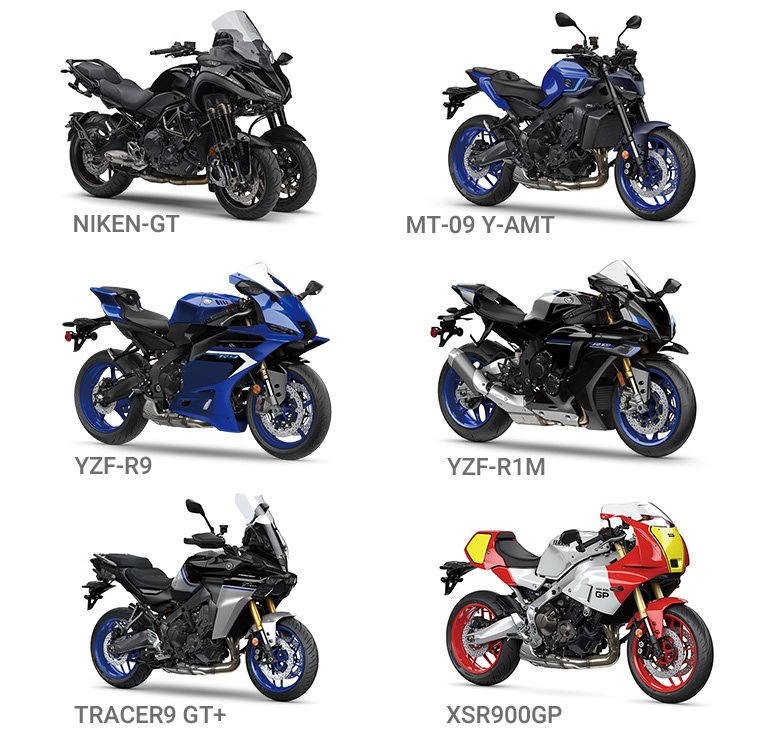
Yamaha’s U.S. motorcycle catalog covers a wide range of displacement, riding style, and price. Here’s how it breaks down as of 2026 (Yamaha Motorsports USA, 2026):
| Category | Key Models | MSRP Range |
|---|---|---|
| Supersport | YZF-R1, YZF-R1M, YZF-R9, YZF-R7, YZF-R3 | $5,499 – $27,899 |
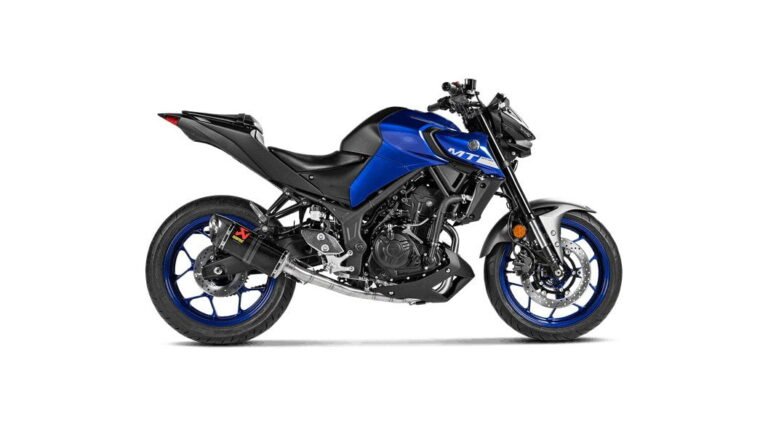
| Hyper Naked | MT-10, MT-10 SP, MT-09, MT-09 SP, MT-07, MT-03 | $4,999 – $17,499 |
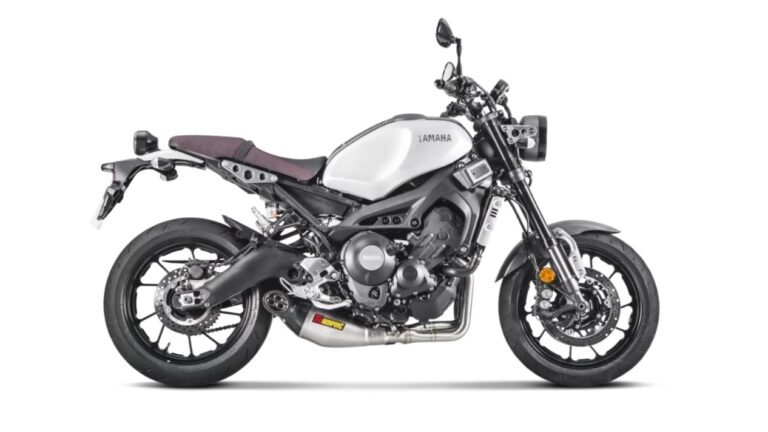
| Sport Heritage | XSR900, XSR700, Bolt R-Spec, V Star 250 | $4,799 – $10,599 |
| Touring | FJR1300ES, Tracer 9, Ténéré 700, Ténéré 700 World Raid | $10,999 – $18,299 |
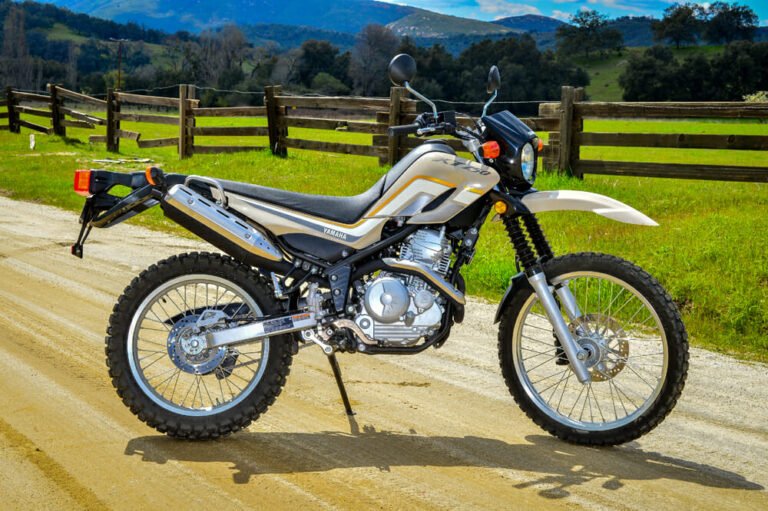
| Dual Sport | TW200, XT250, WR125R | $3,999 – $5,499 |
| Scooter | XMAX, Zuma 125 | $3,799 – $6,399 |
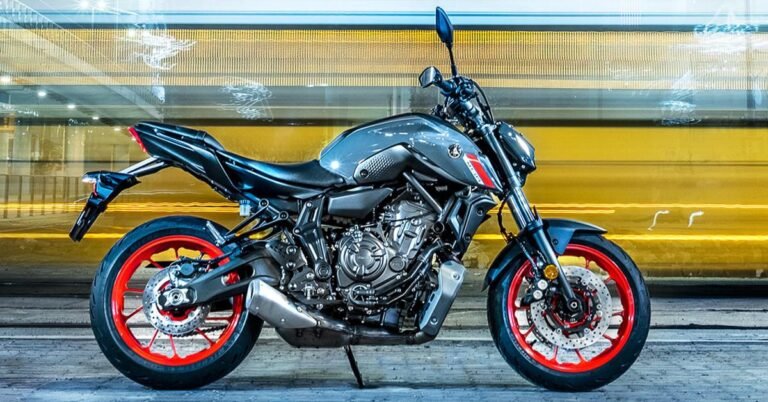
The MT-09, introduced in 2013 with an 847cc inline-three and expanded to 890cc in 2021, is one of Yamaha’s strongest sellers in the naked bike space. At 119 hp and 93 lb-ft of torque, it’s a genuinely fast bike dressed in an approachable package (Grokipedia, 2026). The MT-07 sits below it at $8,599 and is widely recommended as the entry point into the MT family for newer riders.
At the top of the sport range, the R1M carries full carbon fiber bodywork and Ohlins NPS suspension, bridging the gap between production superbike and track-day weapon. It starts at $27,899 for 2026.
Frequently Asked Questions About Yamaha Motorcycles
Who makes Yamaha motorcycles?
Yamaha motorcycles are made by Yamaha Motor Co., Ltd., a Japanese manufacturer headquartered in Iwata, Shizuoka, Japan. It is a separate company from Yamaha Corporation, which makes musical instruments and audio equipment. Both companies share a common history — Yamaha Motor was spun off from Nippon Gakki (now Yamaha Corporation) in 1955.
Who owns Yamaha Motor Co., Ltd.?
No single person or entity owns Yamaha Motor. It is a publicly traded company on the Tokyo Stock Exchange. Yamaha Corporation (the music company) holds a minority stake in the motor company, but does not control it. Institutional investors — domestic Japanese trust banks, global asset managers, and index funds — collectively hold the largest share of the company.
When was Yamaha Motor founded?
Yamaha Motor Co., Ltd. was incorporated on July 1, 1955, in Japan. It was founded by Genichi Kawakami as a spin-off from Nippon Gakki Co., Ltd. (the musical instrument company founded in 1887 by Torakusu Yamaha). The company’s first product was the YA-1, a 125cc motorcycle that won its racing class in its first year of production.
Are Yamaha Corporation and Yamaha Motor the same company?
No, they are two separate publicly traded companies. Yamaha Corporation (founded 1887, incorporated in Hamamatsu, Japan) is the world’s largest musical instrument manufacturer. Yamaha Motor Co., Ltd. (founded 1955, headquartered in Iwata, Japan) makes motorcycles, outboard motors, ATVs, and other motorized products. Yamaha Corporation holds a minority stake in Yamaha Motor, but the two companies operate independently.
What is Yamaha’s best-known motorcycle?
The YZF-R1, introduced in 1998, is arguably Yamaha’s most recognized model globally. Its stacked gearbox design, which shortened the wheelbase and optimized handling for a liter-class bike, set a new standard for the supersport category. The R1 has been continuously updated since launch and remains in production today. For riders not focused on the track, the MT-09 and MT-07 are Yamaha’s most popular street-oriented models in the current U.S. lineup.