Honda Super Cub C125 Specs, Top Speed & Review
TL;DR
- The Honda Super Cub C125 is a 124cc fuel-injected step-through with a claimed top speed of around 60 mph and a real-world cruising range of roughly 180-200 miles per tank.
- It puts out approximately 9.7 hp and 7.7 lb-ft of torque, which is modest but more than enough for urban commuting and light highway on-ramps.
- The C125 weighs 239 lbs wet and has a low 30.7-inch seat height, making it one of the most approachable bikes on the US market.
- US MSRP is $3,799, and real-world fuel economy typically lands between 100-120 mpg.
- It’s the right bike for city commuters, beginner riders, and anyone who wants cheap, reliable, dead-simple transportation with genuine Honda build quality.
What the Honda Super Cub C125 Actually Is
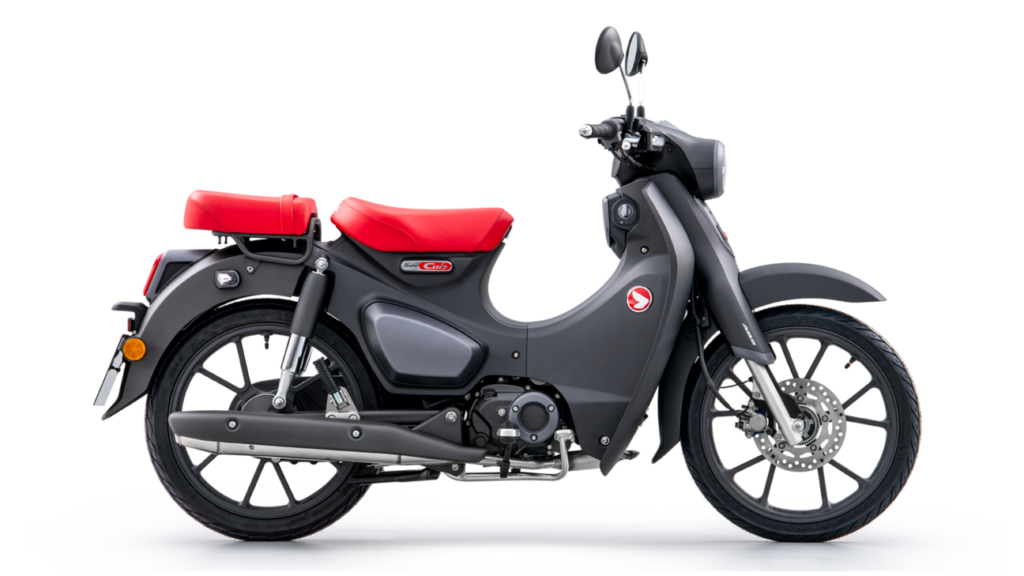
The Honda Super Cub C125 is a modern version of the most produced motor vehicle in history. Honda’s original Super Cub launched in 1958, and the C125 – the current flagship version sold in the US – carries that DNA into a fuel-injected, ABS-equipped small-displacement commuter that’s genuinely capable and not just a nostalgia piece.
It’s a step-through (also called an underbone), meaning there’s no frame tube running between the seat and handlebars. That layout makes it easy to mount and dismount in street clothes, which is a big part of why the Super Cub has sold over 100 million units globally (Honda, 2017). The C125 is the premium variant in Honda’s current Cub lineup – it gets a bigger engine, disc brakes, ABS, and more refined suspension than the entry-level CT125 Trail or the smaller Cub variants sold outside the US.
Honda Super Cub C125 Full Specs
| Spec | Detail |
|---|---|
| Engine | 124cc air-cooled SOHC single |
| Fuel delivery | Programmed Fuel Injection (PGM-FI) |
| Horsepower | ~9.7 hp @ 7,500 rpm |
| Torque | ~7.7 lb-ft @ 5,000 rpm |
| Transmission | 4-speed automatic centrifugal clutch |
| Seat height | 30.7 inches |
| Wet weight | 239 lbs |
| Fuel tank | 1.01 gallons |
| Fuel economy | ~100-120 mpg (real-world estimates) |
| Front brake | 220mm disc with ABS |
| Rear brake | 130mm drum |
| Front suspension | 31mm telescopic fork |
| Rear suspension | Twin shock absorbers |
| Tires (front/rear) | 80/90-17 / 80/90-17 |
| US MSRP | $3,799 (Honda USA, 2025) |
Honda Super Cub C125 Top Speed: What to Expect
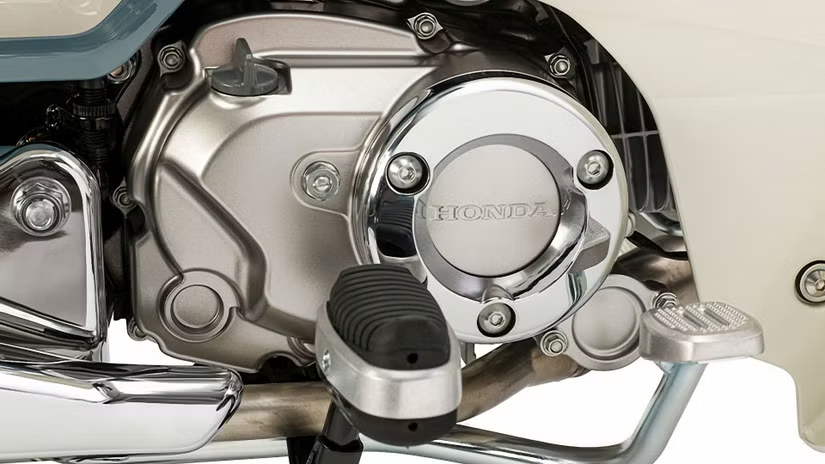
The Honda Super Cub C125 tops out at approximately 55-62 mph depending on rider weight, road grade, and wind. Honda doesn’t publish an official top speed figure for the C125, so this range comes from rider-reported testing. A 150-lb rider on flat ground in calm conditions has reported reaching the low 60s; a heavier rider with a headwind will likely plateau around 55 mph.
That ceiling is honestly the bike’s most discussed limitation. The C125 is not built for sustained highway riding – it’ll do it in a pinch (many US riders use it on 55 mph back roads regularly), but you’re running the engine near its limit above 55 mph. For anything below 50 mph, it has plenty in reserve and feels relaxed.
If your commute involves regular 65+ mph highway stretches, this bike is the wrong tool. For surface streets, urban traffic, and lower-speed rural roads, the top speed is irrelevant – you’ll never need more.
Honda Super Cub C125 Acceleration: How Quick Is It?
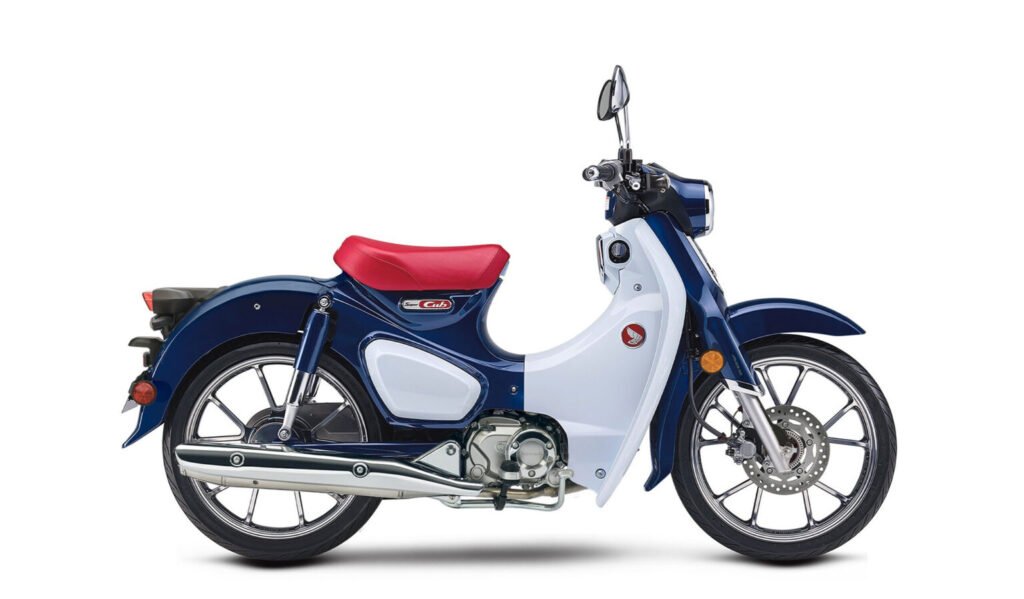
The C125 gets from 0-30 mph in roughly 4-5 seconds, which is brisk enough to stay ahead of car traffic at a light. It won’t win a drag race against anything with more than 150cc, but it pulls cleanly through the low-to-mid range thanks to the automatic centrifugal clutch – there’s no stalling, no clutch lever fumbling, no missed shifts.
The 4-speed automatic transmission shifts without a clutch lever. You still operate the gear selector (a heel-toe shifter on the left side), but the clutch engages and disengages automatically based on engine speed. For riders coming from a car, or newer riders who haven’t built clutch muscle memory yet, this is a significant advantage. The bike just goes when you twist the throttle.
Mid-range pull – roughly 25-45 mph – is where the C125 lives. It’s smooth, linear, and predictable. It won’t surprise you with a surge of power, but it won’t bog either.
Real-World Fuel Economy and Range
The C125 gets approximately 100-120 mpg under normal commuting conditions, which puts its range at around 100-120 miles on its 1.01-gallon tank. Some hypermiling riders have reported higher numbers, but 100-110 mpg is the realistic baseline for mixed urban riding.
That 1.01-gallon tank is the one genuine inconvenience on the bike. It’s small. You’ll be stopping for gas every 100-110 miles unless you’re very conservative. For a daily commuter doing 15-20 miles per day, that’s roughly every 5-7 days – manageable, but something to plan around on longer trips.
Ride Quality, Handling, and What It Feels Like to Ride
The C125 rides noticeably better than you’d expect from a ~$3,800 step-through. The 31mm telescopic front fork and twin rear shocks handle city potholes and rough pavement well enough that you won’t feel beaten up after a 45-minute commute. It’s no Ohlins-equipped sport bike, but the suspension is tuned for comfort and it does its job.
Steering is light and direct. At parking-lot speeds the bike feels natural – you can filter through traffic, make U-turns, and maneuver in tight spaces without fighting the chassis. At 30-40 mph it’s stable and planted. The 17-inch wheels on both ends give it better cornering confidence than smaller-wheeled scooters; you can lean it into a corner with some confidence rather than tiptoeing through turns.
The 30.7-inch seat height is genuinely low. Riders 5’4″ and under can flat-foot both sides. Even taller riders will find one foot solidly down, which matters when you’re stopping and starting in traffic all day.
What the C125 Gets Right and Where It Falls Short
The build quality is the most obvious win. Honda’s fit and finish on the C125 is several steps above what you’d find on similarly priced Chinese-market step-throughs. The chrome details, the painted bodywork, the quality of the plastics – it feels like a bike that will still look presentable in five years.
The automatic clutch is genuinely useful for urban riding. Bumper-to-bumper traffic on a manual clutch bike is exhausting. On the C125 you just roll the throttle and pick your gear position; the clutch does the rest.
The limitations are real. The 1.01-gallon tank is small. The top speed is a hard ceiling. There’s no windscreen and no luggage. The rear drum brake – while adequate – is less progressive than a second disc would be. These aren’t deal-breakers for the right rider, but they matter if you’re expecting the C125 to do everything.
Who Should Buy the Honda Super Cub C125
The C125 is the right bike for urban and suburban commuters who ride under 40-50 miles per day on roads with speed limits at or below 55 mph. It’s also a strong first bike for new riders – the automatic clutch removes one of the main stumbling blocks of learning to ride, the low seat height builds confidence, and the forgiving power delivery won’t get a beginner into trouble.
It’s a poor fit for riders who regularly ride interstates, need to carry a passenger, or want a bike that pulls double duty as a weekend canyon carver. If your commute involves 65 mph freeway stretches, look at Honda’s CB300R or CB500F instead.
Frequently Asked Questions About the Honda Super Cub C125
What is the top speed of the Honda Super Cub C125?
The C125 reaches approximately 55-62 mph under real-world conditions. Honda doesn’t list an official top speed, and the number varies by rider weight and road conditions. Most riders report a practical ceiling of around 58-60 mph on flat ground.
Does the Honda Super Cub C125 have a clutch?
The C125 uses a 4-speed automatic centrifugal clutch – there’s no hand clutch lever. You still shift gears with a foot shifter, but the clutch engages and disengages automatically based on engine speed. It’s similar to a semi-automatic transmission.
How many miles per gallon does the Honda Super Cub C125 get?
Real-world fuel economy is typically 100-120 mpg for mixed urban riding. The 1.01-gallon tank gives a practical range of roughly 100-120 miles before refueling.
Is the Honda Super Cub C125 good for beginners?
Yes – it’s one of the better beginner options under $4,000 in the US. The automatic clutch eliminates stalling, the 30.7-inch seat height is low enough for most riders to reach the ground, and the power output is manageable without being boring.
How much does the Honda Super Cub C125 cost in the US?
The US MSRP is $3,799 as of 2025 (Honda USA, 2025). Dealer fees, destination charges, and any add-on accessories will push the out-the-door number higher.
Does the Honda Super Cub C125 have ABS?
Yes. The C125 comes standard with ABS on the front 220mm disc brake. The rear is a 130mm drum without ABS, which is standard for this segment.
Key Takeaways
- The Honda Super Cub C125 tops out around 55-62 mph and gets 100-120 mpg, making it a purpose-built urban and suburban commuter.
- The 124cc engine produces roughly 9.7 hp and uses an automatic centrifugal clutch – ideal for new riders and stop-and-go traffic.
- The 30.7-inch seat height and 239-lb wet weight make it one of the most physically approachable bikes currently sold in the US market.
- At $3,799 MSRP, it’s priced at the premium end of the small-displacement step-through segment, but the Honda build quality backs that price up.
- The 1.01-gallon tank and ~60 mph ceiling are real limits – the C125 works best for riders whose daily routes stay under 50 mph and under 100 miles.