Kawasaki KX250X Specs, Horsepower & Performance Review
TL;DR
- The 2026 Kawasaki KX250X is the cross-country, closed-course-only sibling of the KX250 motocrosser, built around the same 249cc DOHC single but with off-road gearing, an 18-inch rear wheel, and more suspension travel.
- The shared KX250 engine platform dynos at roughly 39.2 hp and 18.7 lb-ft of torque, though Kawasaki hasn’t published an X-specific figure.
- MSRP is $9,199, and curb weight comes in at 243.2 lb with a full tank.
- Suspension travel is 12.0 in front and 12.1 in rear, both slightly less than the standard KX250’s motocross setup.
- This is a closed-course, off-road competition bike only. It’s not street legal and won’t be titled for road use.
What Does the Kawasaki KX250X Put Out in Horsepower and Torque?
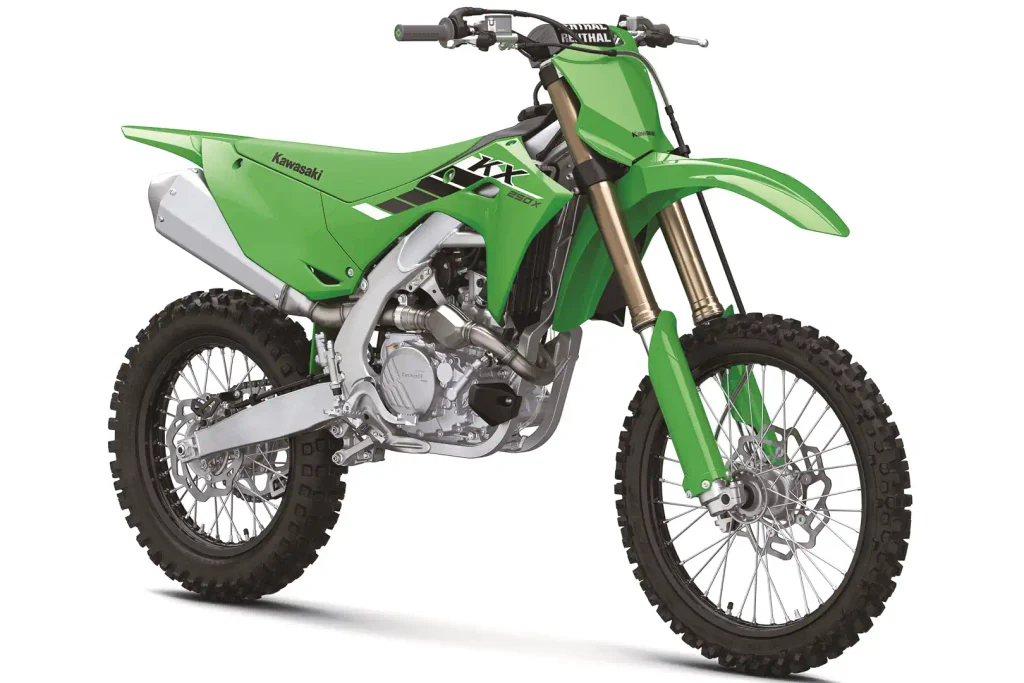
The KX250X shares its 249cc liquid-cooled DOHC single with the standard KX250, and that engine dynos at 39.2 hp and 18.7 lb-ft of torque on Dirt Rider’s in-house Dynojet 250i rear-wheel dyno (Dirt Rider, 2026). Kawasaki hasn’t published a separate dyno figure for the X specifically, so treat that number as a same-engine reference point rather than an X-specific test result.
That power comes from a high-revving mill with a 78.0 x 52.2mm bore and stroke and a steep 14.0:1 compression ratio, fed by a 44mm Keihin throttle body with dual injectors (Kawasaki, 2026).
Dirt Rider’s test riders noted the current-generation engine trades top-end scream for smoother low-end torque and a stronger midrange compared to the 2023-2024 KX250, which matters more off-road than at a motocross track, since cross-country terrain rewards a bike you can lug through a rut rather than one that needs to be kept pinned near redline.
Where the X actually separates from the standard KX250 is gearing, not raw horsepower. It runs a five-speed close-ratio transmission with final drive tuned for trail and cross-country work rather than stadium-style motocross starts and jumps.
What’s Different Between the KX250X and the Standard KX250?
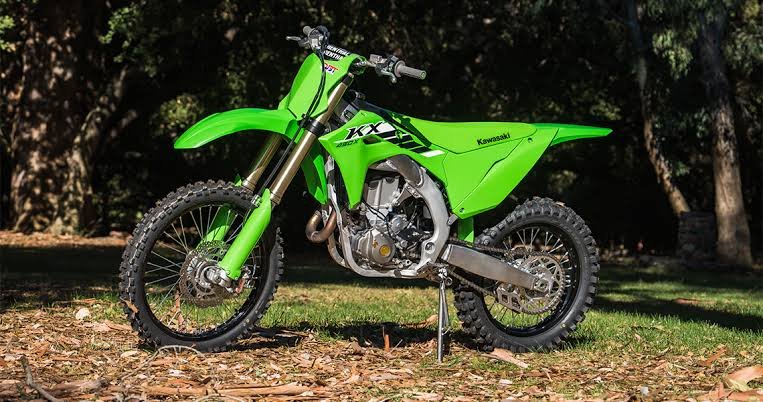
The KX250X is built for cross-country racing (think GNCC or WORCS-style events), while the standard KX250 is a stadium and outdoor motocross bike. Both share the same engine architecture, aluminum perimeter frame, and Showa suspension components, but the X gets an 18-inch rear wheel instead of the KX250’s 19-inch, off-road-specific rubber, and a wider-ratio gearbox feel for varied terrain.
The X is also about 2.4 lb heavier at curb weight (243.2 lb versus roughly 240.8 lb for the standard bike) and sits slightly lower, with a 37.2 in seat height versus the KX250’s 37.6 in (Total Motorcycle, 2026).
Ground clearance drops slightly too, from 13.4 in on the motocross bike to 13.0 in on the X. None of these are huge numbers on paper, but they add up to a bike that tracks straighter and forgives small mistakes better at trail speed, at the cost of a little of the flickable feel MX riders want in whoops and rhythm sections.
Kawasaki KX250X Full Spec Sheet
| Spec | 2026 KX250X |
|---|---|
| Engine | 249cc liquid-cooled DOHC single, 4-valve |
| Bore x Stroke | 78.0 x 52.2mm |
| Compression Ratio | 14.0:1 |
| Fuel System | DFI, 44mm Keihin throttle body, dual injectors |
| Transmission | 5-speed, wet multi-disc clutch, hydraulic actuation |
| Front Suspension / Travel | 49mm Showa inverted fork / 12.0 in |
| Rear Suspension / Travel | Uni-Trak, dual-range compression / 12.1 in |
| Front / Rear Tire | 80/100-21 / 110/100-18 |
| Seat Height | 37.2 in |
| Curb Weight | 243.2 lb (full tank) |
| Fuel Capacity | 1.64 gal |
| MSRP | $9,199 |
How Does the Suspension Handle Off-Road Terrain?
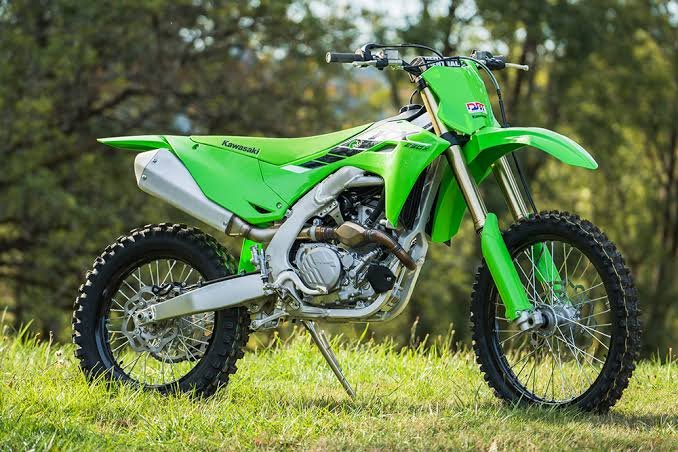
The KX250X runs a 49mm Showa inverted coil-spring fork with 16-way compression and rebound adjustment up front, delivering 12.0 in of travel, and a Uni-Trak rear shock with dual-range compression damping (four turns high-speed, 19-way low-speed) plus 22-way rebound adjustment and 12.1 in of travel.
That’s a genuinely wide adjustment range for a production off-road bike, which matters because cross-country courses swing between rocky, chattery sections and faster, more open trail in the same lap.
Both ends are shy of the standard KX250’s motocross-tuned travel by a fraction of an inch, since the X’s valving leans toward compliance over square-edge jump landings.
If you’re coming from a KX250 and swapping to the X for a cross-country series, expect the suspension to feel a bit plusher at low speed and less harsh over roots and rocks, though serious racers will still want a suspension tuner to set sag and clicker positions for their weight and terrain before a first race.
Does the KX250X Have Traction Control and Launch Control?
Yes. The KX250X comes standard with Kawasaki TRaction Control (KTRC), handlebar-controlled power modes, and Launch Control Mode, all shared with the KX450 platform where this electronics suite first appeared on a production motocrosser. KTRC cuts engine output slightly when the rear wheel starts to spin faster than the front, which is genuinely useful on loose, off-camber cross-country terrain where you can’t always see the traction change coming.
Launch Control retards ignition timing slightly to tame wheelspin off the line and deactivates automatically once you shift into third gear. It’s a small detail, but it’s one less thing to think about at the start of a cross-country race when you’re also worrying about lines through the first turn.
Frequently Asked Questions
How much horsepower does the Kawasaki KX250X have?
Kawasaki doesn’t publish an X-specific dyno figure. The shared KX250 engine platform dynos at 39.2 hp and 18.7 lb-ft of torque, and that’s the most reliable reference point available for the X.
Is the Kawasaki KX250X street legal?
No. The KX250X is a closed-course competition bike only. It has no headlight, taillight, mirrors, or turn signals, and it can’t be registered or titled for street use in the US.
What’s the difference between the KX250X and the KX250F?
The KX250X is the cross-country off-road version with an 18-inch rear wheel and trail-oriented gearing, while the KX250F (usually just called the KX250) is the stadium and outdoor motocross version with a 19-inch rear wheel. They share the same 249cc engine and frame architecture.
How much does the 2026 Kawasaki KX250X weigh?
Curb weight is 243.2 lb with a full tank of fuel. That’s about 2.4 lb heavier than the standard KX250.
What is the seat height on the KX250X?
Seat height is 37.2 in, about 0.4 in lower than the standard KX250’s 37.6 in seat height.
How much does the Kawasaki KX250X cost?
MSRP is $9,199 before destination charge and any dealer fees, which vary by location.