Kawasaki KX65 Specs, Horsepower & Performance Review
TL;DR
- The 2026 Kawasaki KX65 runs a 64cc liquid-cooled two-stroke engine with a 24mm Mikuni carburetor and a six-speed manual transmission.
- Curb weight is 126.1 lb without fuel, seat height is 29.9 in, and MSRP starts at $4,249 before destination and dealer fees.
- Front suspension travel is 8.3 in and rear travel is 9.4 in, giving the KX65 real motocross-track suspension range for a bike this small.
- This is a closed-course, non-street-legal youth motocross bike. There’s no top speed or 0-60 figure because Kawasaki doesn’t build it for road use.
- It’s the direct feeder bike for kids graduating from a KX™ 65cc-class pit bike into real amateur motocross competition.
What’s the Kawasaki KX65’s Engine and Horsepower Like?
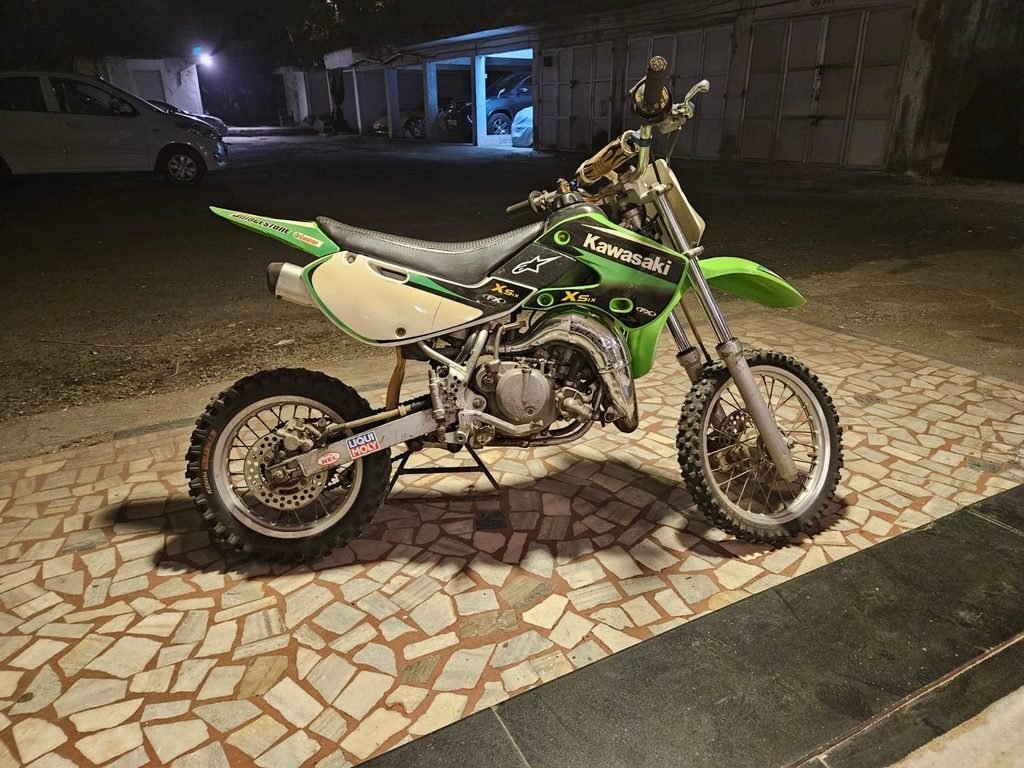
The KX65 uses a 64cc liquid-cooled, single-cylinder two-stroke engine with an 8.4:1 compression ratio and a 24mm Mikuni carburetor feeding the mixture (Kawasaki, 2026).
Kawasaki doesn’t publish an official horsepower or torque number for this bike on its 2026 spec sheet, which is normal for a closed-course youth machine, since power claims aren’t part of the consumer-facing spec page the way they are on street bikes.
The bore and stroke sit at 44.5mm x 41.6mm, a short-stroke combination that lets the little single spin up fast. Two-stroke engines make power differently than the four-strokes most riders grew up on: there’s no separate intake and exhaust stroke, so every downstroke of the piston is a power stroke.
That’s why a 64cc two-stroke like this one can out-rev and out-accelerate a four-stroke of similar displacement, even though it’s tiny by adult standards.
For reference, previous-generation KX65 engines using this same bore, stroke, and compression ratio were dyno-rated around 12 hp near 12,500 rpm (autoevolution, 2024). Kawasaki hasn’t changed the core engine architecture since, so that figure is a reasonable ballpark for the current bike’s output, but it’s not an official 2026 factory number and should be verified against a current dyno test before you treat it as gospel.
How Does the KX65’s Suspension Handle Motocross Tracks?
The KX65 runs a 33mm leading-axle telescopic fork up front with 8.3 in of travel and four-position rebound damping, paired with a Uni-Trak single shock out back offering 9.4 in of travel. That’s a real amount of suspension travel for a bike this size, more than plenty of adult commuter bikes get on the street.
The rear shock has fully adjustable spring preload plus stepless three-turn rebound damping, so a mechanic or parent can dial the setup in as the rider gains skill or gains weight over a season. Soft, undersprung suspension on a kids’ bike bottoms out hard over whoops and jump faces; a shock this adjustable means you’re not stuck with one setting all year.
The steel semi-double cradle frame carries a 27-degree rake and 2.4 in of trail, geometry numbers that lean toward quick, flickable steering rather than high-speed stability. That’s exactly what you want on a tight amateur motocross track full of second-gear corners, not a fast, sweeping supercross rhythm section.
What Does the KX65 Weigh, and How Tall Is the Seat?
The KX65 has a curb weight of 126.1 lb without fuel and 132.2 lb with a full 1.0-gallon tank. Seat height sits at 29.9 in, low enough for most riders in the 6 to 9 year-old range moving up from an 50cc or 65cc pit bike but still building real skills before a KX™85.
That low weight matters more than raw horsepower at this level. A young rider who can pick the bike back up after a crash, paddle a foot down through a rut, and muscle it over a jump face builds confidence a lot faster than one fighting a bike that outweighs them by 3x. Light weight is also why two-strokes still dominate the 65cc youth class: no balance shaft, no cams, no four valves per cylinder to carry around.
What Brakes and Tires Come Stock on the KX65?
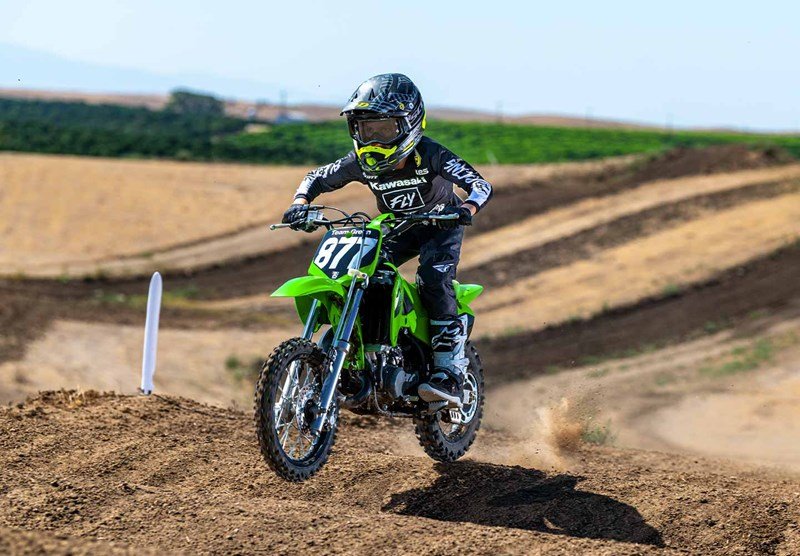
The KX65 uses a single 180mm disc with a single-piston caliper on both the front and rear wheel. That’s disc brakes front and rear, not a drum out back like some entry-level pit bikes still run, which matters when a beginner is learning to trail-brake into a corner instead of grabbing a fistful.
Front tire size is 60/100-14 and rear is 80/100-12, mounted on 14-inch front and 12-inch rear wire-spoke wheels. Stock tires on a bike like this are usually a Dunlop off-road pattern from the factory, and most riders won’t need to touch them until the knobs round off from a season of track time.
KX65 Key Specs at a Glance
| Spec | 2026 Kawasaki KX65 |
|---|---|
| Engine | 64cc liquid-cooled, single-cylinder 2-stroke |
| Bore x Stroke | 44.5mm x 41.6mm |
| Compression Ratio | 8.4:1 |
| Fuel System | 24mm Mikuni carburetor |
| Transmission | 6-speed, return shift, manual clutch |
| Front Suspension Travel | 8.3 in |
| Rear Suspension Travel | 9.4 in |
| Seat Height | 29.9 in |
| Curb Weight | 126.1 lb (without fuel) |
| Fuel Capacity | 1.0 gal |
| MSRP | $4,249 (plus destination and dealer fees) |
Source: Kawasaki’s official 2026 KX65 spec page.
Who Is the Kawasaki KX65 Actually Built For?
The KX65 is built for young riders roughly 6 to 9 years old who’ve outgrown a 50cc or entry pit bike and are ready to race amateur motocross competition. It’s not a trail bike, not street-legal, and not meant for an adult of any size to throw a leg over for a joyride.
This is the bike that sits right below the KX™85 in Kawasaki’s youth motocross ladder, and it’s built to teach real skills: clutch control from a six-speed manual transmission, throttle management on a two-stroke that punishes a sloppy hand, and race-pace cornering on a chassis with quick steering geometry.
If your kid is still on training wheels on a bicycle, this isn’t the next step. If they’re already comfortable on a smaller pit bike and want to line up at a real amateur motocross gate, it is.
Frequently Asked Questions About the Kawasaki KX65
Does the Kawasaki KX65 have a top speed?
Kawasaki doesn’t publish a top speed for the KX65, and it’s not a figure that matters for this bike. It’s a closed-course motocross machine geared for acceleration out of tight corners and off jump faces, not sustained high-speed running, and it isn’t street-legal in any US state.
How much horsepower does the Kawasaki KX65 make?
Kawasaki doesn’t list an official horsepower figure on the 2026 spec sheet. Earlier KX65 engines sharing the same bore, stroke, and compression ratio were dyno-tested around 12 hp near 12,500 rpm, which is a reasonable estimate for the current bike but not a confirmed factory number.
What age is the Kawasaki KX65 recommended for?
The KX65 is generally aimed at riders around 6 to 9 years old, the same range Kawasaki targets for its 65cc youth motocross class. Actual fit depends more on a specific kid’s height, inseam, and riding experience than age alone, so try before you buy whenever a dealer will let you.
Is the Kawasaki KX65 street legal?
No. The KX65 has no headlight, taillight, mirrors, turn signals, or DOT-rated tires, and it isn’t titled for road use in any US state. It’s designed exclusively for closed-course motocross tracks and private off-road riding.
How much does a new Kawasaki KX65 cost?
The 2026 Kawasaki KX65 has an MSRP of $4,249, plus a destination charge and any dealer-added fees. Actual out-the-door price varies by dealer and region, so it’s worth calling ahead before you drive out to buy one.
What’s the difference between the KX65 and the KX85?
The KX65 is the smaller, lighter step in Kawasaki’s youth motocross lineup, built for younger and smaller riders still learning race fundamentals. The KX85 has a bigger engine, more suspension travel, and a taller seat height, aimed at riders who’ve outgrown the KX65’s power and size.