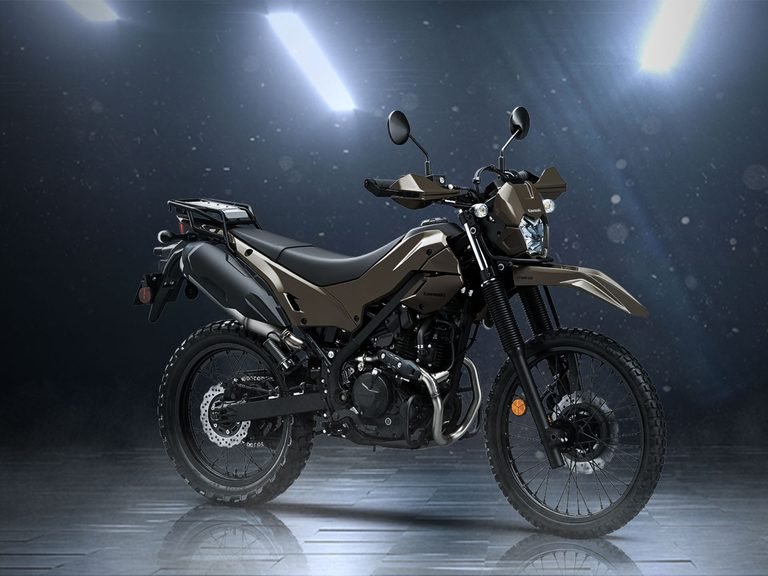
Kawasaki KLX230R Specs, Horsepower & Performance Review
TL;DR
- The 2026 Kawasaki KLX230R runs a 233cc air-cooled, fuel-injected single-cylinder four-stroke, good for roughly 18 rear-wheel horsepower on the dyno.
- Suspension travel is 9.8 inches at both ends, via a 37mm telescopic fork and a Uni-Trak linkage shock.
- Curb weight is 262.4 lb, with an 11.4-inch ground clearance and 35.6-inch seat height.
- MSRP is $4,999, with a six-speed transmission, wet multi-disc clutch, and chain final drive.
- It’s a closed-course, off-road-only trail bike, so there’s no top speed or 0-60 figure worth quoting.
What’s the Kawasaki KLX230R’s Horsepower Output?
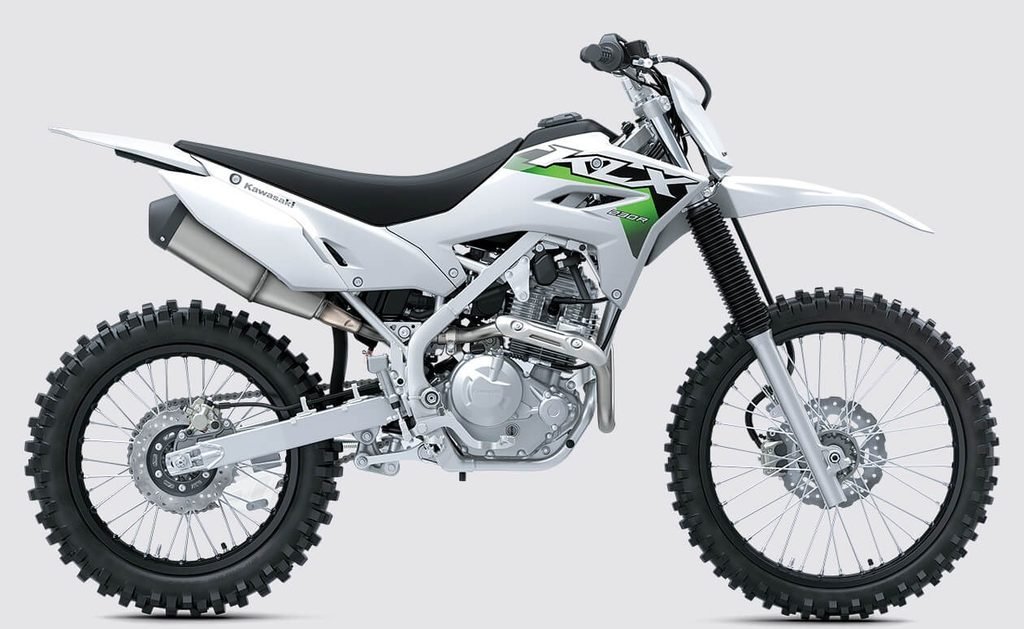
The KLX230R makes around 18 hp at the rear wheel and roughly 14.4 lb-ft of torque, based on independent dyno testing. Dirt Rider put a 2021 model on its in-house Dynojet 250i dyno and recorded 17.9 hp at 7,700 rpm and 14.4 lb-ft of torque at 6,100 rpm (Dirt Rider, 2021). Kawasaki hasn’t touched the engine internals since, so this remains the best independent reference point for the current bike.
Crank horsepower, the number measured before drivetrain losses, is typically higher than what shows up at the rear wheel. A reasonable estimate puts the KLX230R somewhere around 20 to 22 hp at the crank, though Kawasaki doesn’t publish an official claimed figure for this model, so treat that range as an estimate rather than a spec.
That output is right in line with what you’d expect from a 230-250cc air-cooled trail single. This engine isn’t chasing peak numbers. It’s tuned for smooth, predictable low-to-mid-range power that a rider can modulate on a rocky switchback or a loose hillclimb without the bike snapping sideways underneath them.
How Does the KLX230R’s Suspension Handle Rough Trails?
The KLX230R runs 9.8 inches of suspension travel at both the front and rear, which is generous for a full-size trail bike in this displacement class. A 37mm telescopic fork handles the front, while a Uni-Trak linkage connects to a single rear shock with adjustable spring preload.
That travel matters more than most riders realize. Undersprung, over-traveled suspension wallows over rocks and roots instead of tracking the terrain, the same way a stretched, dry chain feels sloppy under load. At 9.8 inches, the KLX230R has enough room to soak up a square-edged rock ledge or a rutted fire road without bottoming out hard, assuming rider weight sits within the stock spring range.
That range tops out around 150 to 180 pounds for a comfortable, well-balanced ride. Heavier or more aggressive riders will want a stiffer aftermarket shock spring, since the stock unit is built for broad recreational use rather than fast, hard-charging riding.
Preload adjustment on the rear shock lets you dial in sag for your own body weight, which is the first setup step before ever hitting a trail. Front fork settings are fixed, with no compression or rebound clickers, keeping things simple for a bike aimed at recreational riders rather than racers.
KLX230R Spec Sheet
| Spec | 2026 KLX230R |
|---|---|
| Engine | 233cc air-cooled, SOHC single |
| Bore x stroke | 67.0 x 66.0mm |
| Compression ratio | 9.4:1 |
| Fuel system | DFI with 32mm Keihin throttle body |
| Transmission | 6-speed, wet multi-disc clutch |
| Rear-wheel horsepower | ~18 hp @ 7,700 rpm (dyno) |
| Rear-wheel torque | ~14.4 lb-ft @ 6,100 rpm (dyno) |
| Front suspension / travel | 37mm telescopic fork / 9.8 in |
| Rear suspension / travel | Uni-Trak, adjustable preload / 9.8 in |
| Front / rear brakes | 240mm disc / 220mm disc, no ABS |
| Front / rear tire | 80/100-21 / 100/100-18 |
| Seat height | 35.6 in |
| Ground clearance | 11.4 in |
| Wheelbase | 54.1 in |
| Curb weight | 262.4 lb |
| Fuel capacity | 2.0 gal |
| MSRP | $4,999 |
What’s the KLX230R’s Ground Clearance and Seat Height?
credit: https://ultimatemotorcycling.com/
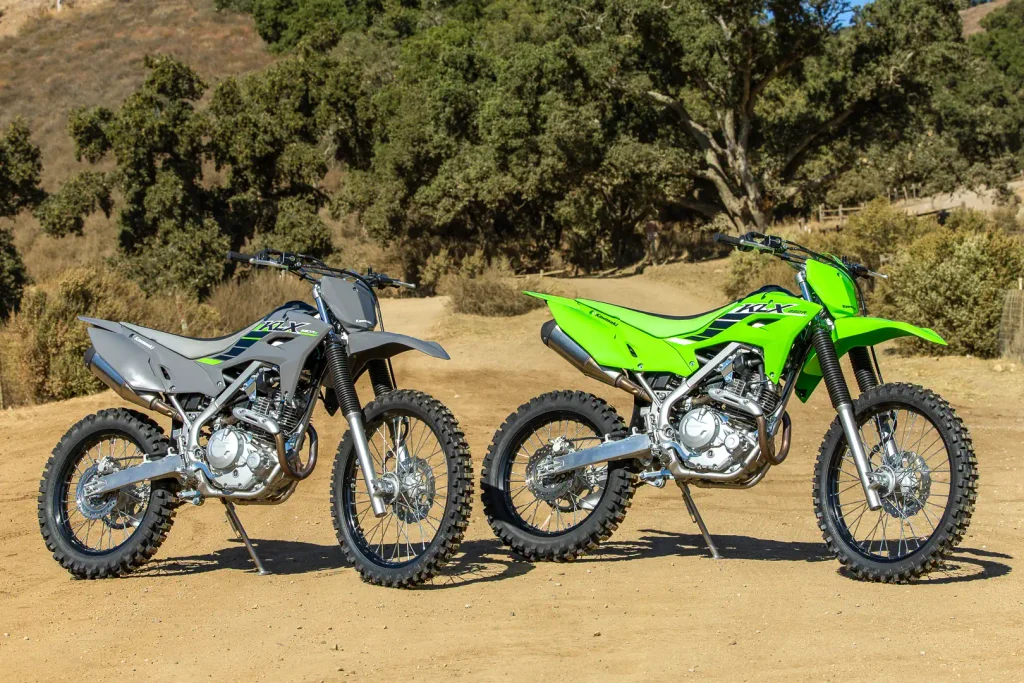
Ground clearance is 11.4 inches, with a 35.6-inch seat height on the standard R model (Kawasaki, 2026). Both numbers put the bike solidly in full-size trail bike territory, tall enough to clear most rocks and logs on a moderate trail without dragging the skid plate constantly.
If that seat height sounds intimidating, Kawasaki builds the KLX230R S specifically to address it. The S variant uses a different suspension linkage and shock setting to bring seat height down to 34.4 inches while keeping the same 233cc engine and chassis. Everything else, powerplant, brakes, and frame, is shared between the two.
Wheelbase on the standard R is 54.1 inches, with a 25.4-degree rake and 4.2 inches of trail. That’s shorter than a typical adventure-oriented dual-sport, which is part of why the KLX230R turns quickly in tight, technical singletrack but can feel a little less planted at higher trail speeds than a longer machine.
How Much Does the KLX230R Weigh, and Is That a Problem?
Curb weight on the 2026 KLX230R is 262.4 lb, with dry weight at 247 lb. That’s a middling number for the class: heavier than a stripped-down competition bike, but that’s the tradeoff for a full lighting kit, electric start, and a more forgiving, trail-friendly chassis instead of a race-focused machine.
For a full-size trail bike meant to serve everyone from a teenager stepping up from a KLX140R to an adult getting back into dirt riding after years away, that weight is reasonable and predictable rather than a liability.
Where it actually shows up is in tight, technical terrain: picking the bike back up after a tip-over, or muscling it through a deep sand wash. It’s manageable for most riders, but it’s not a bike you’ll casually toss around like a 220-pound two-stroke.
What Brakes and Tires Come Stock on the KLX230R?
The KLX230R uses a single 240mm petal disc up front with a dual-piston caliper, and a 220mm petal disc at the rear with a single-piston caliper. There’s no ABS, which is standard for a closed-course, off-road-only trail bike where locking the rear wheel intentionally is sometimes exactly what a rider wants in loose terrain.
Stock tires are an 80/100-21 front and 100/100-18 rear, mounted on 21-inch front and 18-inch rear wire-spoke wheels. That’s the classic big-wheel trail bike setup: the tall front wheel rolls over obstacles more easily than a smaller-diameter wheel, while the 18-inch rear opens up a wider range of aftermarket knobby tire choices for mud or hardpack.
Stock rubber on most trail bikes in this class is built for a broad mix of conditions rather than one specific terrain. Riders who spend most of their time in soft sand or deep mud typically upgrade to a dedicated intermediate or soft-terrain tire once the stock tires wear down.
Frequently Asked Questions
Is the Kawasaki KLX230R street legal?
No. The KLX230R is sold as a closed-course, off-road-only vehicle in the United States and doesn’t come with the lighting, mirrors, or DOT-rated tires required for street registration. Riders wanting a similar platform they can legally ride on the road should look at the dual-sport KLX230S instead, which carries a headlight, turn signals, and DOT tires.
How much horsepower does the KLX230R make at the crank versus the rear wheel?
Independent dyno testing shows roughly 18 hp and 14.4 lb-ft of torque at the rear wheel. Crank horsepower, measured before drivetrain losses, is typically higher and likely falls in the 20 to 22 hp range, though this is an estimate rather than an official Kawasaki figure.
What’s the difference between the KLX230R and the KLX230R S?
Both share the same 233cc engine, frame, and brakes. The S variant uses a modified suspension linkage and shock setting to lower seat height to 34.4 inches, compared to 35.6 inches on the standard R. It’s aimed at shorter or less experienced riders who want more confidence putting a foot down.
How much suspension travel does the KLX230R have?
The KLX230R has 9.8 inches of travel at both the front and rear. The front fork is a non-adjustable 37mm telescopic unit, while the rear shock has adjustable spring preload through the Uni-Trak linkage.
What’s the recommended rider weight for the KLX230R?
The stock suspension setup suits riders in the 150 to 180-pound range for a balanced, well-sprung ride. Heavier riders can still ride the bike comfortably but may want to upgrade the rear shock spring rate to avoid excessive sag and a harsher bottoming feel on rough trails.
Does the KLX230R have electronic rider aids like traction control?
No. There’s no traction control, ride modes, or ABS on this model. Power delivery is managed entirely by throttle input and the engine’s naturally smooth, low-revving single-cylinder character.