Kawasaki Ninja 400 Specs, Top Speed & Performance Review
TL;DR
- The Kawasaki Ninja 400 is a 399cc liquid-cooled parallel twin making 44.8 hp at 10,000 rpm and 27 lb-ft of torque at 8,000 rpm (Kawasaki, 2023).
- Top speed in independent testing reaches 118.3 mph, with a 0–60 mph time of 4.07 seconds — quickest in its class (MotoStatz, 2023).
- Wet weight is 370 lb with a 30.9-inch seat height; ABS is standard on all trims.
- MSRP for 2023 models ranged from $5,299 to $5,899 (Kawasaki US, 2023).
- Kawasaki discontinued the Ninja 400 after 2023, replacing it with the Ninja 500.
What the Kawasaki Ninja 400 Actually Is
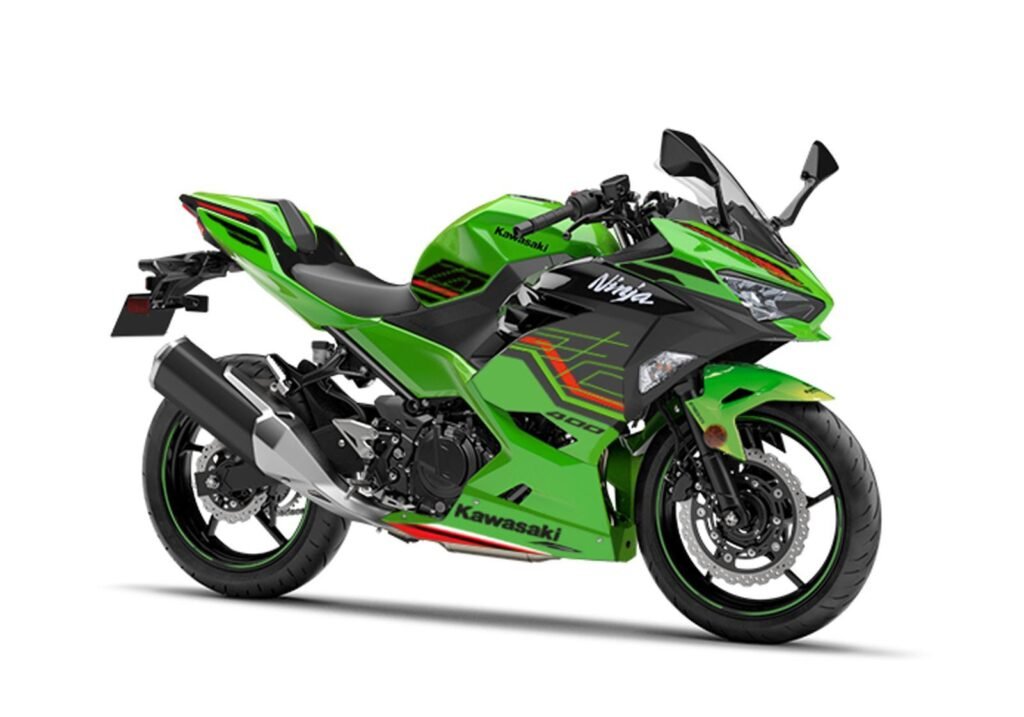
The Kawasaki Ninja 400 is a 399cc sport bike produced from 2018 through 2023, built as a successor to the Ninja 300. It’s aimed at new riders who want real sport-bike character without the intimidation of a 600cc or liter-class machine, and experienced riders who want a light, flickable city bike or backroad carver.
The chassis uses a steel trellis frame with the engine mounted as a stressed member. That frame design, combined with a sub-375 lb wet weight, is what makes the 400 handle beyond what its power number suggests. A 45 hp bike that weighs 370 lb stops and turns on a completely different level than a 45 hp bike that weighs 450 lb.
Full Kawasaki Ninja 400 Specs
| Specification | Detail |
|---|---|
| Engine | 399cc liquid-cooled DOHC parallel twin |
| Bore x Stroke | 70.0 mm x 51.8 mm |
| Compression Ratio | 11.5:1 |
| Peak Power (claimed) | 44.8 hp @ 10,000 rpm |
| Peak Torque (claimed) | 27 lb-ft @ 8,000 rpm |
| Transmission | 6-speed, Assist & Slipper Clutch |
| Front Suspension | 41 mm non-adjustable fork, 4.7 in. travel |
| Rear Suspension | Gas-charged monoshock, 5-way preload adjust |
| Front Brake | 310 mm disc, dual-piston caliper, ABS |
| Rear Brake | 220 mm disc, single-piston caliper, ABS |
| Seat Height | 30.9 in. (785 mm) |
| Wet Weight | 370 lb (168 kg) |
| Fuel Capacity | 3.7 US gal (14 L) |
| MSRP (2023, USA) | $5,299–$5,899 |
Kawasaki Ninja 400 Top Speed
The Ninja 400 reaches 118.3 mph in independent instrumented testing (MotoStatz, 2023). Kawasaki does not publish official top speed figures. Some owners report higher numbers in optimal conditions, with forum posts claiming up to 125 mph in stock form — but 118 mph is the consistent, verified figure.
That’s a strong result for a 399cc parallel twin. It puts the Ninja 400 at the top of its displacement class on outright speed.
Kawasaki Ninja 400 Acceleration: 0–60 and Quarter Mile
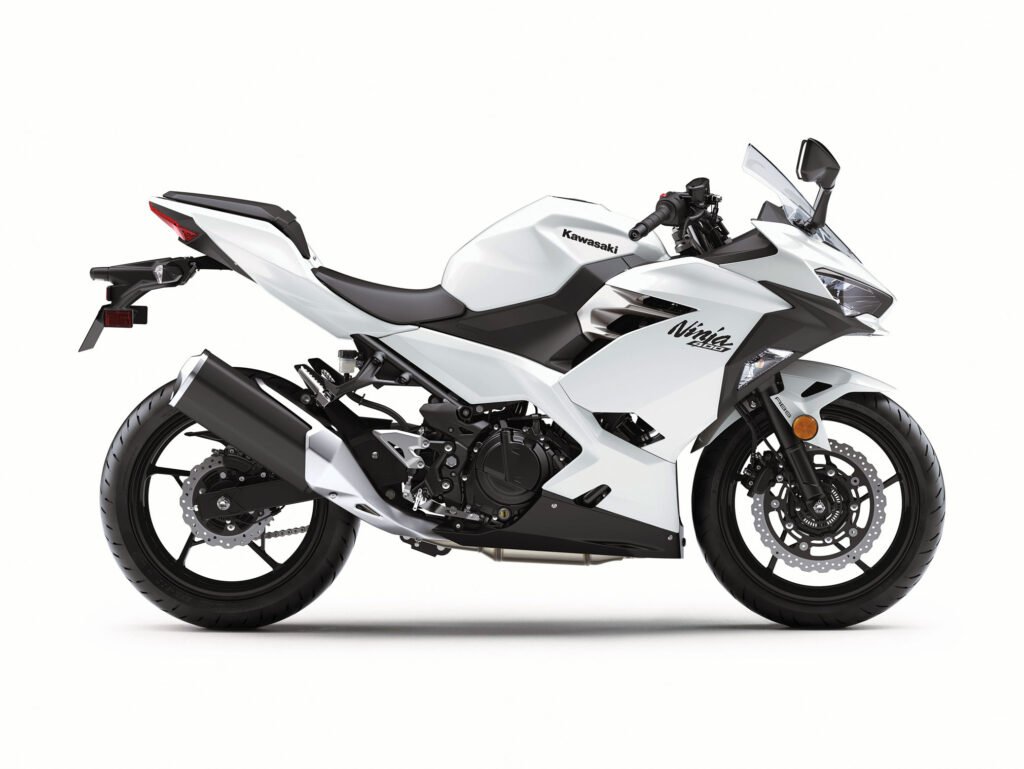
The Ninja 400 runs 0–60 mph in 4.07 seconds and 0–100 mph in approximately 11.8 seconds (MotoStatz, 2023; Speedmasti, 2023). The quarter mile takes around 13.0–13.5 seconds at a 98–100 mph trap speed (FastestLaps, 2023).
Those numbers are quick for the class. Weight and low-end torque delivery explain it. At 370 lb, the power-to-weight ratio punches well above the displacement. The parallel twin also builds torque from low in the rev range, so you don’t need to hold 9,000 rpm for every pull — the engine is tractable from the bottom and genuinely exciting at the top.
Engine Character and Power Delivery
The 399cc DOHC engine is fuel-injected through a pair of 32 mm throttle bodies, giving clean, predictable response at every throttle position. Power builds from around 5,000 rpm and gets urgent between 7,500 and 10,000 rpm. The top end has a wail to it that feels disproportionate to the displacement.
The Assist & Slipper Clutch does real work. Downshifting hard into a corner no longer means rear-wheel hop. The clutch pull is also light, which matters on longer days in stop-and-go traffic.
Handling, Suspension, and Brakes
The trellis frame and short 55.1-inch wheelbase make the 400 flick between corners easily. It’s not a fully adjustable track weapon, but for street riding and occasional track days it’s genuinely capable.
The 41 mm front fork is non-adjustable — the main limitation if you want to tune handling for aggressive use. The rear monoshock has five-way preload adjust, which lets you compensate for a passenger or heavy luggage.
The single 310 mm front disc — the same diameter as the Ninja ZX-14R — provides adequate stopping power for the bike’s weight. ABS is standard and well-calibrated. It doesn’t intrude on smooth surfaces but earns its keep on gravel or wet paint.
Real-World Fuel Economy and Range
Owner-reported data from Fuelly (2023) puts real-world fuel economy at 50–57 mpg depending on riding style. Kawasaki’s test figure is approximately 72 mpg. Mixed riding — commuting, highway, occasional hard runs — lands around 55–60 mpg.
The 3.7-gallon tank gives a practical range of roughly 200–220 miles before the fuel light appears.
Who the Ninja 400 Is Best For
The Ninja 400 is the right choice for a new rider who wants a bike they’ll grow into rather than out of in six months. A 250cc or 300cc machine gets limiting fast. The 400 stays interesting for 2–3 years of skill development, then works well as a commuter or second bike.
It’s also a strong pick for an experienced rider who wants a light, low-maintenance machine for daily riding. At 370 lb, low-speed maneuvering and parking are genuinely easy. The 30.9-inch seat height works for riders 5’4″ and taller without modification.
Where it falls short: extended highway touring is fatiguing past 90 minutes. The half-fairing does enough for city and weekend use, not for all-day slab miles. Regular two-up riding with a passenger pushes the bike past its comfort zone.
Frequently Asked Questions About the Kawasaki Ninja 400
What is the top speed of the Kawasaki Ninja 400?
The Ninja 400 reaches 118.3 mph in independent instrumented testing by MotoStatz (2023). Kawasaki does not publish an official figure. Some owners report higher speeds in optimal conditions, but 118 mph is the consistent, verified number.
How fast is the 0–60 mph time on the Ninja 400?
The Ninja 400 covers 0–60 mph in 4.07 seconds (MotoStatz, 2023), making it the fastest-accelerating bike in its displacement class.
Is the Kawasaki Ninja 400 good for beginners?
Yes. The Ninja 400 is one of the best entry-level sport bikes available. Its 370 lb wet weight, 30.9-inch seat height, predictable power, and standard ABS all make it approachable. European A2 licence compliance confirms the power delivery was tuned with newer riders in mind.
What year was the Ninja 400 discontinued?
Kawasaki discontinued the Ninja 400 after the 2023 model year, replacing it with the Ninja 500 on the same platform with a larger engine and updated technology (Kawasaki, 2023).
How many horsepower does the Kawasaki Ninja 400 produce?
The Ninja 400 makes 44.8 hp at 10,000 rpm (claimed) and 27 lb-ft of torque at 8,000 rpm. Rear-wheel dyno figures typically run 38–43 hp after drivetrain losses.
What is the real-world fuel economy of the Ninja 400?
Real-world fuel economy averages 50–57 mpg based on owner data from Fuelly (2023). Mixed riding typically lands around 55–60 mpg, well below Kawasaki’s 72 mpg test figure.
Key Takeaways
- The Kawasaki Ninja 400 produces 44.8 hp and 27 lb-ft from a 399cc parallel twin, with a tested top speed of 118.3 mph and a 0–60 time of 4.07 seconds.
- At 370 lb wet with a 30.9-inch seat height and standard ABS, it’s among the most accessible sport bikes at its price point.
- Real-world fuel economy runs 50–60 mpg; the 3.7-gallon tank delivers roughly 200–220 miles of range.
- It’s the right choice for new riders and city commuters — less suited to long touring or regular two-up use.
- The 400 was replaced by the Ninja 500 after 2023, but used examples are widely available and represent strong value.