Kawasaki Z H2 Specs, Top Speed & Performance Review
TL;DR
- The Kawasaki Z H2 is a supercharged 998cc naked street bike producing 197 hp and 101 lb-ft of torque
- It reaches 60 mph in approximately 3.3 seconds and 100 mph in around 5.6 seconds
- Top speed runs from 166 mph in independent road tests to 179 mph in videoed high-speed passes.
- The 2025 Z H2 SE ABS starts at $21,700 MSRP, adding Showa Skyhook EERA semi-active suspension and Brembo Stylema calipers over the base model.
- This is not a beginner bike — at 527 lbs wet with 200 PS on tap, it demands experienced hands and full attention.
What Is the Kawasaki Z H2?
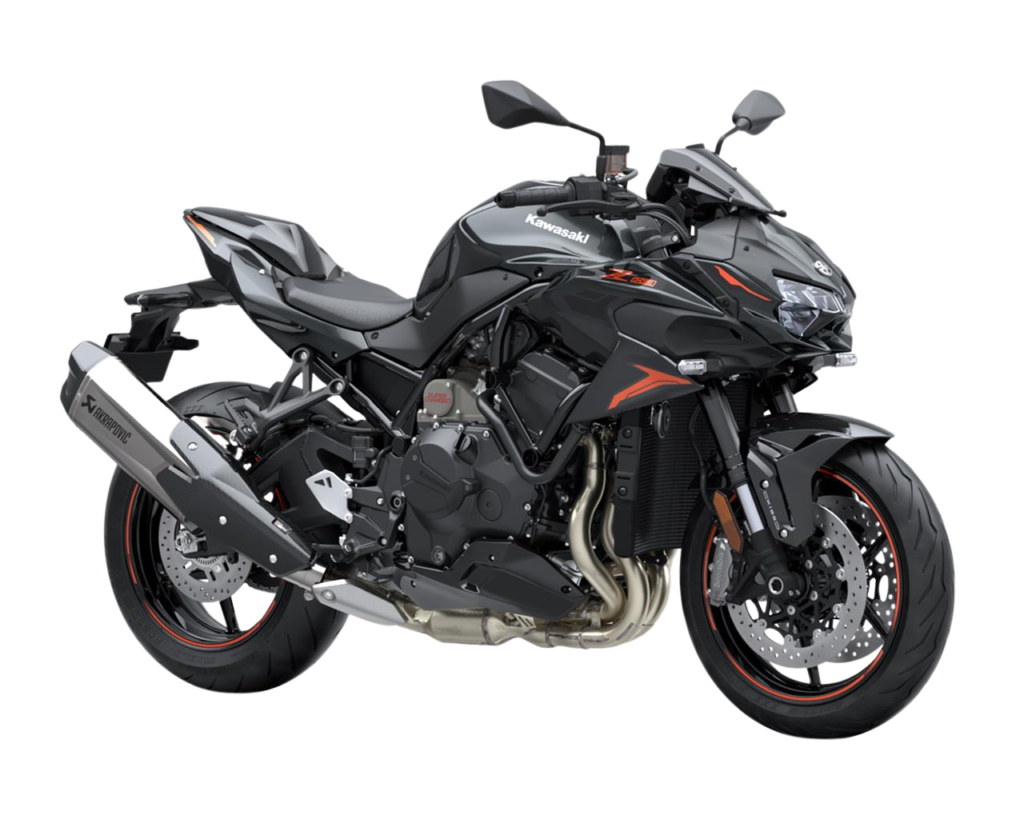
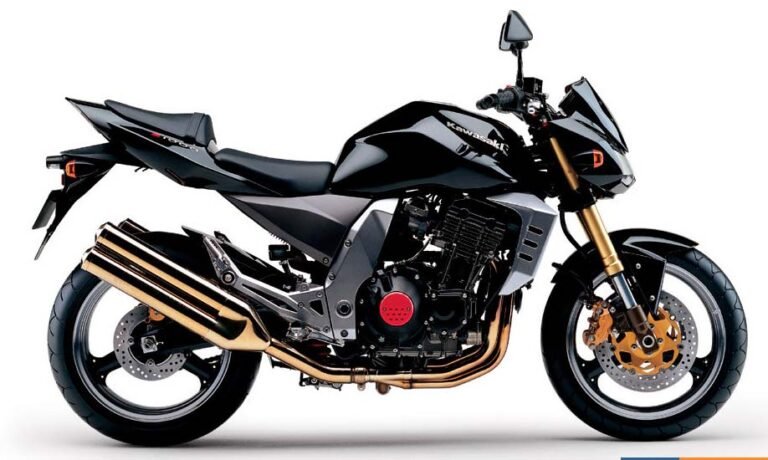
The Z H2 is Kawasaki’s supercharged hypernaked — a 998cc, four-cylinder, street-legal motorcycle with a factory-fitted centrifugal supercharger borrowed from the H2 lineage. Kawasaki debuted the Z H2 for the 2020 model year, positioning it as the most powerful naked bike in the Z family. It sits below the track-only Ninja H2R and the faired Ninja H2 supersport — the only one you can legally ride on public roads.
The “Z” designates the naked, unfaired platform. No fairing, no windscreen — just the supercharger poking out of the engine bay and a steel trellis frame holding everything together. Kawasaki calls the design philosophy “Sugomi,” a Japanese term for beauty found in something formidable. The power is outright alarming.
Kawasaki Z H2 Full Specs
| Spec | Z H2 (Base) | Z H2 SE ABS |
|---|---|---|
| Engine | 998cc DOHC inline-four, supercharged | Same |
| Power | 197 hp @ 10,500 rpm | 197 hp @ 10,500 rpm |
| Torque | 101 lb-ft @ 8,500 rpm | 101 lb-ft @ 8,500 rpm |
| Compression Ratio | 11.2:1 | 11.2:1 |
| Transmission | 6-speed | 6-speed + KQS standard |
| Front Suspension | Showa 43mm SFF-BP inverted fork | Showa KECS Skyhook EERA semi-active |
| Rear Suspension | Showa gas-charged UNI-TRAK | Showa BFRC semi-active, electronic preload |
| Front Brakes | Brembo M4.32 monobloc, dual 320mm discs | Brembo Stylema monobloc, dual 320mm discs |
| Tires | Pirelli Diablo Rosso III | Pirelli Diablo Rosso III |
| Seat Height | 32.7 in (831 mm) | 32.7 in (831 mm) |
| Wet Weight | 527 lbs (239 kg) | 527 lbs (239 kg) |
| Wheelbase | 57.3 in (1,455 mm) | 57.3 in (1,455 mm) |
| Fuel Capacity | 5.0 gal (18.9 L) | 5.0 gal (18.9 L) |
| MSRP (2025) | ~$18,000–$19,000 (est.) | $21,700 |
Sources: Kawasaki USA, Autotrader, Motorcycle.com, 2025.
How the Supercharger Works on the Z H2
The Z H2 uses a centrifugal supercharger — a forced-induction unit driven directly by the engine that compresses intake air before combustion, allowing more fuel to burn per cycle and extracting more power from the same 998cc displacement. Kawasaki engineered it to fit within the existing engine envelope without adding bulk.
At low revs, the Z H2 rides like a thumpy, manageable streetfighter. Above 6,000 rpm, the boost builds and the character changes completely. Cycle World’s Doug Toland described the throttle as delivering “an almost electric torque feel starting from 2,000 rpm” that “basically adds 20 hp with every 1,000 rpm” (Cycle World, 2024). Twenty horsepower per 1,000 rpm is not a normal powerband.
The base compression ratio of 11.2:1 is deliberately modest. The supercharger handles the pressure work; keeping base compression manageable prevents knock and lets the engine run on standard 91 octane.
Kawasaki Z H2 Top Speed
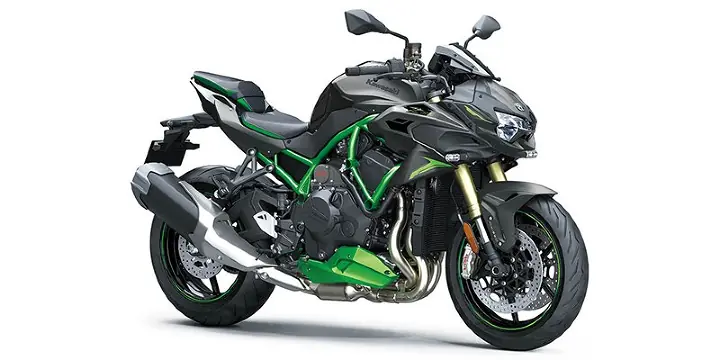
Kawasaki has not published an official top speed. Independent results are consistent: Motorcycle News clocked 166 mph in a controlled road test, YouTuber MotoTop recorded 167 mph, and YouTuber Bigbike Story reached 179 mph in a videoed run (SlashGear, 2025). The spread comes down to rider size, wind, road grade, and nerve.
For context, the Z H2 achieves all of this in a fully upright naked-bike riding position. At 150 mph with no windscreen, your body is doing serious aerodynamic work. That reality shapes how far most riders push the top end.
Kawasaki Z H2 Acceleration: 0–60 and Quarter Mile
The Z H2 reaches 60 mph in approximately 3.3 seconds, 100 mph in around 5.6 seconds, and 140 mph at the 9.2-second mark (SlashGear, 2025). Those numbers belong in a sports car spec sheet, not a naked street bike. The sequential dog-ring gearbox — borrowed from Kawasaki’s racing program — keeps power flowing through shifts with minimal interruption, especially on the SE with the standard KQS quick shifter.
How the Z H2 Rides in Practice
The steel trellis frame keeps the chassis composed without harsh rigidity. At speed, the weight largely disappears and the bike tracks cleanly through corners. At a standstill or in a parking lot, the 527-lb reality returns fast. Maneuvering this bike slowly takes awareness and some practice.
The 32.7-inch seat height is accessible for average-height riders, though the trellis frame spreads the knees wider than most naked bikes. On the SE, the Showa Skyhook EERA suspension adjusts damping up to 100 times per second using a five-axis Bosch IMU (Motorcycle.com, 2025) — the bike reads the road and reacts in real time. The base model’s Showa SFF-BP fork is manually adjustable and performs well; it just doesn’t adapt.
Brembo Stylema calipers on the SE deliver outstanding stopping power. The KIBS (Kawasaki Intelligent anti-lock Brake System) monitors caliper pressure, throttle position, wheel speed, and gear position to modulate braking precisely — well beyond standard ABS.
Where the Z H2 Falls Short
The weight is the main real-world compromise. At 527 lbs wet, dropping the Z H2 at low speed is a two-person recovery operation. Fuel range on spirited riding averages around 150 miles from the 19-liter tank. On a long road trip, that’s a fuel stop every 150 miles.
The stock exhaust is quiet and heavy for a bike with this personality. It muffles an engine that deserves to be heard. Akrapovic and Yoshimura make aftermarket options, though the supercharged architecture limits fitment choices compared to a naturally aspirated motor.
And to be direct: this is a machine for experienced riders. Rider aids help, but they’re not a substitute for throttle discipline and situational awareness. If your muscle memory comes from 600cc streetfighters, the Z H2 will outpace your instincts before your brain catches up.
Frequently Asked Questions About the Kawasaki Z H2
What engine does the Kawasaki Z H2 use?
The Z H2 uses a liquid-cooled 998cc DOHC 16-valve inline-four with a centrifugal supercharger. It produces 197 hp at 10,500 rpm and 101 lb-ft of torque at 8,500 rpm (Kawasaki, 2025).
How fast is the Kawasaki Z H2?
The Z H2 reaches 60 mph in approximately 3.3 seconds and tops out between 166 and 179 mph depending on conditions. Kawasaki has not published an official top speed figure (SlashGear, 2025).
What is the difference between the Z H2 and Z H2 SE?
The SE adds Showa Skyhook EERA semi-active suspension, Brembo Stylema calipers, steel braided brake lines, and standard KQS quick shifter. The 2025 SE starts at $21,700 MSRP (Autotrader, 2025).
Is the Kawasaki Z H2 a good beginner bike?
No. The Z H2’s supercharged powerband, 527-lb wet weight, and 197 hp demand experience, throttle discipline, and situational awareness that new riders haven’t yet built. Kawasaki’s electronics help manage the power but don’t replace rider skill.
How does the Z H2 supercharger differ from a turbocharger?
A supercharger is engine-driven and delivers boost instantly when you open the throttle. A turbocharger is exhaust-driven and introduces a delay before boost arrives. On a motorcycle, instantaneous response is far more practical and predictable than the on-off surge of a turbo.
What tires does the Z H2 use from the factory?
The Z H2 comes with Pirelli Diablo Rosso III tires — 120/70 ZR17 front and 190/55 ZR17 rear (Motorcycle.com, 2025). The Rosso III is a sport-touring compound with solid wet-weather grip.
Key Takeaways
- The Z H2 makes 197 hp and 101 lb-ft of torque from a supercharged 998cc inline-four.
- 0–60 mph takes 3.3 seconds; top speed runs 166–179 mph in real-world tests.
- The 2025 Z H2 SE ABS starts at $21,700 with semi-active suspension and Brembo Stylema brakes.
- At 527 lbs wet, the weight is manageable at pace but very present at low speed.
- This bike is for experienced riders — the electronics help, but they don’t substitute for skill.