Kawasaki Ninja 650 Specs, Top Speed & Performance
TL;DR
- The Kawasaki Ninja 650 makes 67 hp and 48.5 lb-ft of torque from a 649cc liquid-cooled parallel twin
- Top speed is approximately 130–131 mph (210–211 km/h) based on GPS-verified testing
- It hits 0–60 mph in 3.53 seconds and covers the quarter mile in 12.3 seconds at 110 mph
- Curb weight is 419 lbs (non-ABS) with a 31.1-inch seat height and a 4.0-gallon tank.
- MSRP for 2025 runs from $7,599 (non-ABS) to $8,399 (KRT Edition with ABS)
Kawasaki Ninja 650 Full Specs (2025–2026)
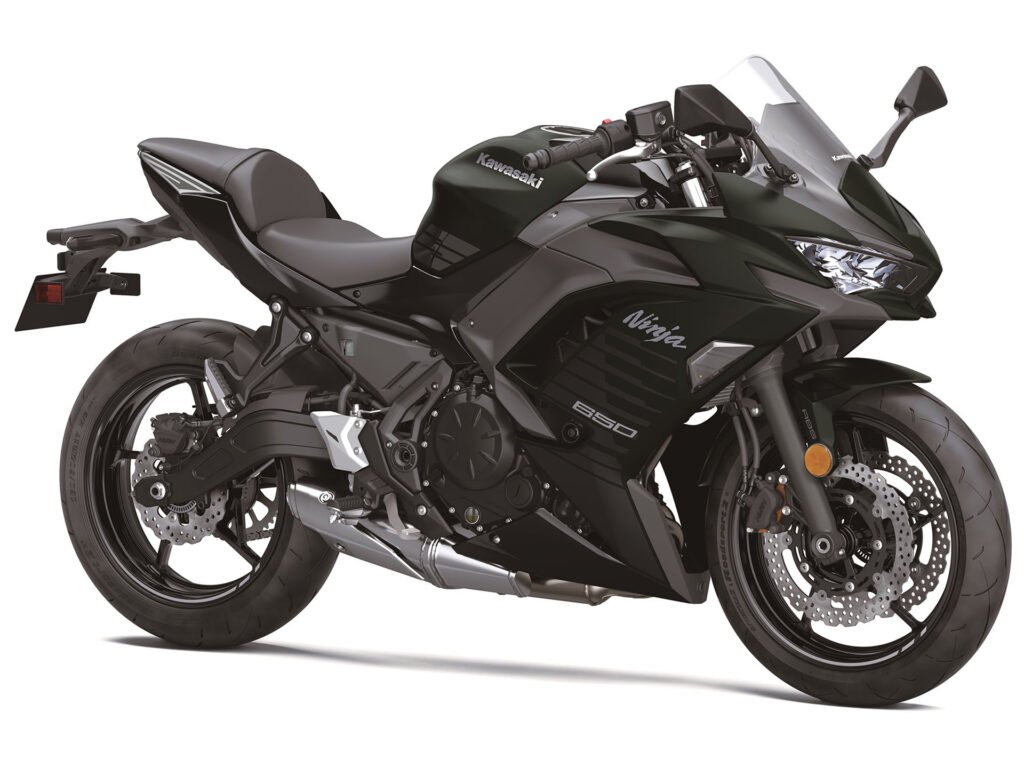
The Ninja 650 is built around a 649cc parallel twin and a high-tensile steel frame. Kawasaki landed on a solid package years ago and has focused on refinement since.
| Spec | Detail |
|---|---|
| Engine | 649cc liquid-cooled DOHC parallel twin |
| Bore x Stroke | 83.0 x 60.0 mm |
| Compression Ratio | 10.8:1 |
| Peak Power | 67 hp @ 8,000 rpm |
| Peak Torque | 48.5 lb-ft @ 6,500 rpm |
| Transmission | 6-speed with assist and slipper clutch |
| Front Suspension | 41mm telescopic fork, 4.9 in. travel |
| Rear Suspension | Horizontal back-link, adjustable preload, 5.1 in. travel |
| Front Brakes | Dual 300mm petal discs, 2-piston calipers |
| Rear Brake | Single 220mm petal disc |
| Tires | 120/70-17 front / 160/60-17 rear (Dunlop Sportmax Roadsport 2) |
| Wheelbase | 55.5 in. |
| Seat Height | 31.1 in. (790 mm) |
| Fuel Capacity | 4.0 gal. |
| Curb Weight | 419 lbs (non-ABS) / 423 lbs (ABS) |
| Fuel Economy | ~51.6 mpg average |
| MSRP (2025, USA) | $7,599 (non-ABS) – $8,399 (KRT ABS) |
Sources: Kawasaki, 2025; Total Motorcycle, 2024.
Top Speed and Acceleration Data
The Ninja 650’s top speed is 130–131 mph (210–211 km/h), confirmed by GPS testing (MotoStatz, 2026). The factory speedo reads within 5% of GPS at high speed — notably honest for a production bike.
| Run | Time / Speed |
|---|---|
| 0–60 mph | 3.53 seconds |
| 0–100 km/h | 3.92 seconds |
| Quarter mile | 12.3 sec @ 110 mph |
| 0–100 mph | 9.5 seconds |
| 0–200 km/h | 18.5 seconds |
Source: MotoStatz, 2026.
A typical rider on a stock bike will see around 4.0 seconds to 60 mph and mid-12s in the quarter mile at about 105 mph. The gap between optimal and real-world times is narrower than on high-strung supersports, which makes the Ninja consistent and easier to ride fast day-to-day.
What the 649cc Engine Feels Like at Speed
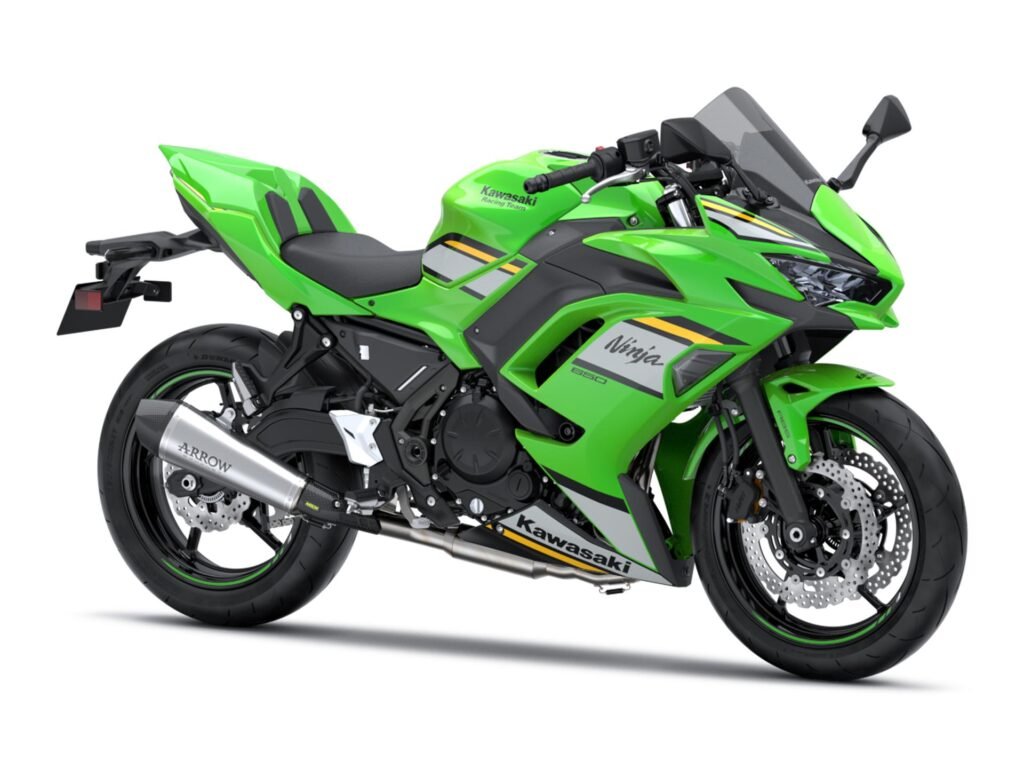
The 649cc parallel twin is the core of this bike’s appeal. Sixty-seven horsepower sounds modest, but the oversquare bore and stroke (83.0 x 60.0 mm) makes the engine rev freely, and 10.8:1 compression builds genuine midrange pull.
You feel the torque widen around 4,000–5,000 rpm — exactly where you live during city riding and freeway merges. No constant gear-hunting to stay in the power. Dual 36mm Keihin throttle bodies keep fuel delivery clean with no stumble off idle or mid-corner hesitation. For this price point, that’s honest calibration.
The assist and slipper clutch is a standout feature: lighter lever pull at the bar, plus slipper function to prevent rear-wheel hop under aggressive downshifts. This hardware usually lives on bikes thousands of dollars more expensive.
Handling and Braking: What the Numbers Mean on the Road
The Ninja 650 handles like a street bike built for streets, not a track bike compromised for road use. The 41mm fork and adjustable rear preload give a planted feel over broken pavement with enough response to be entertaining on twisty back roads.
At 419 lbs wet, low-speed handling is easy to manage. Parking lots and U-turns don’t require heroics.
The dual 300mm front discs with 2-piston calipers stop the bike cleanly and are well-matched to its weight and speed. They aren’t a Brembo-level standout, but they’re not a weak point either. On ABS-equipped models, KTRC (Kawasaki Traction Control) adds three intervention modes — including fully off — which is genuinely useful in wet or mixed conditions.
Ergonomics, Comfort, and the 2025 Updates Worth Knowing
The 31.1-inch seat height is accessible to riders roughly 5’5″ and taller. For 2025, Kawasaki thickened the seat cushion — an overdue change that makes multi-hour rides noticeably more comfortable. The redesigned windscreen does a better job managing highway blast, though taller riders at 75+ mph will still feel pressure and may want an aftermarket screen for long-distance work.
The handlebar position tilts you into a sport-touring posture: weight through the seat, not the wrists. Wrist and back fatigue on 2–3 hour stints is minimal for most riders.
One honest complaint: the mirrors vibrate noticeably at idle. It stabilizes at speed, but first-time owners always notice it.
The 2025–2026 models also get Dunlop Sportmax Roadsport 2 tires as standard fitment and a 4.3-inch full-color TFT display with Kawasaki Rideology Bluetooth app connectivity. OBD-2B emissions compliance was added for 2025 without any change to power output.
Who the Ninja 650 Is Actually For
The Ninja 650 is the right next bike for riders moving up from 300–400cc machines who want real-world power without getting in over their heads. It’s also a practical daily commuter at 51.6 mpg that doesn’t feel like a compromise when the road opens up on weekends.
Here’s where to be clear-eyed: the suspension is street-tuned and won’t satisfy anyone chasing track-day lap times. The 2-piston front calipers work fine on public roads but feel under-engineered if you’re coming from a ZX-6R. And 419 lbs isn’t the lightest in the 650 class.
If you’re buying new, the ABS model at around $7,999 is the better call. KTRC alone justifies the step up from base trim, especially for riders in wet climates or year-round commuting situations.
Frequently Asked Questions About the Kawasaki Ninja 650
What is the top speed of the Kawasaki Ninja 650?
The Kawasaki Ninja 650 reaches 130–131 mph (210–211 km/h) based on GPS-verified testing (MotoStatz, 2026). The factory speedometer reads within about 5% of GPS at high speed, which is more accurate than many bikes in this segment.
How fast does the Ninja 650 go 0 to 60 mph?
Under optimal conditions, the Ninja 650 hits 0–60 mph in 3.53 seconds (MotoStatz, 2026). Most riders on a stock bike in everyday conditions will see around 4.0 seconds. The quarter mile runs 12.3 seconds at 110 mph.
What engine does the Kawasaki Ninja 650 use?
The Ninja 650 uses a 649cc liquid-cooled DOHC parallel twin with an 83.0 x 60.0 mm bore and stroke, 10.8:1 compression, and dual 36mm Keihin throttle bodies. It produces 67 hp at 8,000 rpm and 48.5 lb-ft of torque at 6,500 rpm (Kawasaki, 2025).
Is the Kawasaki Ninja 650 a good beginner bike?
The Ninja 650 suits riders stepping up from a 300–400cc machine better than it suits someone brand new to motorcycling. Power is manageable, the 31.1-inch seat is approachable, and the chassis is forgiving. Most safety courses recommend smaller displacement bikes for total beginners first.
How much does the 2025 Kawasaki Ninja 650 cost?
The 2025 Ninja 650 starts at approximately $7,599 MSRP for the base non-ABS model. The ABS version is around $7,999, and the KRT Edition with ABS reaches about $8,399 (Total Motorcycle, 2024). Dealer out-the-door pricing varies by region and includes freight and setup fees.
What is the fuel economy of the Kawasaki Ninja 650?
The Ninja 650 averages roughly 51.6 mpg under mixed riding conditions. The 4.0-gallon tank gives a practical range of around 200 miles between fill-ups.
Does the 2025 Ninja 650 have traction control?
Yes, on ABS-equipped models only. KTRC (Kawasaki Traction Control) offers three intervention modes, including fully off for riders who prefer unassisted throttle response.
Key Takeaways
- The Ninja 650 makes 67 hp and 48.5 lb-ft of torque — enough for 130+ mph top speed and sub-4-second 0–60 runs.
- Optimal 0–60 is 3.53 seconds; the quarter mile runs 12.3 seconds at 110 mph. Typical rider times are around 4.0 sec and mid-12s.
- At 419 lbs wet with a 31.1-inch seat and ~51.6 mpg, it’s practical daily and capable on weekends.
- The 2025 update added a thicker seat, redesigned windscreen, Dunlop Sportmax Roadsport 2 tires, and OBD-2B compliance — zero impact on power output.
- Buy the ABS version at ~$7,999; the traction control system justifies the step up from base trim.