Kawasaki Vulcan 1700 Vaquero Top Speed & 0-60 Review
TL;DR
- The Kawasaki Vulcan 1700 Vaquero has a tested top speed of 114 mph and hits 0-60 mph in 5.4 seconds.
- Power comes from a 1,700cc, 52-degree, liquid-cooled V-twin making 73.4 hp at 5,000 rpm and 107.6 lb-ft of torque at 2,750 rpm.
- Curb weight is 845 lbs with ABS, and the belt-driven six-speed sends power to a 170/70-16 rear tire.
- The 2026 model carries an MSRP of $19,999 and remains the sole survivor of Kawasaki’s Vulcan 1700 platform for the model year.
- This is a highway cruiser built for torque and touring range, not a stoplight racer, and the numbers below reflect that.
How Fast Is the Kawasaki Vulcan 1700 Vaquero?
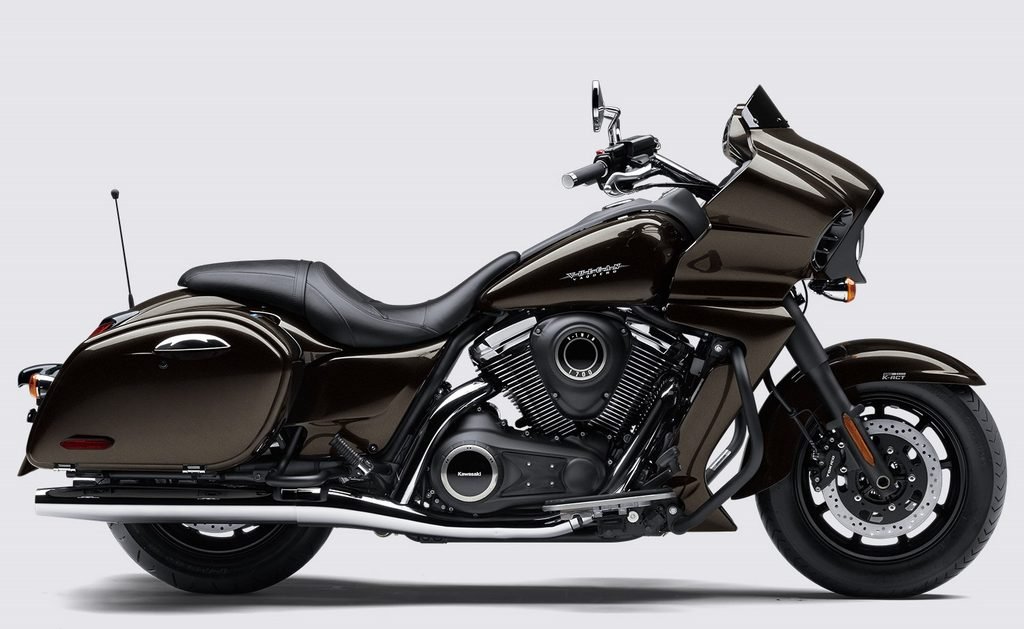
The Vulcan 1700 Vaquero runs 0-60 mph in 5.4 seconds and tops out at 114 mph, according to independent testing by Motorcycle Consumer News on the 2011 model (Motorcycle Consumer News, 2011). Kawasaki has never published an official top speed or 0-60 figure for this bike, which is typical for cruisers built around torque rather than outright speed.
The engine and chassis haven’t changed since that 2011 test. The Vaquero and its sister Voyager share the same 1,700cc V-twin, same gearing, and same belt final drive straight through to the 2026 model year, so those numbers still hold as the best real-world reference point available.
That 5.4-second sprint isn’t going to worry a sportbike, but it’s quick for a bike pushing 845 lbs (Cycle Trader, 2025). The torque hits early and hard, which is what actually matters when you’re rolling on the throttle out of a stop or merging onto the interstate with a passenger and full saddlebags.
What Powers the Vulcan 1700 Vaquero’s Performance?
A 1,700cc, liquid-cooled, 52-degree V-twin is what gets the Vaquero moving, and it’s tuned for grunt low in the rev range rather than top-end horsepower. Peak torque of 107.6 lb-ft arrives at just 2,750 rpm (BikesWiki, 2026), so you’re rarely reaching for a downshift to get moving.
Max output is 73.4 hp at 5,000 rpm, a modest number on paper next to a sportbike, but that’s not the point of this engine. Bore and stroke sit at 102.0 x 104.0mm with a 9.5:1 compression ratio, and Digital Fuel Injection through dual 42mm Mikuni throttle bodies keeps delivery smooth whether you’re crawling through a parking lot or holding 75 mph on the interstate.
The six-speed transmission includes overdrive for relaxed highway rpm, and final drive is a carbon fiber-reinforced belt instead of a chain. That means no chain slack to check, no sprocket wear to track, and no chain lube schedule to keep up with, which matters a lot to owners racking up big touring miles.
What Does the Vulcan 1700 Vaquero Weigh and How Does It Handle?
Curb weight for the ABS model comes in at 845 lbs, putting the Vaquero solidly in heavyweight bagger territory alongside bikes like the Harley-Davidson Road Glide. That weight sits low, though, thanks to the 1,700cc engine mounted deep in a double-cradle steel frame.
Wheelbase is a long 65.6 inches with a 30-degree rake and 7.0 inches of trail, a geometry that trades quick flickability for stability at highway speed. Seat height is a low 28.7 inches, which lets shorter riders get both feet flat at a stop despite the bike’s size.
Suspension is a 45mm Showa telescopic fork up front with 5.5 inches of travel, and twin air-assisted shocks out back with 4-way rebound adjustment and 3.1 inches of travel. Ground clearance is 5.7 inches. None of this is sport-tourer sharp, but it doesn’t need to be. This bike is happiest carving long, sweeping curves at a steady pace, not chasing apexes.
How Does the Vulcan 1700 Vaquero Stop and What Safety Tech Does It Have?
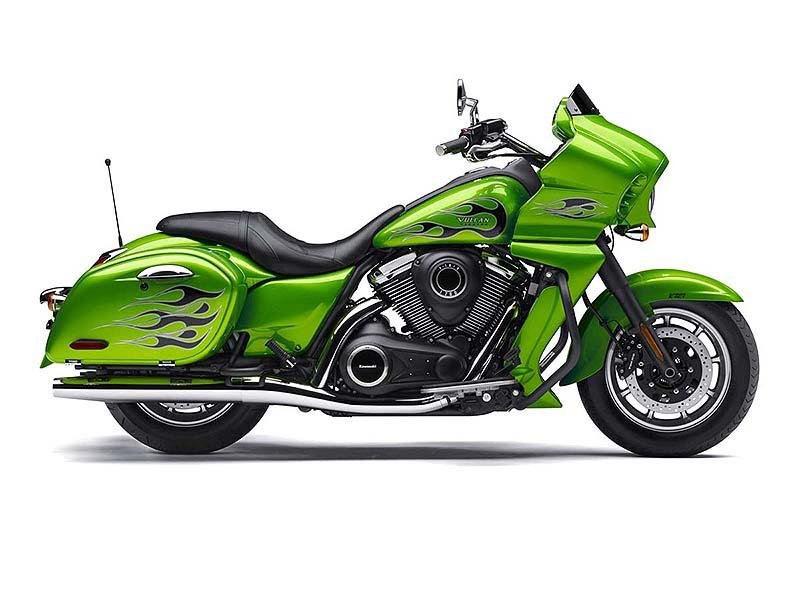
Braking comes from dual 300mm front discs with four-piston calipers and a single 300mm rear disc with a twin-piston caliper, backed by Kawasaki’s K-ACT ABS system as standard equipment (Kawasaki, 2026). K-ACT links front and rear brake application for more even weight transfer under hard stops, similar in concept to Harley’s linked ABS setups.
That matters more on a bike this heavy. An 845-lb motorcycle with a passenger and loaded saddlebags needs every bit of stopping power it can get, and the linked system helps keep the rear wheel from locking up if you grab too much front brake in a panic stop.
Front tire size is 130/90-16 and rear is 170/70-16, both radials. Tire pressure and tread depth matter even more on a heavy tourer than on a lightweight commuter, since a soft or worn rear tire on 845 lbs of bike and rider behaves very differently than the same tire on something half that weight.
Full Specs: Kawasaki Vulcan 1700 Vaquero
| Spec | Detail |
|---|---|
| Engine | 1,700cc, liquid-cooled, 52-degree V-twin |
| Max power | 73.4 hp @ 5,000 rpm |
| Max torque | 107.6 lb-ft @ 2,750 rpm |
| Compression ratio | 9.5:1 |
| Transmission | 6-speed with overdrive |
| Final drive | Carbon fiber-reinforced belt |
| Top speed | 114 mph (tested) |
| 0-60 mph | 5.4 seconds (tested) |
| Curb weight | 845 lbs (ABS) |
| Seat height | 28.7 in |
| Wheelbase | 65.6 in |
| Fuel capacity | 5.3 gal |
| Front brake | Dual 300mm discs, 4-piston calipers, K-ACT ABS |
| Rear brake | Single 300mm disc, 2-piston caliper, K-ACT ABS |
| MSRP (2026) | $19,999 |
What Kind of Rider Is the Vulcan 1700 Vaquero Built For?
The Vaquero is built for riders who want bagger looks and long-haul comfort without stepping up to a full touring rig like the Vulcan Voyager. Kawasaki originally positioned it as a step-up bike for riders moving from smaller cruisers who wanted more presence and highway capability.
It works well for two-up weekend trips and interstate commuting thanks to the cruise control, weatherband-equipped audio system, and roughly 10 gallons of storage in each hard saddlebag. The frame-mounted fairing does real work here too, cutting wind blast at speed without creating the buffeting you get from some aftermarket windscreens.
It’s not the bike for tight canyon roads or anyone chasing 0-60 bragging rights. The long wheelbase and nearly 850 lbs of curb weight mean low-speed U-turns take practice, and this is a highway cruiser first, a corner carver a distant second.
Frequently Asked Questions
What is the top speed of the Kawasaki Vulcan 1700 Vaquero?
Independent testing recorded a top speed of 114 mph on the 2011 model. Kawasaki has not published an official top speed, and the engine and gearing are unchanged through the 2026 model year, so this figure still applies.
How fast does the Vulcan 1700 Vaquero go 0-60?
The Vaquero runs 0-60 mph in 5.4 seconds according to independent testing. That’s quick for an 845-lb cruiser, thanks to strong low-rpm torque from the 1,700cc V-twin.
How much horsepower does the Vulcan 1700 Vaquero have?
It makes 73.4 hp at 5,000 rpm and 107.6 lb-ft of torque at 2,750 rpm. The torque peak arrives early, which is what gives the bike its strong roll-on feel around town and on the highway.
How much does the Kawasaki Vulcan 1700 Vaquero weigh?
Curb weight for the ABS model is 845 lbs. That’s typical for the heavyweight bagger class, where most competitors also land in the 800-900 lb range.
Is the Kawasaki Vulcan 1700 Vaquero still in production?
Yes. The Vaquero remains part of Kawasaki’s lineup for the 2026 model year, priced at $19,999 MSRP, and is currently the only Vulcan 1700 variant Kawasaki still builds for the US market.
What is the fuel capacity and range of the Vulcan 1700 Vaquero?
The tank holds 5.3 gallons. Combined with the V-twin’s efficient low-rpm cruising, that’s enough for a comfortable highway range between fuel stops on a long tour.
Does the Vulcan 1700 Vaquero have a chain or belt final drive?
It uses a carbon fiber-reinforced belt final drive, not a chain. That means no chain slack adjustments or lube intervals to manage, a real advantage for high-mileage touring riders.