Kawasaki Motorcycles: History, Manufacturer & Ownership
TL;DR
- Kawasaki motorcycles are designed and manufactured by Kawasaki Motors, Ltd., a wholly owned subsidiary of Kawasaki Heavy Industries, Ltd. (KHI).
- KHI traces its roots to 1878, when founder Shōzō Kawasaki opened a shipyard in Tokyo — motorcycles didn’t come until 1953.
- The motorcycle division formally became Kawasaki Motors, Ltd. on October 1, 2021, when KHI spun off the business as a separate entity.
- In November 2024, KHI sold a 20% stake in Kawasaki Motors to ITOCHU Corporation to expand financial services, particularly in North America.
- Kawasaki builds motorcycles in Japan, at its Lincoln, Nebraska plant (opened 1974), and at a facility in Rayong, Thailand.
Who Makes Kawasaki Motorcycles?
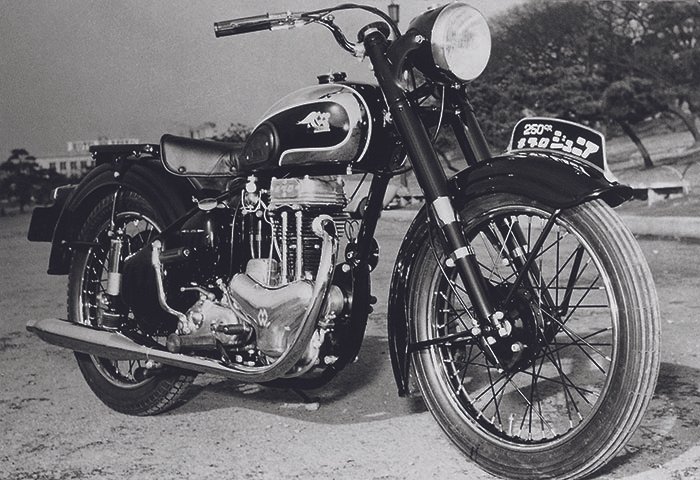
Kawasaki motorcycles are manufactured by Kawasaki Motors, Ltd., a wholly owned subsidiary of Kawasaki Heavy Industries, Ltd. (KHI). As of October 2021, the motorcycle and engine business operates as its own legal entity after KHI spun it off to give the division faster decision-making and more direct market focus (Powersports Business, 2020). KHI — the parent company — remains the majority shareholder.
KHI itself is a publicly traded Japanese conglomerate listed on the Tokyo Stock Exchange (ticker: 7012.T). Its largest single institutional shareholder is The Master Trust Bank of Japan, Ltd. at 16.4%, with the remaining float spread across institutional investors, Japanese trust banks, foreign funds, and retail shareholders (MatrixBCG, 2025). KHI also operates in aerospace, energy systems, rolling stock, and shipbuilding — Kawasaki’s “Jet Ski” watercraft, which originated there, has become a generic trademark for the entire personal watercraft category worldwide.
In November 2024, KHI announced a strategic alliance with ITOCHU Corporation, selling 20% of Kawasaki Motors to the trading giant. The stated goal was to strengthen Kawasaki Motors’ North American operations and introduce direct financial services for buyers (Kawasaki Heavy Industries, 2024). Kawasaki Motors Corp., U.S.A. (KMC) handles U.S. marketing and distribution through a network of approximately 1,100 independent retailers (Kawasaki Motors Corp. U.S.A., 2020).
KHI’s overall revenue for the fiscal year ending March 31, 2025 hit ¥2.13 trillion — a 15.1% increase year-over-year — with aerospace systems contributing significantly to the recovery (pestel-analysis.com, 2025). The motorcycle division’s separation from the parent’s heavier industrial business was designed precisely to let KHI focus on defense, hydrogen, and aerospace while giving Kawasaki Motors the speed to respond to the powersports market on its own terms.
From Shipyard to Superbike: The Origins of Kawasaki

Kawasaki Heavy Industries started with ships, not motorcycles. In 1878, Shōzō Kawasaki — a merchant who’d lost a cargo business when his ships sank and kept going anyway — opened the Kawasaki Tsukiji Shipyard in Tokyo. He’d observed that Western vessels were faster and more capable than their Japanese counterparts and set out to close the gap (SlashGear, 2025). By 1896, the operation had grown enough to formally incorporate as Kawasaki Dockyard Co., Ltd. in Kobe.
The company diversified steadily. Locomotive production started in 1911. An aircraft division launched in 1918. By World War II, Kawasaki was manufacturing combat aircraft like the Ki-61 fighter. The company name became Kawasaki Heavy Industries, Ltd. in 1939, reflecting how far it had traveled from its shipbuilding origins (Britannica, 1998).
The motorcycle story begins in 1949, when Kawasaki Aircraft engineers started developing a small engine. By 1953, mass production had started on an air-cooled 148cc OHV four-stroke single putting out 4 horsepower (Kawasaki Motors, Ltd., official history). In 1954, the first complete Kawasaki motorcycle rolled out under the Meihatsu name, a subsidiary brand of Kawasaki Aircraft.
The Meguro Merger and Kawasaki Motorcycle Co., Ltd.
Kawasaki didn’t build its motorcycle operation from scratch — it bought a struggling competitor and absorbed its knowledge. Meguro Manufacturing Company had been producing bikes since 1935, and its designs included copies of BSA’s 500cc vertical twin. Kawasaki had been in partnership with Meguro before buying the company outright in 1960 and completing a formal merger in 1963 to form Kawasaki Motorcycle Co., Ltd. (Kawasaki Motors Wikipedia, 2026).
The first bike to carry the Kawasaki name was the B8 in 1962: a 125cc single-cylinder two-stroke. Straightforward enough. But the engineers who came out of the aircraft division brought a different mindset to engine development — high RPM, tight tolerances, performance first. That culture would define every significant Kawasaki that followed.
By 1963, the company had also produced the B8M, an early motocross variant. In 1967, the A1 arrived as the first 250cc street bike with an air-cooled two-stroke parallel twin. By 1969, American demand for power had pushed Kawasaki to release the H1 Mach III — a 500cc two-stroke triple that became infamous for its light chassis and ferocious acceleration (UTI, 2026).
| Year | Model | Significance |
|---|---|---|
| 1962 | B8 | First Kawasaki-branded motorcycle, 125cc two-stroke |
| 1969 | H1 Mach III | 500cc two-stroke triple; terrifyingly fast for its era |
| 1973 | Z1 (900 Super Four) | DOHC inline-four; set 46 world and AMA speed records at Daytona |
| 1984 | GPZ900R (Ninja 900) | World’s first 16-valve liquid-cooled inline-four; 151 mph top speed |
| 1992 | ZZR-1100 | Held world’s fastest production motorcycle title for years |
| 2015 | Ninja H2 / H2R | First factory-supercharged production motorcycles; no rival has followed |
The Z1 and the Making of a Performance Brand
The 1973 Z1 900 — also called the 900 Super Four — is the bike that locked in Kawasaki’s identity as a performance manufacturer. Honda had already launched the CB750 in 1969, shifting the industry toward four-cylinder power and proving mass-market demand existed. Kawasaki responded with something more extreme: a DOHC inline-four with 903cc, dual overhead camshafts, and 82 SAE horsepower at 8,500 rpm (Kawasaki Z 50th Anniversary, official). At Daytona, the Z1 shattered the 24-hour world speed record and set 45 other world and AMA records (Kawasaki Motors Corp. U.S.A., heritage page).
The Z1 wasn’t just quick — it was reliable and well-engineered enough to stay competitive through the mid-1970s with minimal updates. That combination of outright performance and mechanical durability set a standard that Kawasaki riders still talk about.
By 1984, the next major leap arrived in the form of the GPZ900R. Developed in secret over six years, it was the world’s first production motorcycle with a 16-valve liquid-cooled inline-four engine (Kawasaki GPZ900R, Wikipedia, 2026). Its 908cc motor put out 108 horsepower and pushed the bike to 151 mph, making it the fastest production motorcycle on sale at the time (AutoEvolution, 2023). A US Kawasaki executive named it the Ninja 900, borrowing the name from his sailboat — and the Ninja brand was born. Tom Cruise riding it in Top Gun didn’t hurt visibility either.
Where Kawasaki Motorcycles Are Built Today
Kawasaki builds motorcycles in three countries. Japan remains the home of high-performance and export models, with engine production rooted in the expertise built since 1953. The Lincoln, Nebraska facility opened in 1974 as the American Kawasaki Motors Corporation — a 335-acre plant built to reduce shipping costs and get American-assembled bikes into American hands (SlashGear, 2025). The first US-assembled Kawasaki, a KZ400, rolled out of Lincoln on January 22, 1975 (Kawasaki Motors Corp. U.S.A., heritage page). Kawasaki also operates a manufacturing plant in Rayong, Thailand, where a portion of its global lineup is produced.
For US buyers, the practical implication is that some models are American-built, while others are imported from Japan or Thailand depending on model and trim. Regardless of plant, Kawasaki’s quality standards apply across all three facilities — the engineering specs originate in Japan and don’t change by geography.
Kawasaki Motors Corp., U.S.A. (KMC) distributes through approximately 1,100 independent retailers. There’s no factory-direct channel. OEM parts come from the dealer network; for aftermarket, brands like DID and RK cover chains, while the Ninja lineup remains one of the most supported platforms for bolt-on exhaust from makers like Akrapovic and Yoshimura.
The Lincoln plant is also notable beyond just motorcycle assembly. It’s where Kawasaki has produced its Jet Ski watercraft for the North American market since the mid-1970s, and where the “Jet Ski” trademark was registered. The facility represents one of the longer-running Japanese motorcycle manufacturing presences on American soil, predating most of its competitors’ US manufacturing investments.
Frequently Asked Questions About Kawasaki Motorcycles
Who owns Kawasaki motorcycles?
Kawasaki motorcycles are owned and manufactured by Kawasaki Motors, Ltd., a wholly owned subsidiary of Kawasaki Heavy Industries, Ltd. (KHI). In 2024, KHI sold a 20% stake in Kawasaki Motors to ITOCHU Corporation, but KHI retains majority ownership. Kawasaki Heavy Industries is a publicly traded company on the Tokyo Stock Exchange (ticker: 7012.T).
When did Kawasaki start making motorcycles?
Kawasaki began producing motorcycle engines in 1953, leveraging technology from its aircraft engine division. The first complete motorcycle under the Kawasaki name came in 1962 with the B8, a 125cc two-stroke single. The formal motorcycle company, Kawasaki Motorcycle Co., Ltd., was established in 1963 following the merger with Meguro Manufacturing Company.
Where are Kawasaki motorcycles manufactured?
Kawasaki builds motorcycles in Japan, at its Lincoln, Nebraska plant in the United States (opened 1974), and at a facility in Rayong, Thailand. Which plant builds a specific model depends on the model line and production allocation. High-performance export models are often Japan-built.
What is the relationship between Kawasaki motorcycles and Kawasaki Heavy Industries?
Kawasaki Heavy Industries (KHI) is the parent conglomerate that also builds ships, aircraft, locomotives, and industrial robots. Kawasaki Motors, Ltd. is the subsidiary that handles all consumer products including motorcycles, ATVs, and Jet Ski watercraft. The motorcycle division operated internally within KHI until October 1, 2021, when it was formally spun off as a separate company — still wholly owned by KHI, but with its own management structure and greater operational independence.
What were the most important Kawasaki motorcycles in history?
Several Kawasaki models changed the industry. The 1969 H1 Mach III 500cc two-stroke established Kawasaki’s performance reputation in the US market. The 1973 Z1 900 set dozens of world records and defined the inline-four superbike format. The 1984 GPZ900R introduced 16-valve liquid-cooled technology and the Ninja name. The 2015 Ninja H2 became the world’s first factory-supercharged production motorcycle, a title no other manufacturer has yet matched.