Kawasaki KLE500 Top Speed, 0-60 Time & Specs Review
TL;DR
- The 2026 Kawasaki KLE500 uses a 451cc liquid-cooled parallel twin making a claimed 51 horsepower and 31.7 lb-ft of torque.
- Independent riders report a real-world top speed in the 100-105 mph range, with one GPS-verified test showing the bike out-running a CFMOTO 450MT.
- No third party has published an official 0-60 mph time for the KLE500 yet; treat any number you see online as an estimate until a magazine runs the bike on a proper test strip.
- Curb weight lands around 428 lbs fully fueled, and MSRP starts at $6,599 for the base ABS model.
- This isn’t the old Euro-market KLE500 from the 1990s. Kawasaki revived the nameplate for 2026 on a completely different platform built off the Ninja 500’s engine.
Is the 2026 KLE500 the Same Bike as the Old KLE500?
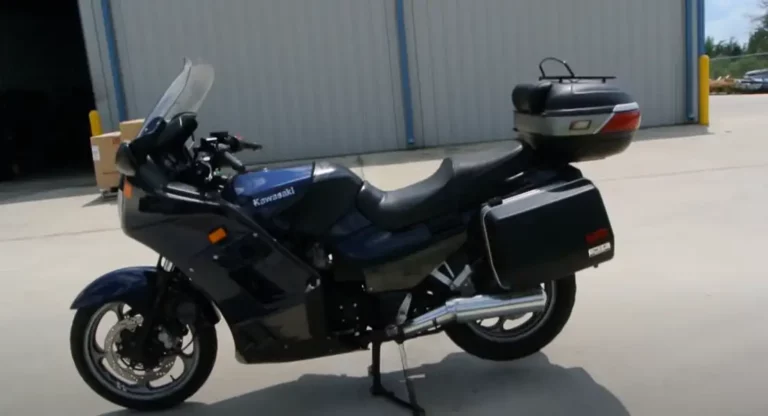
No. The name is recycled, but the motorcycle underneath it isn’t. The original KLE500 ran from 1991 to 2007 overseas (it never officially sold in the US) with a 498cc twin borrowed from the old EX500. Kawasaki killed it off and replaced it with the Versys 650.
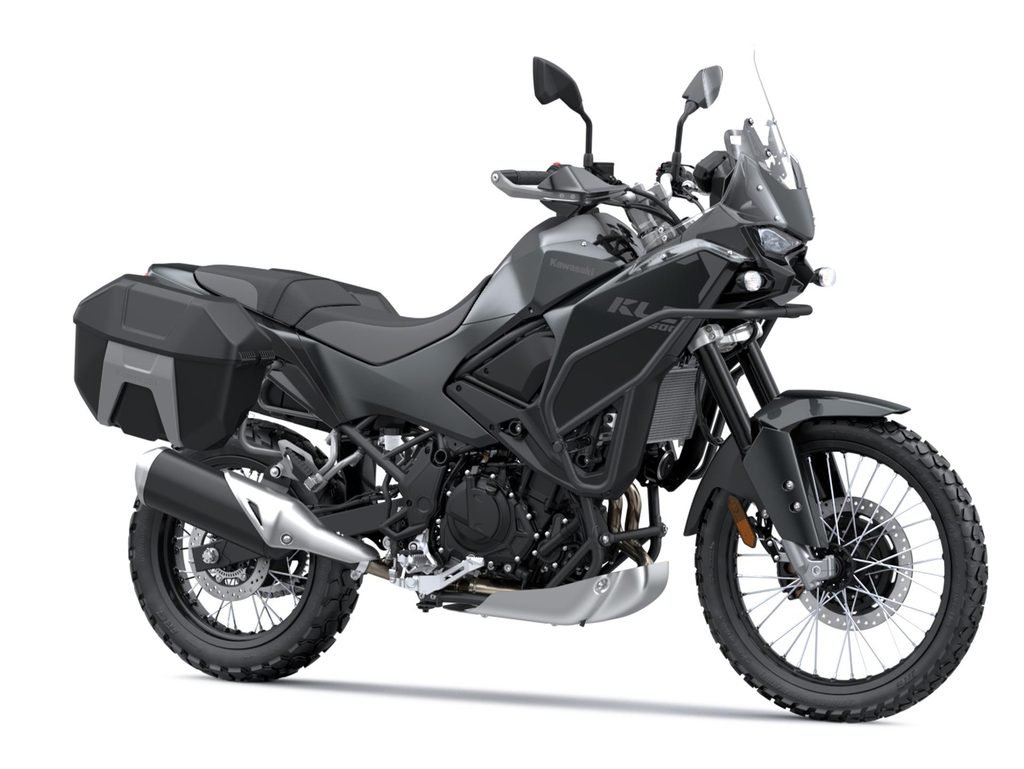
The 2026 KLE500 is a ground-up new machine. It shares its 451cc parallel twin with the Ninja 500, Z500, and Eliminator, and it’s the first KLE-badged bike Kawasaki has ever sold new in US dealerships. If you’re shopping for a used bike from the 1990s or 2000s with “KLE500” stamped on the tank, that’s a different animal entirely, and this article covers the current model.
How Fast Is the Kawasaki KLE500’s Top Speed?
The KLE500’s top speed sits somewhere around 100-105 mph in real-world testing, though no major print outlet has published a controlled, radar-verified number yet. Cycle News rode the bike to 80-85 mph on a public highway during a 350-mile press ride and reported the bike still had speed in reserve at that point (Cycle News, 2026).
One independent YouTube tester ran a GPS speed test and claimed the KLE500 edged out a CFMOTO 450MT, a rival that typically tops out in the high 90s to low 100s mph. That result lines up with what you’d expect from a 51-horsepower, 428-pound adventure bike wearing knobby-adjacent dual-sport tires, which create more aerodynamic drag than a naked or sport bike running the same motor.
For context, the Ninja 500 (same engine, lighter weight, sportier fairing) has been documented hitting speeds in the low 100s mph in owner GPS tests. The KLE500 carries roughly 50-60 lbs more weight and sits the rider more upright into the wind, both of which cost a few mph off the top end compared to its street-going sibling.
Until a publication like Cycle World or MCN runs a proper GPS top-speed test on a closed course, treat any number over 105 mph with skepticism. The engine’s 10,000 rpm redline and gearing simply don’t support sportbike-territory speeds.
What’s the 0-60 Time on the KLE500?
There’s no independently verified 0-60 mph time for the KLE500 as of this writing. If you see a specific number, such as “5.2 seconds,” attributed to the KLE500 online, it’s almost certainly an estimate or a figure borrowed from a different bike with a similar engine.
Given the shared 451cc platform, the KLE500’s acceleration should land in a similar neighborhood to the Ninja 500 and Z500, both of which have been estimated in the mid-to-high 4-second range to 60 mph by various outlets, though even those figures come from limited sample testing rather than controlled strip runs.
The KLE500 will be a touch slower than its naked and sport siblings to 60 mph. It carries more weight, taller gearing suited to trail use, and a more upright, less aerodynamic riding position. None of that matters much in practice since this bike isn’t built to win stoplight drags. It’s built to get you down a fire road and back home on the highway without drama.
What Engine and Power Does the KLE500 Make?
The KLE500 runs a 451cc, liquid-cooled, DOHC parallel twin with 180-degree crank timing, the same core engine architecture found in the Ninja 500, Z500, and Eliminator. Kawasaki claims 51 horsepower at 10,000 rpm and 31.7 lb-ft of torque at 7,500 rpm for the KLE500.
Kawasaki didn’t just drop the street engine straight in. Engineers fitted a larger airbox, a new downdraft intake, and revised ECU mapping aimed at pulling torque lower in the rev range for off-road use, along with an updated 46T/15T final drive ratio. The bike also gets a slip-and-assist clutch, which keeps aggressive downshifts from hopping the rear wheel on loose surfaces.
Reviewers note the power still comes on strongest in the upper half of the rev range, and vibration through the bars, pegs, and tank becomes noticeable above 6,000 rpm, or roughly 65 mph in top gear. That’s a fair trade-off for an engine platform that’s proven reliable in three other Kawasaki models already on the road.
Kawasaki KLE500 Full Spec Sheet
| Spec | 2026 Kawasaki KLE500 |
|---|---|
| Engine | 451cc liquid-cooled DOHC parallel twin, 180-degree crank |
| Bore x stroke | 70.0mm x 58.6mm |
| Horsepower | 51 hp @ 10,000 rpm (claimed) |
| Torque | 31.7 lb-ft @ 7,500 rpm (claimed) |
| Transmission | 6-speed, slip-and-assist clutch, chain final drive |
| Frame | Steel trellis, engine as stressed member |
| Front suspension | 43mm KYB inverted fork, 8.3 in travel |
| Rear suspension | Uni-Trak linkage, preload adjustable, 7.7 in travel |
| Front brake | Single 300mm disc, Nissin dual-piston caliper |
| Rear brake | Single 230mm disc, Nissin dual-piston caliper |
| Wheels | 21-in front / 17-in rear, wire-spoke |
| Seat height | 34.3 in (871mm) |
| Ground clearance | 7.3 in |
| Wheelbase | 61.2 in |
| Fuel capacity | 4.2 gal |
| Curb weight | 428 lbs (fully fueled) |
| MSRP (base ABS) | $6,599 |
| MSRP (SE trim) | $7,499 |
Kawasaki has revised some figures since the initial EICMA reveal, so always cross-check the current model year on Kawasaki’s own site before buying.
Why Did Kawasaki Bring Back the KLE Name?
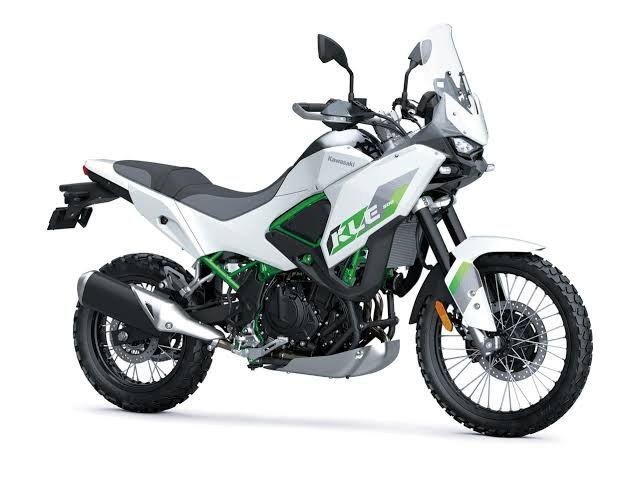
Kawasaki brought back the KLE badge to fill a gap in its own lineup between the single-cylinder KLX/Versys-X 300 and the big-bore Versys 650 and 1000. There wasn’t a twin-cylinder, mid-weight adventure bike in the US catalog that matched the affordable, do-it-all formula the original KLE500 was known for overseas.
The timing also lines up with a boom in the 400-500cc adventure segment. Riders wanting a light, approachable ADV bike now have options from Royal Enfield’s Himalayan 452, CFMOTO’s 450MT, and others crowding this price bracket. Kawasaki already had the 451cc engine sitting in three other models, so building an adventure variant around it was a relatively low-cost way to compete.
The KLE500 name also carries genuine history. The original ran in the 1992 Paris-to-Cape Town rally, and it built a loyal following in Europe over its 16-year production run. Reviving a recognizable name gives Kawasaki instant credibility in a segment where budget-ADV newcomers often lack any track record at all.
Is the KLE500 Good for Highway Riding?
The KLE500 handles highway speeds fine up to around 75 mph, where vibration through the seat, tank, and bars starts creeping in and gets progressively worse the faster you go (ADV Pulse, 2026). Wind protection from the stock screen is solid for the class, though some testers noted helmet buffeting above 60 mph on both the standard and taller SE screen.
Cruising at 65-70 mph puts the engine around 6,000 rpm, right where that buzz starts to show up. It’s not unbearable, and several reviewers compared it to the vibration level of Kawasaki’s own KLR650 and KLX300 single-cylinder bikes at similar speeds. If you’re planning long interstate stretches at 80 mph, expect some numbness in your hands and feet by the end of a tank of gas.
For most owners doing a mix of commuting, weekend backroads, and occasional highway hops to a trailhead, the KLE500 does the job without complaint. It’s not the smoothest bike in its class at sustained high speed, but it’s far from the worst either.
Frequently Asked Questions
What is the top speed of the Kawasaki KLE500?
Real-world testing puts the KLE500’s top speed around 100-105 mph, though no major outlet has published a controlled, radar-verified figure. One press ride reported comfortably hitting 80-85 mph on the highway with speed still in reserve.
Does the Kawasaki KLE500 have a 0-60 time?
No independently verified 0-60 mph time exists for the KLE500 as of this writing. Given its shared engine with the Ninja 500 and Z500, expect performance in a similar range to those models, likely in the mid-to-high 4-second range, but treat any specific number you find online as an unverified estimate.
How much horsepower does the KLE500 have?
Kawasaki claims 51 horsepower at 10,000 rpm and 31.7 lb-ft of torque at 7,500 rpm from the 451cc parallel twin, which is the same core engine used in the Ninja 500, Z500, and Eliminator.
Is the new KLE500 the same as the old 1990s KLE500?
No. The 2026 KLE500 is an entirely new motorcycle that shares only a name and a general concept (twin-cylinder, 21-inch front wheel adventure bike) with the original 1991-2007 model. The engine, frame, and every major component are different.
How much does the Kawasaki KLE500 cost?
The base ABS model starts at $6,599, and the upgraded SE trim, which adds a taller windscreen, handguards, a bigger skid plate, and a color TFT display, runs $7,499.
Is the KLE500 good for beginners?
Yes, most reviewers point to the KLE500 as a solid entry point into adventure riding thanks to its manageable weight, forgiving power delivery, and accessible seat height compared to bigger ADV bikes like the Ténéré 700 or DesertX.