Kawasaki Ninja ZX-10RR Top Speed, 0-60 Time & Specs Review
TL;DR
- The Kawasaki Ninja ZX-10RR is electronically limited to roughly 186-189 mph, the same gentleman’s-agreement cap that governs every modern liter-class superbike.
- Expect a 0-60 mph time in the high 2-second range and a quarter mile around 10 seconds flat, in line with the closely related standard ZX-10R.
- Kawasaki claims 204 horsepower at 14,000 rpm and 82.5 lb-ft of torque at 11,700 rpm from the 998cc inline-four.
- In stock trim the RR only makes a couple horsepower more than the base ZX-10R; the real gap opens up once you bolt on Kawasaki’s race kit ECU and full exhaust.
- 2024 MSRP was $30,499, roughly $12,800 above the standard ZX-10R KRT Edition, for titanium rods, DLC-coated valvetrain parts, and a chassis built to homologation rules.
How Fast Is the Kawasaki ZX-10RR’s Top Speed?
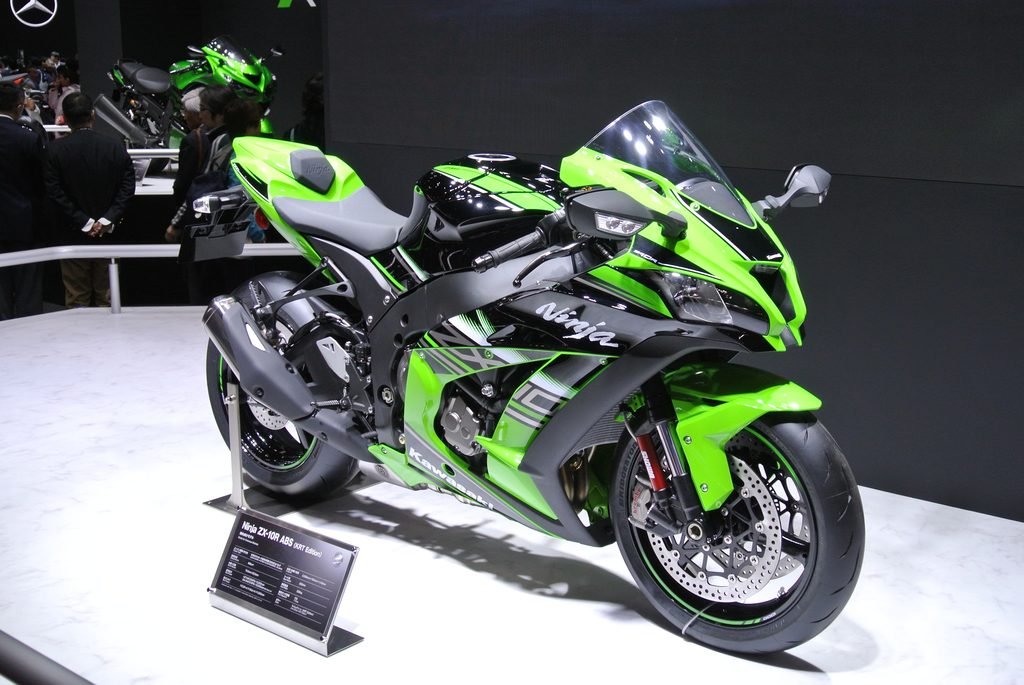
The ZX-10RR tops out around 186-189 mph, capped by the voluntary speed-limiting agreement that Japanese and European manufacturers have followed for decades. That’s not a chassis or engine limitation. It’s a rev-limiter cutoff programmed into the ECU.
Kawasaki’s own dyno sheet shows the engine still pulling hard well past that mark, and MotoStatz’s instrumented testing of the closely related standard ZX-10R recorded a top speed of 188.9 mph before the limiter stepped in (MotoStatz, 2026).
The RR shares the same basic engine architecture and limiter logic, so real-world top speed lands in the same window. Strip the limiter with a race kit ECU (track-only, not street legal) and you’re looking at genuine 195-plus mph potential given the extra horsepower on tap.
What’s the ZX-10RR’s 0-60 and Quarter Mile Time?
Figure on a 0-60 mph time in the high 2-second range, with a quarter mile around 10 seconds flat at well over 150 mph. Instrumented testing on the standard ZX-10R clocked 2.91 seconds to 60 mph and 9.98 seconds at 151 mph through the quarter.
The RR should match or very slightly better those numbers in the hands of an experienced rider. Its titanium connecting rods and lighter pistons cut reciprocating mass, which helps the engine spin up faster, but the stock RR only carries a couple horsepower more than the standard bike, so the drag-strip gap is smaller than the price tag suggests.
Getting anywhere near these numbers on the street takes a proper launch, a clutch drop right at the traction limit, and a lot of practice. This isn’t a bike that rewards a ham-fisted first attempt off the line.
Kawasaki ZX-10RR Specifications
| Spec | Kawasaki ZX-10RR |
|---|---|
| Engine | 998cc liquid-cooled inline-four, DOHC, 16-valve |
| Bore x stroke | 76.0mm x 55.0mm |
| Compression ratio | 13.0:1 |
| Claimed horsepower | 204 hp @ 14,000 rpm |
| Claimed torque | 82.5 lb-ft @ 11,700 rpm |
| Transmission | 6-speed, chain final drive |
| Front suspension | 43mm KYB inverted fork, fully adjustable |
| Rear suspension | KYB shock, fully adjustable |
| Front brakes | Brembo 4-piston Monoblock, dual 330mm discs, ABS |
| Seat height | 32.9 in |
| Wet weight | 456 lb |
| Fuel capacity | 4.5 gal |
| 2024 MSRP | $30,499 |
How the ZX-10RR’s Engine Makes Its Power
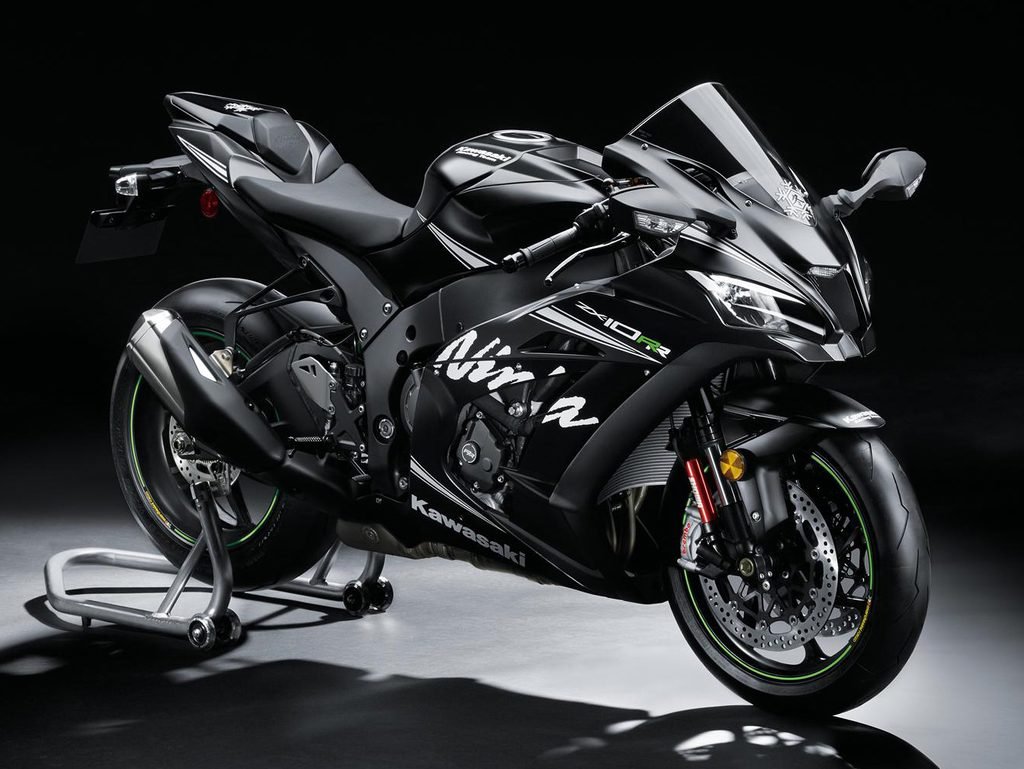
Kawasaki claims 204 horsepower at 14,000 rpm and 82.5 lb-ft of torque at 11,700 rpm from the 998cc inline-four (Ultimate Specs, 2023).
That engine shares its basic architecture with the standard ZX-10R, but with a modified cylinder head that clears higher-lift cams, plus DLC-coated tappets and titanium connecting rods to cut friction and reciprocating weight (BikeWale, 2018).
Kawasaki’s Variable Air Intake system, introduced for 2023, shortens the intake funnels by 35mm at lower rpm for midrange punch, then extends them for top-end pull (Cycle World, 2024).
Peak power arrives at a lofty 14,000 rpm, which means you have to actually ride the bike into the upper third of the tachometer to get the payoff. Short-shift it around town and you’re leaving most of what you paid for on the table.
That high-rpm powerband is exactly why this bike exists as a homologation special: World Superbike rules cap what teams can change from the production spec, so Kawasaki builds the expensive internals in from the factory instead.
Chassis, Suspension, and Brakes
The ZX-10RR runs a cast-aluminum twin-spar frame with fully adjustable KYB Balance-Free suspension front and rear, the same high-end damping hardware used on Kawasaki’s WorldSBK effort. Brembo 4-piston Monoblock calipers grip dual 330mm front discs, backed by cornering ABS as part of the standard five-axis IMU electronics suite.
At a 25.0-degree rake and 1,450mm wheelbase, the geometry is tuned for quick direction changes over long-haul stability, which is exactly what a 190-something-mph track weapon needs. Seat height sits at 32.9 inches and wet weight comes in around 456 pounds, both essentially identical to the standard ZX-10R. None of the RR-specific upgrades touch chassis dimensions.
Is the ZX-10RR Worth the Extra Money Over the ZX-10R?
Only if you’re racing it or building toward a full track kit. In stock street trim, the RR makes roughly the same power as the standard ZX-10R, so you’re paying a premium of well over $10,000 for titanium rods, forged wheels, and a chassis that’s homologated for WorldSBK competition rather than for a meaningful bump in daily performance.
The upgrades matter enormously once you add Kawasaki’s race kit ECU, full exhaust, and tuning, at which point the RR pulls ahead of what a standard ZX-10R can be built into.
For a street rider who just wants the fastest lap times on a Sunday trackday without a race license, the standard ZX-10R KRT Edition gets you 95 percent of the experience for thousands less.
Frequently Asked Questions About the Kawasaki ZX-10RR
What is the top speed of the Kawasaki ZX-10RR?
Around 186-189 mph, electronically limited like every current liter-class superbike sold in the US.
How fast is the ZX-10RR from 0-60 mph?
In the high 2-second range, based on instrumented testing of the closely related standard ZX-10R at 2.91 seconds.
How much horsepower does the ZX-10RR make?
Kawasaki claims 204 horsepower at 14,000 rpm from the 998cc inline-four.
What’s the real difference between the ZX-10R and ZX-10RR?
The RR adds titanium connecting rods, DLC-coated valvetrain parts, and forged wheels for homologation purposes. In stock trim it only makes a couple more horsepower than the standard bike.
How much does the Kawasaki ZX-10RR cost?
2024 MSRP was $30,499, roughly $12,800 more than the standard ZX-10R KRT Edition.