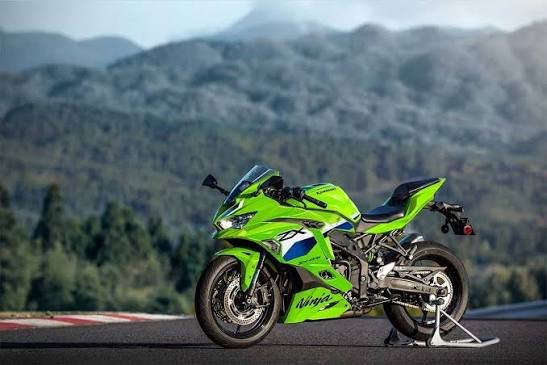
Kawasaki Ninja 300 Top Speed, 0-60 & Specs (2026)
TL;DR
- The Kawasaki Ninja 300 tops out around 110 mph and runs 0-60 mph in roughly 5.2 seconds.
- Its 296cc parallel-twin makes a claimed 38.9 hp at 11,000 rpm and 19.3 lb-ft of torque at 10,000 rpm.
- Curb weight is 388.1 lb with a 30.9-inch seat height, making it approachable for shorter and newer riders.
- 2026 MSRP is $4,999 plus a $650 destination charge, keeping it near the top of the budget-sportbike class.
- It’s built for new riders learning throttle control and cornering, not for chasing liter-bike numbers on a back road.
How Fast Is the Kawasaki Ninja 300?
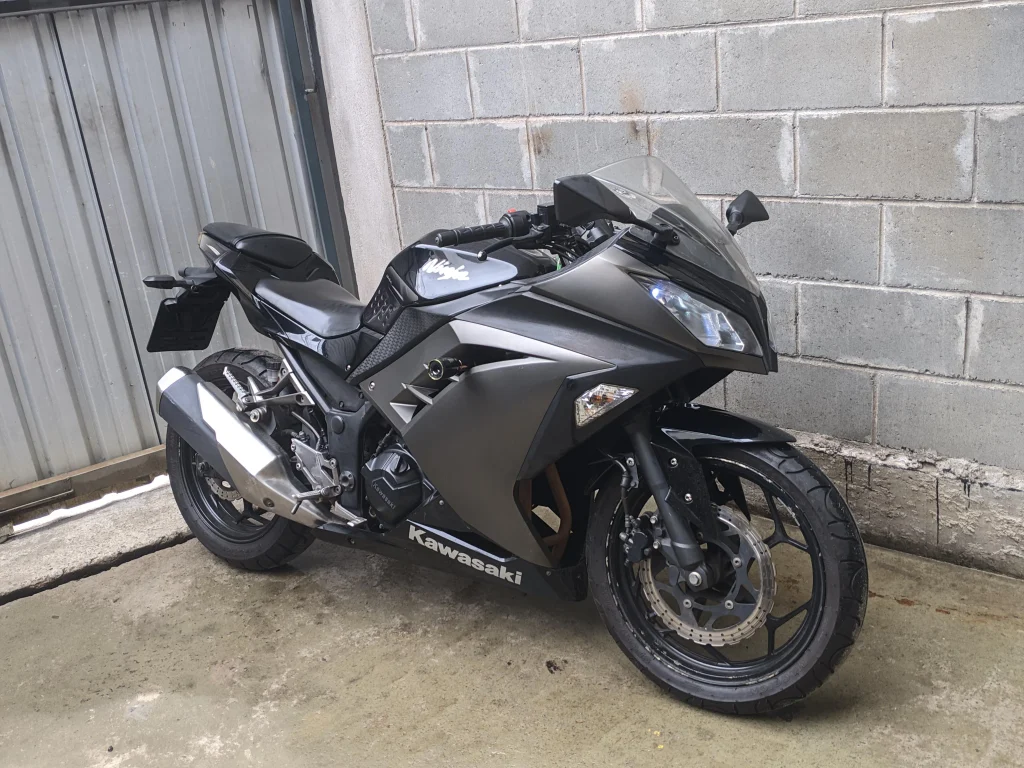
The Ninja 300 tops out at approximately 110 mph and covers 0-60 mph in about 5.2 seconds, based on independent testing (MotoStatz, 2023). Kawasaki doesn’t publish an official top speed or 0-60 figure, so these numbers come from third-party instrumented runs rather than a factory claim. The quarter mile lands around 14.1 seconds using the same test data.
Those figures put the Ninja 300 solidly ahead of most economy cars off the line, but well behind anything in the 400cc-plus sportbike class. Hitting the quoted 0-60 time also takes a clean launch: rev to around 9,000 rpm, slip the clutch smoothly, and bang through the gears without hesitating. Most new riders will see 7-8 seconds until that technique clicks.
What Engine Does the Ninja 300 Use?
The Ninja 300 runs a 296cc liquid-cooled parallel-twin with DOHC and eight valves, fed by digital fuel injection through 32mm throttle bodies (Kawasaki, 2026). That’s the same basic architecture the bike has used since it replaced the Ninja 250R.
Peak output is 38.9 hp at 11,000 rpm and 19.3 lb-ft of torque at 10,000 rpm. Both numbers arrive high in the rev range, so the bike wants to be revved. Short-shifting at 5,000 rpm on a Ninja 300 feels sluggish; the engine actually wakes up past 8,000 rpm and pulls hardest right before the 13,000 rpm redline.
Power gets to the rear wheel through a 6-speed gearbox with an assist and slipper clutch and a sealed final chain. The slipper function matters more than it sounds. It stops the rear wheel from hopping or locking during aggressive downshifts, which is a real concern for a new rider braking hard into a corner for the first time.
Regular maintenance is simple by sportbike standards. Valve clearance checks come due roughly every 7,500 miles, and the parallel-twin layout means both cylinders are easy to reach without pulling the tank or fairings.
That interval is shorter than a lot of bigger sportbikes, but the twin has only two cylinders to check, so the job doesn’t take long. The sealed chain needs the usual lube and tension checks every 500-600 miles of riding.
Kawasaki Ninja 300 Full Specs
| Spec | Detail |
|---|---|
| Engine | 296cc liquid-cooled parallel-twin, DOHC |
| Horsepower | 38.9 hp @ 11,000 rpm |
| Torque | 19.3 lb-ft @ 10,000 rpm |
| Transmission | 6-speed, assist and slipper clutch |
| Top speed | ~110 mph (est.) |
| 0-60 mph | ~5.2 sec (est.) |
| Front suspension | 37mm telescopic fork, 4.7 in travel |
| Rear suspension | Uni-Trak, gas-charged shock, adjustable preload, 5.2 in travel |
| Front brake | Single 290mm disc, dual-piston caliper, ABS |
| Rear brake | Single 220mm disc, dual-piston caliper, ABS |
| Seat height | 30.9 in |
| Curb weight | 388.1 lb |
| Fuel capacity | 4.5 gal |
| MSRP (2026) | $4,999 + $650 destination |
Top speed and 0-60 figures are independent estimates, not factory claims.
How Does the Ninja 300 Handle on the Road?
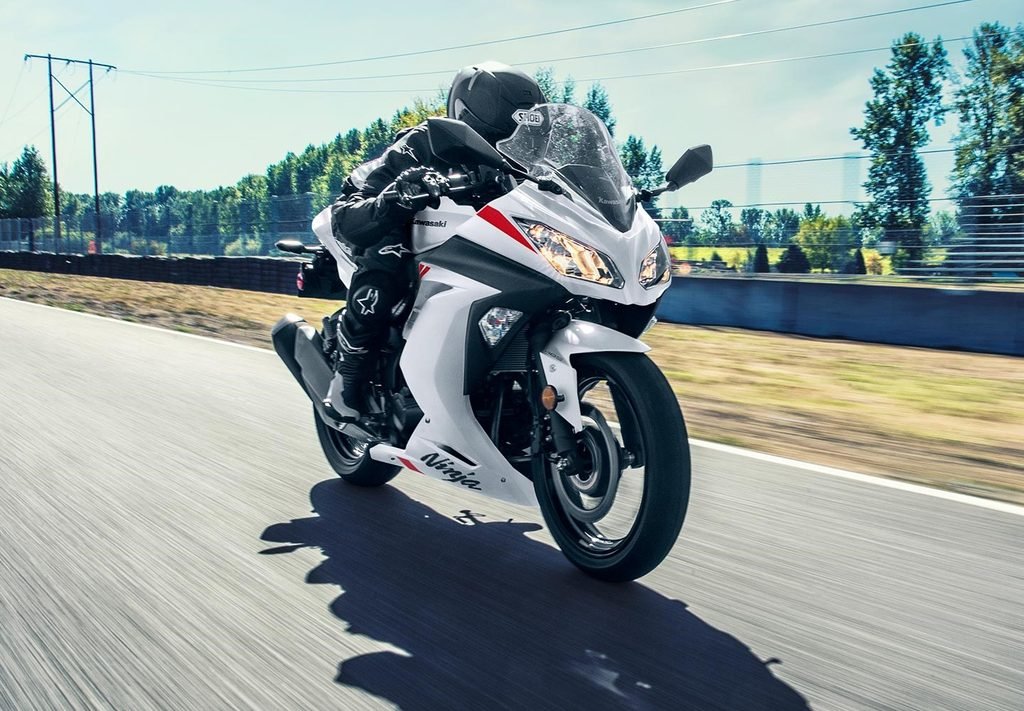
The Ninja 300 handles like a bike built to teach cornering fundamentals, not to hide mistakes. Its diamond steel frame and modest 388.1 lb curb weight make it easy to flick between lean angles, and the 27-degree rake keeps steering input light at parking-lot speeds.
Suspension travel is 4.7 inches up front and 5.2 inches out back, tuned soft enough to soak up broken pavement without wallowing through a sweeper. It’s not adjustable beyond rear preload, so aggressive riders will eventually feel the fork dive under hard braking. That’s a fair tradeoff for a bike built to be forgiving.
Braking comes from a single 290mm front disc and 220mm rear disc, both with dual-piston calipers and standard ABS. Bite is progressive rather than grabby, which suits a rider still building feel for the front lever. Stopping distances from 60-0 mph have run between roughly 125 and 135 feet on the ABS model in independent testing.
Who Should Buy a Kawasaki Ninja 300?
The Ninja 300 is best for new riders who want sportbike styling and real cornering clearance without the power that gets rookies into trouble. The 30.9-inch seat height and light overall weight also make it a strong pick for shorter riders who felt cramped on a 400cc-plus sportbike.
It’s a poor fit for anyone who already has a season or two of riding experience and wants room to grow into more power. Commuters covering long highway stretches will also find the small tank and upright-but-still-sporty position tiring past 45 minutes at a stretch.
At $4,999 MSRP plus destination, the Ninja 300 sits close to its direct rivals in price, but its resale value and dealer network support in the US remain strong selling points for a first bike.
Frequently Asked Questions
What is the top speed of the Kawasaki Ninja 300?
Independent testing puts the Ninja 300’s top speed at approximately 110 mph. Kawasaki does not publish an official top speed figure for the model.
How fast does the Ninja 300 go from 0-60?
The Ninja 300 runs 0-60 mph in roughly 5.2 seconds with a skilled rider working the clutch and shifting cleanly. New riders will typically see times in the 7-8 second range until their launch technique improves.
How much horsepower does the Ninja 300 have?
The 2026 Ninja 300 makes a claimed 38.9 hp at 11,000 rpm and 19.3 lb-ft of torque at 10,000 rpm from its 296cc parallel-twin.
Is the Kawasaki Ninja 300 good for beginners?
Yes. Its light weight, low seat height, forgiving power delivery, and standard ABS make it one of the more approachable sportbikes for new riders learning throttle and brake control.
What is the 2026 Kawasaki Ninja 300 price?
The 2026 Ninja 300 ABS carries an MSRP of $4,999 plus a $650 destination charge, for a total before tax, title, and dealer fees of $5,649.