Moto Guzzi Motorcycles Years to Avoid
TL;DR
- The most documented Moto Guzzi years to avoid are the 2003-2005 California 1100 (hydraulic tappet recall), the 2008-2012 Griso/Stelvio/Norge 8V (flat tappet cam failure), and the 2016-2017 V7 III (ABS brake hose recall).
- The 2020 V85 TT launched with two simultaneous NHTSA recalls covering the rear drive seal and footrest pins before many units had even left dealer inventory.
- Early 2023 V100 Mandello (non-S trim, built before mid-July 2023) had a factory assembly defect in the Kayaba rear shock absorber that could cause the shock to fracture while riding.
- Recalled models are not necessarily bikes to skip outright — a verified recall completion and a VIN check with a Moto Guzzi dealer clears most of these issues.
- For used buyers, the V7 (2021+), V85 TT (2021+), and V100 Mandello S are the safest picks in the current lineup.
Why Moto Guzzi Has a Short List of Problem Years
Moto Guzzi is a 100-year-old Italian brand with a long reputation for durable, shaft-drive-equipped motorcycles that rack up serious miles when maintained properly. That said, no manufacturer ships a spotless history, and Guzzi’s catalog has a handful of specific model years where real problems — documented through NHTSA recalls, class action investigations, and thousands of owner forum posts — can hurt an uninformed used buyer. None of these issues are brand-wide failures, but they cluster tightly around specific engines and model years. Knowing which ones to check before you hand over a check is the whole job.
Moto Guzzi Years to Avoid: Quick Reference
| Model / Engine | Problem Years | Core Issue | Recall / Action |
|---|---|---|---|
| California 1100 (Stone, EV, Titanium, Aluminium) | 2003-2005 | Hydraulic tappet / camshaft failure | NHTSA recall; dealer camshaft/lifter replacement |
| Griso 1200 8V, Stelvio NTX 1200, Norge 1200 | 2008-2012 | DLC flat tappet delamination; severe cam wear | No formal recall; class action investigation; Piaggio kits available |
| Griso 1200, Norge 1200, Stelvio NTX 1200 | 2012-2013 | Rear suspension connecting rod fracture | NHTSA recall 13V323000; free dealer replacement |
| V7 III (Racer, Stone, Special), V9 Bobber, V9 Roamer | 2016-2017 | ABS brake hose rubs engine; brake fluid leak | NHTSA recall 17V380000; 1,139 units affected |
| V85 TT | 2020 | Rear drive seal oil leak onto tire; footrest pin failure | NHTSA recalls 19V857000 + 19V858000 |
| V100 Mandello, Mandello Aviazione Navale (non-S) | Early 2023 | Kayaba rear shock missing bushings; shock fracture risk | NHTSA recall 23V572; ~260 US units affected |
2003-2005 California 1100: The Hydraulic Tappet Problem
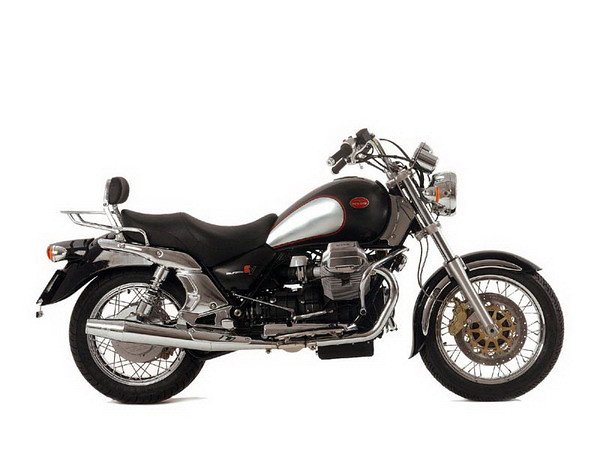
The 2003-2005 California 1100 variants — Stone, EV, EV Touring, Aluminium, and Titanium — shipped with a factory-designed hydraulic tappet system that had a manufacturing flaw in the cam lobe and follower metallurgy. The soft metal surfaces wore at an accelerated rate, leading to noisy valvetrains, loss of compression, and in neglected cases, outright engine damage. Moto Guzzi issued a recall campaign covering these model years, with dealers replacing the camshaft and lifter assembly (motoguzzicalifornia.com, 2018).
If you’re looking at a used California 1100 from this range, run the VIN through a Moto Guzzi dealer before buying. A completed recall is a green light — owners who had the work done properly report these engines running cleanly to well over 60,000 miles. A bike with no recall service history is either a gamble or a negotiating point; price it accordingly.
2008-2012 Griso 8V, Stelvio NTX, and Norge: The Flat Tappet Engine Crisis
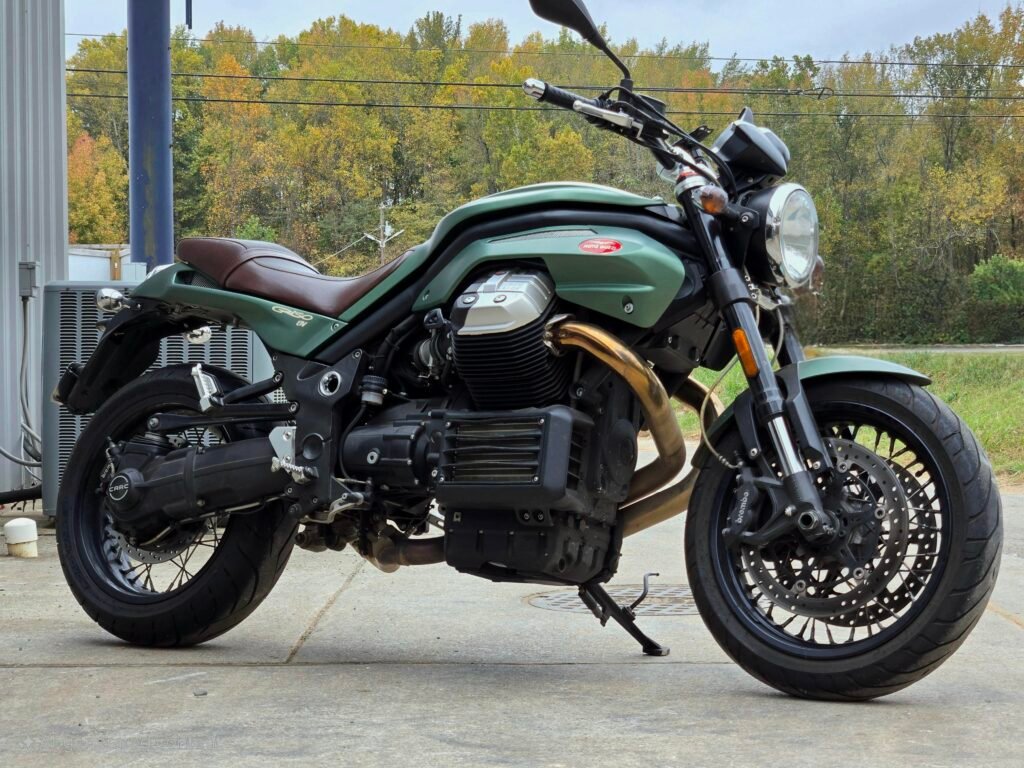
This is the most serious and widespread Moto Guzzi reliability issue on record. The 1200cc 8-valve engine used in the Griso, Stelvio NTX, and Norge from approximately 2008 through mid-2012 used flat tappets coated with diamond-like carbon (DLC). That DLC coating eventually delaminates, destroying the cam lobes and tappet faces rapidly — sometimes within 15,000 miles. Forum documentation across GuzziTech and Moto Guzzi Riders shows cam wear visible at just 1,500 miles in severe cases (GuzziTech Forums, 2022).
Piaggio never issued a formal NHTSA recall for the flat tappet issue, which prompted a class action investigation (ClassAction.org, 2017). The company did release repair kits — but parts and labor ran between $2,000 and $3,000 per bike out of pocket. Piaggio transitioned to roller cam followers starting around March-April 2012, with documented production serial number cutoffs: Stelvio after serial AC12596, Griso after A8-13524, and Norge after AA-12214 (Sun Coast Cycle Sports, sourced from Piaggio production records).
Any 2013 or later 8V is safe. A 2012 is a coin flip unless someone has pulled the valve cover and confirmed roller followers visually — serial number alone is not conclusive, because Piaggio ran out existing parts inventory during the transition. If you’re buying any pre-2013 8V model, pull the valve cover or walk away.
2012-2013 Griso, Norge, and Stelvio: Rear Suspension Recall
Separate from the flat tappet issue, model year 2012-2013 versions of the Griso 1200, Norge 1200, and Stelvio NTX 1200 were recalled in August 2013 for a manufacturing defect in the rear suspension double connecting rod (NHTSA Campaign 13V323000). A fault during the extrusion phase compromised the structural reliability of the part — under certain conditions it could fracture, instantly collapsing the rear suspension while riding (Motorcycle.com, 2013). The US recall affected 680 units across all three models: 262 Stelvios, 156 Norges, and 262 Grisos.
Warning signs before fracture included increasing vibration and reduced rear suspension travel. Piaggio replaced the connecting links free of charge. A used 2012-2013 example is fine today as long as the recall was completed — dealers can confirm this through the VIN.
2016-2017 V7 III and V9 Bobber / Roamer: ABS Brake Hose Routing
The 2017 V7 III Racer, Stone, and Special, along with the 2016-2017 V9 Bobber and V9 Roamer, carried a brake line routing defect that Piaggio recalled in June 2017 (NHTSA Campaign 17V380000; 1,139 units affected). The front ABS brake hose was routed in a position where it could rub against the engine’s secondary air system connection. That constant abrasion eventually wore through the hose, causing brake fluid to leak — and a front brake fluid leak means degraded stopping power at the worst possible time (Motorcyclist, 2017).
The fix was simple: dealers installed a pipe mount to restrain the ABS hose, and replaced any hose already showing damage, all at no cost. If you own or are buying one of these bikes, confirm the recall was completed. A dealer parts inquiry on your VIN takes about two minutes. The V7 III is otherwise a well-regarded, long-running platform with a strong parts and service network.
2020 V85 TT: Two Recalls Before the First Season
The 2020 V85 TT launched with two simultaneous NHTSA recalls before many bikes had even shipped from dealer inventory. The first (19V857000) covered 371 units with a potential rear drive output seal leak — sharp edges on the final drive shaft during assembly could damage the internal seal, allowing gear oil to drip onto the rear tire and reduce traction (Piaggio, via NHTSA, 2019). The second recall (19V858000) covered 399 units with footrest mounting pin retaining clips that may have been incorrectly installed, allowing the footrest to detach while riding (RideApart, 2019).
Most of these bikes were remediated at the dealer level before retail delivery. Owners who took delivery and experienced the rear seal issue before the recall was performed reported noticing oil spray on the rear rim after short rides — exactly the kind of thing you want to catch in a parking lot, not mid-corner. The 2021 and later V85 TT is clean; if you’re considering a used 2020, run the VIN against the two recall numbers above before buying.
Early 2023 V100 Mandello and Mandello Aviazione Navale: Rear Shock Assembly Defect
On August 10, 2023, Piaggio notified NHTSA of a safety defect in certain 2023 V100 Mandello and Mandello Aviazione Navale motorcycles (NHTSA Recall 23V572). The Kayaba rear shock absorber may have been assembled without one or both mounting bushings. Without those bushings, the shock can rotate in its mount, become rigid, and fracture at the lower mount — a rear suspension failure at speed (Piaggio Part 573 Report, 2023). Approximately 260 US units were affected, with production dates ranging from October 28, 2022 through July 14, 2023.
Piaggio reported awareness of two real-world fractures, both occurring in Italy before the US recall was issued. The V100 Mandello S is entirely unaffected — it runs Ohlins suspension, not Kayaba. If you’re buying an early 2023 V100 Mandello (non-S), confirm the recall inspection was completed and the shock was replaced if bushings were missing.
Moto Guzzi Years Worth Buying Instead
If you want a used Moto Guzzi without the research overhead, these are the straightforward picks:
- V7 (2021 or later) — Updated electronics, reduced oil consumption, strong track record through 2026.
- V85 TT (2021 or later) — Post-recall production, strong adventure-touring following, shaft drive, 853cc air/oil-cooled twin.
- V100 Mandello S (any year) — Ohlins suspension, liquid-cooled 1,042cc engine, not affected by the 2023 Kayaba shock recall.
- California 1100 (pre-2003 or post-2005 with confirmed recall service) — The older 2-valve big block is mechanically simpler and long-lived when maintained.
- Breva 750 / V7 Classic (2008-2013, 750cc small block) — These use the simpler 2-valve engine; the flat tappet issue is specific to the 1200 8V. The 750 is an honest, low-stress platform.
Frequently Asked Questions About Moto Guzzi Reliability
What Moto Guzzi years should I avoid when buying used?
The years with the highest documented risk are 2003-2005 California 1100 (hydraulic tappet recall), 2008-2012 Griso/Stelvio/Norge 8V (flat tappet cam failure), 2016-2017 V7 III and V9 (ABS brake hose recall), 2020 V85 TT (dual recalls at launch), and early-production 2023 V100 Mandello non-S (rear shock defect). Any of these can be bought safely if the specific recall or repair has been confirmed completed through a VIN check.
Is the Moto Guzzi 8V engine reliable?
The 8V engine in the Griso, Stelvio, and Norge is reliable in post-mid-2012 production, once Piaggio switched to roller cam followers. Pre-2012 units with original flat DLC-coated tappets are high-risk unless the cam and tappets have already been replaced with the Piaggio repair kit or aftermarket equivalent. The serial number cutoffs are documented, but the only definitive confirmation is a visual inspection of the cam follower surface with the valve cover off.
Did Moto Guzzi issue a recall for the flat tappet cam problem?
No. Piaggio did not issue a formal NHTSA recall for the DLC flat tappet issue on the 1200 8V engine. The company made repair kits available for purchase and quietly transitioned to roller followers in mid-2012, but owners seeking reimbursement for prior engine damage had no official recall to reference. A class action investigation was launched by ClassAction.org in 2017, but no class action was ultimately certified.
How do I check if a used Moto Guzzi has open recalls?
Call any Piaggio/Moto Guzzi dealer with your full 17-digit VIN and ask them to run a recall check. You can also search the NHTSA recall database at nhtsa.gov using your VIN or by make and model year. The database covers all NHTSA-registered recalls; it does not cover Piaggio’s voluntary service campaigns (like early V85 TT pre-delivery fixes) that were resolved before reaching customers.
Is the Moto Guzzi V85 TT a reliable motorcycle overall?
The V85 TT is generally well-regarded in the adventure-touring class for its shaft drive reliability, approachable power delivery, and low maintenance overhead compared to chain-drive alternatives. The 2020 launch recalls were addressed before most bikes reached riders, and 2021+ production has a clean record through 2026. Owners regularly report 30,000+ miles without major mechanical issues when oil changes and valve clearance checks are kept current.