Yamaha Xsr900 Top Speed, Acceleration and Specifications
TL;DR
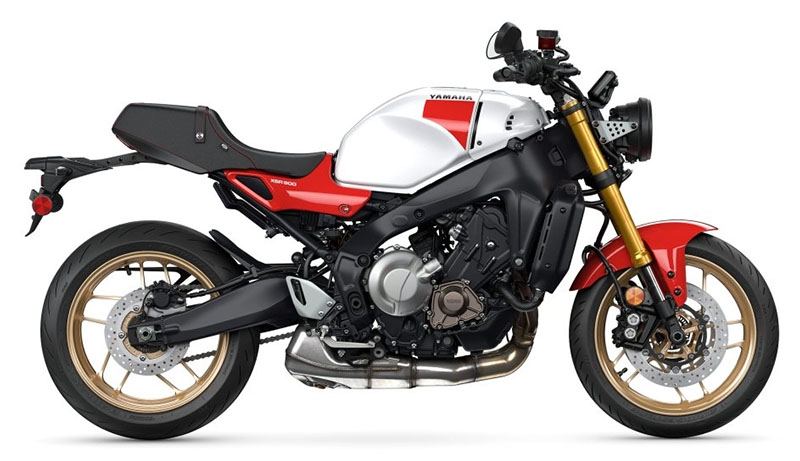
- The Yamaha XSR900 has a GPS-verified top speed of 144 mph and hits 0-60 mph in 3.26 seconds.
- The 2026 model runs an 890cc liquid-cooled inline three-cylinder (CP3) engine making a claimed 115 hp at 10,000 rpm.
- Yamaha lists wet weight at 425 lb and seat height at 31.9 inches.
- The 2026 XSR900 starts at $10,599 MSRP in the US.
- It’s the best pick in this price range if you want genuine sport-bike pace wrapped in retro street styling and a full modern electronics package.
Yamaha XSR900 Specs at a Glance
| Specification | 2026 Yamaha XSR900 |
|---|---|
| Engine | 890cc liquid-cooled DOHC inline 3-cylinder |
| Bore x Stroke | 78.0 mm x 62.1 mm |
| Compression Ratio | 11.5:1 |
| Claimed Power | 115 hp @ 10,000 rpm |
| Peak Torque | 68.6 ft-lb (manufacturer claim) |
| Transmission | 6-speed with assist & slipper clutch |
| Final Drive | Chain |
| Front Suspension | 41 mm inverted fork; 5.1 in travel |
| Rear Suspension | Single shock; 5.4 in travel |
| Front Brake | Dual 298 mm discs, ABS |
| Rear Brake | Single 245 mm disc, ABS |
| Front Tire | 120/70ZR17 Bridgestone Battlax Hypersport S22 |
| Rear Tire | 180/55ZR17 Bridgestone Battlax Hypersport S22 |
| Seat Height | 31.9 in |
| Wet Weight | 425 lb |
| Fuel Capacity | 3.7 gal |
| Fuel Economy | 49 mpg (est.) |
| US MSRP (2026) | $10,599 |
Specifications per Yamaha Motorsports USA, 2026.
What the CP3 Engine Actually Delivers on the Road
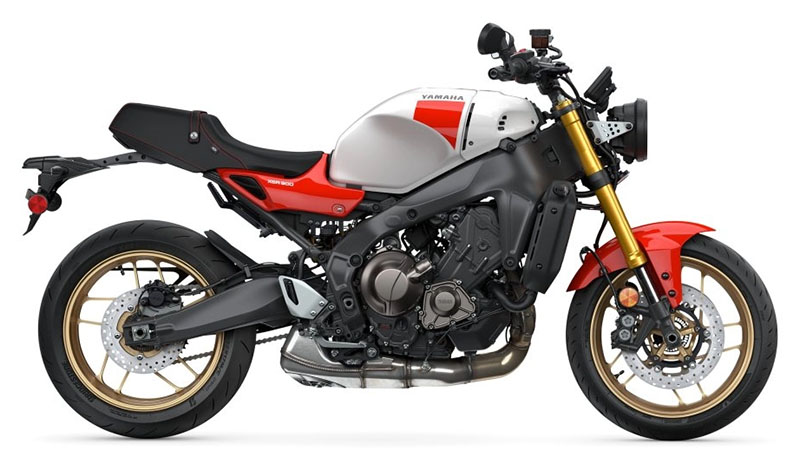
The 890cc crossplane triple is the single best argument for buying this bike. It makes around 106 hp at the rear wheel on a dyno (MotoStatz, 2023), with a power spread that’s genuinely flat and usable from 4,000 rpm upward. You can sit in fourth gear on a tight back road at 40 mph and simply roll on, and the engine digs in without any complaint. That’s the advantage of a triple: it splits the difference between a parallel twin’s low-end grunt and an inline four’s top-end rush.
The CP3 also powers the MT-09, Tracer 9, and YZF-R9, which tells you something about how Yamaha views this engine. They put it in everything they want to go fast. The XSR900 version runs the same 11.5:1 compression ratio and the same Yamaha Chip Controlled Throttle (YCC-T) fuel injection system.
Real-world fuel consumption lands around 40-45 mpg in spirited riding, with Yamaha’s estimated economy figure of 49 mpg achievable on easy highway stints. With a 3.7-gallon tank, budget for a fill-up every 150-180 miles if you’re riding it the way it wants to be ridden.
Yamaha XSR900 Top Speed and Acceleration Numbers
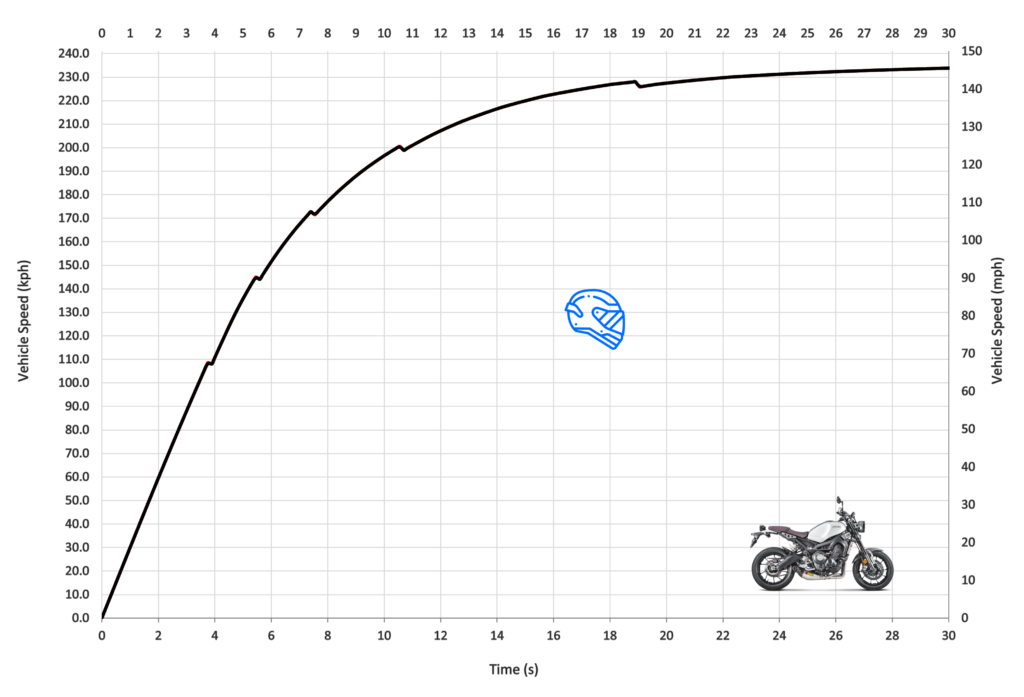
The XSR900 hits a GPS-verified top speed of 144 mph in unrestricted trim (MotoStatz, 2023). Stock bikes sold in the US market have a speed limiter that keeps them under a real 130 mph – about 140 mph on the speedo. With restrictions removed, the CP3 uses all its power across the last two gears and the bike runs out of aerodynamic ability before it runs out of engine.
On the acceleration side, the numbers are strong for a middleweight naked:
| Benchmark | Time |
|---|---|
| 0-60 mph | 3.26 seconds |
| 0-100 mph | 6.48 seconds |
| Quarter mile | 11.15 sec @ 125.5 mph |
| 60-130 mph | 9.00 seconds |
| Top Speed (unrestricted) | 144 mph |
GPS-instrumented figures from MotoStatz (2023). Testing conducted under non-optimal conditions (heat, humidity, poor surfaces). Times in optimal conditions expected to improve by 0.5-0.6 sec.
These numbers were recorded under genuinely bad conditions – high heat, humidity, and slippery asphalt. The tester noted that a sub-3-second 0-60 is achievable with better grip and air density. The quarter-mile trap speed of 125.5 mph tells the real story: this engine is still pulling hard at the end of the strip.
The harder number to appreciate on paper is in-gear roll-on performance. At 5,000 rpm in sixth gear the bike is doing 75.2 mph. Roll the throttle and it pulls with enough authority that you don’t need to downshift, regardless of what’s in front of you (MotoStatz, 2023).
Chassis, Suspension, and Brakes
The XSR900 rides on an aluminum twin-spar frame shared with the MT-09. It’s light, stiff, and lets the front end talk to you clearly. The 41 mm fully adjustable inverted fork and the KYB rear shock (updated for 2025) give you compression and rebound adjustment, which is more than most riders in this class will ever use. The point is the baseline tune is good out of the box.
Bridgestone Battlax Hypersport S22 tires (updated to S23 for 2026) are a genuinely good choice from the factory. They warm up quickly and stick well in normal street temperatures. They’re not track-day rubber, but they’re close. Ground clearance is 5.5 inches, and the 25.0-degree rake keeps steering light and quick without feeling nervous on the highway.
The front brake setup is a pair of 298 mm discs with standard (not Brembo) calipers. Stopping power is strong enough, but if you’re coming from anything with Brembo monobloc calipers you’ll notice the initial bite is softer. ABS is standard and works well. There’s no cornering ABS on the base model.
The 31.9-inch seat height is accessible for a wide range of riders. Someone around 5’8″ will get one foot down flat. At 425 lb wet, the XSR900 is manageable at parking-lot speeds, though that weight is felt when walking the bike backward on a slope.
Electronics Package: What’s Standard and What It Does
The 2026 XSR900 gets a six-axis Inertial Measurement Unit (IMU) that makes the rider aids genuinely useful rather than just marketing items. Lean angle-sensitive traction control means the system knows whether the rear is sliding in a straight line or mid-corner, and calibrates intervention accordingly. There are three selectable TCS levels.
Slide Control System (SCS) is a rarer feature at this price point. It detects lateral rear-wheel movement in corners and modulates power to manage slide without abrupt cuts. Lift Control (LIF) watches for front-wheel lift and trims power to maintain forward drive. Together they let you use the power harder than you might otherwise dare.
The Quick Shift System (QSS) operates both up and down without the clutch, which is one of the best reasons to own this bike for daily use. Blipping a downshift without lifting your left hand off the bar makes canyon roads significantly more relaxed.
The 2025 update added a 5-inch TFT display with more customizable ride modes. Cruise control is also standard, activating above 25 mph in third gear or higher. That’s a practical feature for anyone using the XSR900 for anything longer than a weekend blast.
Who the XSR900 Is For (and Where It Falls Short)
The XSR900 is the right choice if you want real performance numbers, a full electronics suite, and styling that doesn’t look like every other naked bike on the road, all for under $11,000. Riders coming from smaller-displacement bikes will find the power delivery manageable; it’s not a throttle-on, instant-wheelie situation at low rpm in city traffic.
Where it falls short: wind protection is essentially zero. This is a naked bike and riding it above 80 mph for more than a few minutes is physically exhausting. Yamaha sells an accessory wind screen, but riders who tested it in reviews say it does little above highway speeds. If you’re doing a regular 200-mile slab run, factor that in.
Comfort is also limited for the passenger. The rear seat is small and the footpegs are high. For occasional pillion use it’s fine; for a regular two-up touring setup, the XSR900 is the wrong tool.
Highway riding also exposes the gearing. In sixth gear at 70 mph, the engine is turning comfortably and quietly. Above 85 mph sustained, you’ll start listening for vibration. There isn’t much, but the triple’s character at high, sustained load is less refined than a smooth inline four.
The service interval for valve clearance inspection on the CP3 is every 26,700 miles. That’s reasonable for a modern four-stroke, but it’s not a job most riders will do themselves. Budget for a dealer visit.
Frequently Asked Questions About the Yamaha XSR900
What is the top speed of the Yamaha XSR900?
The Yamaha XSR900 has a GPS-verified top speed of 144 mph in unrestricted trim (MotoStatz, 2023). Stock US-market bikes have a speed limiter that holds them to under a real 130 mph. Wind resistance is the limiting factor at those speeds, not engine output.
How fast does the XSR900 go from 0 to 60 mph?
The XSR900 runs 0-60 mph in 3.26 seconds under GPS timing (MotoStatz, 2023). Those times were recorded in unfavorable conditions – heat, humidity, and a greasy road surface. In better conditions, a sub-3-second run is achievable. The quarter mile falls at 11.15 seconds with a trap speed of 125.5 mph.
What engine does the Yamaha XSR900 use?
The XSR900 uses Yamaha’s CP3 engine: an 890cc liquid-cooled DOHC inline three-cylinder with a 78.0 mm bore, 62.1 mm stroke, and 11.5:1 compression ratio (Yamaha Motorsports USA, 2026). This is the same fundamental engine used in the MT-09 and Tracer 9. Yamaha claims 115 hp at 10,000 rpm; dyno testing typically returns around 106 hp at the rear wheel.
Is the Yamaha XSR900 good for beginners?
The XSR900 is better described as an intermediate bike than a beginner bike. The CP3 triple is not as punchy off idle as an inline four, which makes it less prone to unexpected wheelies in low-speed traffic. However, the power at mid-range and above is substantial. A rider coming from a 300-400cc machine should plan a careful transition period rather than immediately riding it hard.
What is the seat height and weight of the XSR900?
The 2026 Yamaha XSR900 has a seat height of 31.9 inches and a wet weight of 425 lb (Yamaha Motorsports USA, 2026). Those figures make it accessible for average-height riders, with most people around 5’7″ and above getting at least one foot planted at a stop.