Yamaha R3 Top Speed, Specs & Review
TL;DR
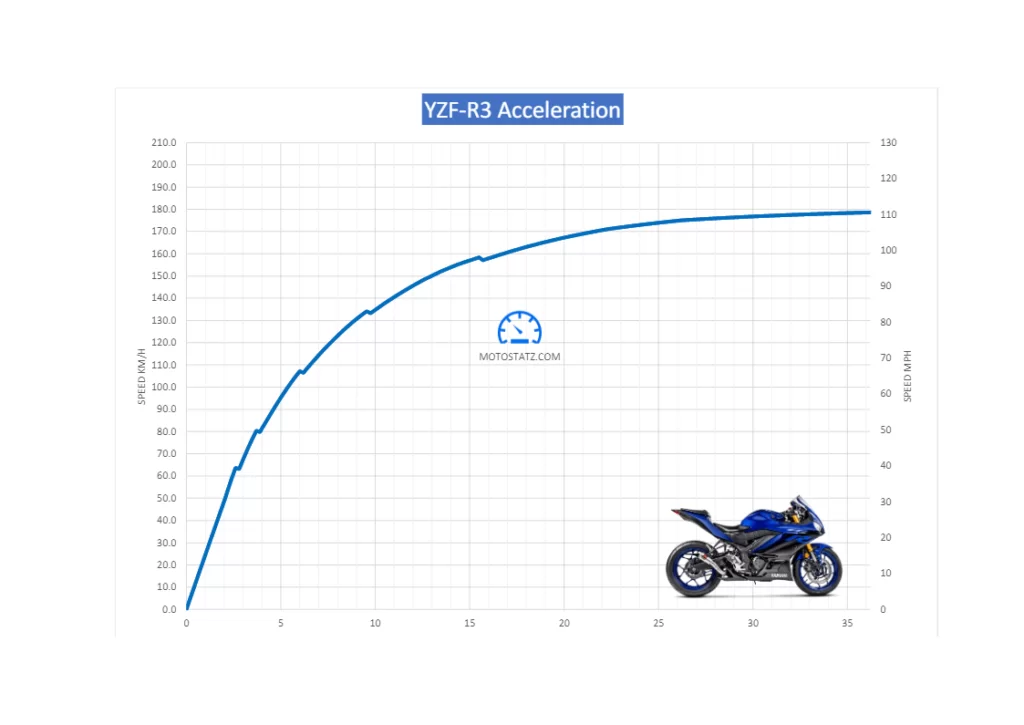
- The Yamaha YZF-R3 has a GPS-tested top speed of 112 mph under normal conditions, and can reach 120 mph with a tailwind or slight downhill grade.
- It covers 0-60 mph in 5.11 seconds and the quarter-mile in 14.07 seconds at 95 mph.
- The 2025 model carries a 321cc DOHC parallel-twin, a 30.7-inch seat height, and weighs 373 lb wet — priced at $5,499 MSRP.
- Standard ABS, a KYB inverted fork, and Dunlop Sportmax GPR-300 tires make this a well-sorted package for new riders and track-day regulars.
- The R3 is the best entry-level sportbike under $6,000 for riders who want fully faired styling, a confidence-building power delivery, and real-world fuel economy around 56 MPG.
Yamaha R3 Top Speed: What the GPS Numbers Actually Show

The Yamaha R3 top speed is 112 mph in standard conditions, confirmed by GPS-instrumented testing. That figure comes from MotoStatz (2024), who ran a 2024 YZF-R3 on a closed course with data logging. With a favorable tailwind or a slight decline in elevation, the bike can touch 120 mph as it kisses the rev limiter in sixth gear. Yamaha publishes no official top speed figure for the R3; that 112 mph number is independently sourced and should be understood as a real-world ceiling, not a manufacturer claim.
Context matters here. At 112 mph, the R3 is working hard. The 321cc engine is spinning high into its rev range, and the relatively relaxed riding position means you’re pushing against the air rather than slicing through it. Tuck in tight — elbows in, chin to the tank — and you buy a few extra mph. The R3 teaches you what to do with speed — a more useful skill for most riders than raw top-end grunt.
The quarter-mile run tells a similar story. At 14.07 seconds with a 95 mph terminal speed (MotoStatz, 2024), the R3 is quicker through the traps than a Toyota Yaris or most naturally aspirated economy cars. That’s real-world fast enough to make every on-ramp feel rewarding. It holds its own respectably for a 321cc machine.
Performance Specs: 0-60, Quarter-Mile, and Where the Power Lives
| Metric | Figure | Source |
|---|---|---|
| Top Speed | 112 mph (120 mph w/ tailwind) | MotoStatz GPS test, 2024 |
| 0-60 mph | 5.11 seconds | MotoStatz GPS test, 2024 |
| 0-80 mph | 8.73 seconds | MotoStatz GPS test, 2024 |
| 0-100 mph | 17.13 seconds | MotoStatz GPS test, 2024 |
| Quarter-Mile | 14.07 sec @ 95 mph | MotoStatz GPS test, 2024 |
| Claimed Horsepower | 42 hp @ 10,750 rpm | Yamaha USA, 2025 |
| Rear-Wheel HP | ~37 hp | Dyno estimate, various sources |
| Peak Torque (claimed) | 21.8 lb-ft @ 9,000 rpm | Yamaha USA, 2025 |
The R3 makes its best acceleration between 7,000 and 12,000 rpm. Shift anywhere in that band and you’ll get consistent times. For optimal 0-60 runs, MotoStatz noted you want an abrupt clutch release rather than a slow, slipping release — the low torque output means a dragged clutch kills your launch momentum.
Full 2025 Yamaha R3 Specs
| Spec | Detail |
|---|---|
| Engine | 321cc liquid-cooled DOHC inline-twin, 8 valves |
| Bore x Stroke | 68.0mm x 44.1mm |
| Compression Ratio | 11.2:1 |
| Fuel Delivery | Fuel injection |
| Transmission | 6-speed, multiplate wet clutch w/ Assist & Slipper |
| Final Drive | Chain |
| Front Suspension | Inverted telescopic KYB fork, 5.1 in travel |
| Rear Suspension | KYB Monocross single shock, adjustable preload, 4.9 in travel |
| Front Brake | 298mm hydraulic disc, ABS |
| Rear Brake | 220mm hydraulic disc, ABS |
| Front Tire | 110/70-17 Dunlop Sportmax GPR-300F |
| Rear Tire | 140/70-17 Dunlop Sportmax GPR-300R |
| Seat Height | 30.7 in |
| Wet Weight | 373 lb |
| Wheelbase | 54.3 in |
| Fuel Capacity | 3.7 gal |
| Fuel Economy | 56 MPG (estimated) |
| MSRP (2025) | $5,499 |
Engine and Powertrain: What 321cc Actually Feels Like
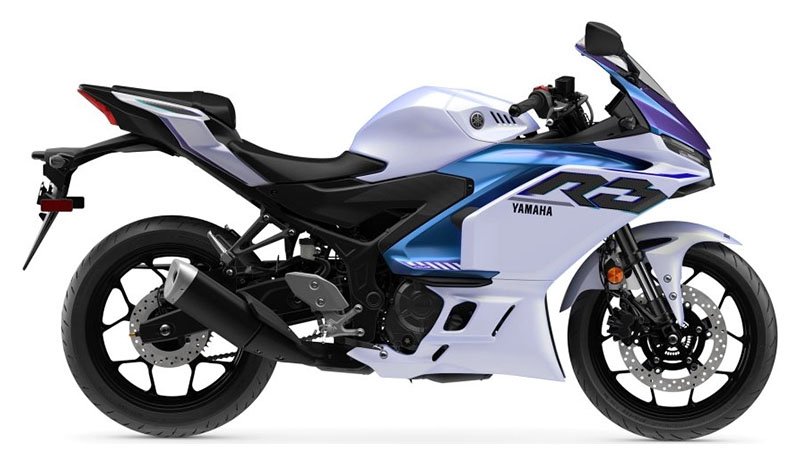
The R3 runs a 321cc liquid-cooled DOHC parallel-twin with 42 horsepower claimed at the crank and around 37 at the rear wheel. That’s the number that matters. The engine uses an offset cylinder design — meaning the cylinders aren’t perfectly side-by-side but staggered slightly — which shortens the con rod angle and reduces friction. Yamaha introduced this layout on the R3 and R25 when the R3 launched in 2015, and it’s still there in 2025.
The power delivery is linear and forgiving. There’s no aggressive hit anywhere in the rev range; power builds steadily from idle up through the 10,750 rpm redline. That makes the R3 easy to manage in traffic, where abrupt throttle response from a more aggressive engine can wear you out fast. Fuel injection (replacing the older carbureted designs it competes against historically) keeps cold starts clean and throttle response crisp even on chilly spring mornings.
The assist and slipper clutch is worth mentioning. It lightens lever pull for everyday riding and protects the rear wheel from locking up during aggressive downshifts. On a first sportbike, that’s a meaningful safety net. The 6-speed gearbox shifts cleanly, though like most small-displacement bikes it rewards riders who stay in the powerband rather than lugging it in too high a gear below 5,000 rpm.
Chassis, Brakes, and How the R3 Actually Corners
The R3 handles well because it’s light and the geometry is sensible. At 373 lb wet, it’s easy to flick through corners, and the 25-degree rake angle keeps steering quick without making it nervous on the highway. The KYB inverted fork up front provides a notably stable feel for a bike in this price class — non-adjustable for damping, but the spring rate is well-matched to the bike’s weight.
The single KYB rear shock is adjustable for spring preload, which lets you dial in sag for your bodyweight. Set it correctly and the bike feels planted mid-corner. Ignore it and heavier riders will find the rear wallowing under hard acceleration out of turns.
The brakes are adequate but not a standout. The 298mm front disc with a 2-piston caliper does the job, but riders coming from bikes with Brembo radial calipers will notice the difference in initial bite. ABS is standard on the 2025 model, which is the right call. Dunlop Sportmax GPR-300 tires are a solid stock fitment — they warm up quickly and offer predictable grip in both dry and light wet conditions. They’re not a track-day tire, but they’re a better-than-average choice for an entry-level machine.
One real-world drawback: the R3 can feel unsettled in strong crosswinds. At 373 lb, it’s light enough that a hard gust on an open highway requires deliberate correction. That’s a trade-off for the low weight everywhere else.
Riding the R3: Honest Assessment of Day-to-Day Experience
The R3’s 30.7-inch seat height is genuinely accessible. Most riders in the 5’4″ and above range will have at least one foot solidly planted at a stop, and shorter riders can manage with a lean. The riding position is more upright than a pure race crouch — there’s clip-on handlebar placement but the bars are raised enough that you’re not folded over the tank on a two-hour ride.
Comfort over distance is fine for the class. You won’t mistake it for a touring bike, but the R3 won’t beat you up on a 150-mile day the way a more aggressive sportbike will. The seat has reasonable padding, and the windscreen provides enough protection to make 70 mph highway riding tolerable. Wind noise is still present above 65 mph — it’s a small fairing on a small bike.
The 56 MPG fuel economy estimate from Yamaha is realistic in mixed riding. The 3.7-gallon tank gives you a real-world range of around 200 miles before reserve. That’s solid for commuting and weekend rides.
The 2025 refresh brought YZR-M1 MotoGP-inspired bodywork, LED lighting throughout, and a new LCD gauge cluster that can display smartphone data. These are genuine improvements over the previous-gen R3. The styling is sharper and the electronics feel more current (Rider Magazine, 2024).
Who Should Buy the 2025 Yamaha R3
The R3 is the right bike if you’re a new rider who wants a real sportbike — not a stripped-down beginner machine — and you have no interest in being overwhelmed. At 373 lb and with a linear, manageable power delivery, it teaches throttle control, cornering technique, and body position without punishing you for small mistakes.
It also works well as a dedicated track-day bike for riders building lap skills before moving up to a middleweight. The R3 Cup racing series confirms this — organized club racing exists around this specific bike, which tells you it has enough to be genuinely fun at a circuit.
The R3 is not the right bike if you’ve already spent two or more years on sportbikes, do regular highway riding above 70 mph, or have a passenger you’d like to take along. At 321cc, the engine starts to feel strained at sustained highway speeds, and two-up riding eats into the already-modest power reserves quickly.
At $5,499, the R3 is priced fairly against its direct competition. You get ABS, a KYB suspension package, Dunlop sport tires, and Yamaha’s proven reliability in a package that’s been refined over a decade.
Frequently Asked Questions About the Yamaha R3
What is the top speed of the Yamaha R3?
The Yamaha R3 has a GPS-tested top speed of 112 mph under standard conditions. With a tailwind or a slight downhill grade, riders have recorded up to 120 mph. Yamaha does not publish an official top speed figure; the 112 mph figure comes from MotoStatz instrumented testing of a 2024 model.
How fast does the Yamaha R3 go from 0-60 mph?
The Yamaha R3 covers 0-60 mph in 5.11 seconds in GPS-instrumented testing (MotoStatz, 2024). That’s quicker than most entry-level cars and competitive within the 300cc sportbike class. The quarter-mile takes 14.07 seconds with a terminal speed of 95 mph.
Is the Yamaha R3 a good beginner motorcycle?
The R3 is one of the better beginner sportbikes available. Its 30.7-inch seat height, 373 lb wet weight, linear power delivery, and standard ABS make it manageable for new riders. It’s also capable enough to remain interesting as your skills develop, so you won’t feel like you’ve outgrown it after six months.
What engine does the 2025 Yamaha R3 have?
The 2025 YZF-R3 uses a 321cc liquid-cooled DOHC parallel-twin with fuel injection. It produces 42 horsepower at 10,750 rpm and 21.8 lb-ft of torque at 9,000 rpm per Yamaha’s claim. An assist and slipper clutch is standard, and the transmission is a 6-speed with chain final drive.
How does the Yamaha R3 compare in fuel economy?
Yamaha estimates the 2025 R3 at 56 MPG, and real-world owner reports generally support that figure in mixed riding. The 3.7-gallon fuel tank provides roughly 190-210 miles of range before reserve, which is practical for daily commuting and weekend sport riding.