Triumph Trident 660 Top Speed, Specs & Review
TL;DR
- The Triumph Trident 660 has a top speed of approximately 127 mph (204 km/h), per independently instrumented testing by MotoStatz.
- The 660cc liquid-cooled inline-triple produces 81 hp at 10,250 rpm and 47 lb-ft of torque at 6,250 rpm
- The 2025 model adds cornering ABS, traction control, cruise control, and a standard quickshifter, all at the same $8,720 MSRP as the outgoing model.
- Seat height is 31.7 inches (805mm), wet weight is 417 lb (189 kg) — manageable figures for newer and shorter riders.
- This is the right bike for commuters, newer riders, and canyon enthusiasts who want triple character without Street Triple 765 aggression or price.
Triumph Trident 660 Specs at a Glance
| Spec | 2025 Triumph Trident 660 |
|---|---|
| Engine | 660cc liquid-cooled DOHC inline-triple |
| Bore x Stroke | 74mm x 51.1mm |
| Compression Ratio | 11.95:1 |
| Peak Power | 81 hp (81 PS) @ 10,250 rpm |
| Peak Torque | 47 lb-ft (64 Nm) @ 6,250 rpm |
| Transmission | 6-speed wet clutch, chain final drive |
| Frame | Steel tubular perimeter |
| Front Suspension | Showa 41mm SFF-BP inverted fork, 120mm travel |
| Rear Suspension | Showa monoshock, preload adjustable, 130mm travel |
| Front Brakes | Dual 310mm discs, Nissin 2-piston calipers, cornering ABS |
| Rear Brake | Single 255mm disc, Nissin 1-piston caliper |
| Tires | Michelin Road 5 – 120/70 ZR17 front, 180/55 ZR17 rear |
| Wheelbase | 55.2 in (1,401mm) |
| Seat Height | 31.7 in (805mm) |
| Wet Weight | 417 lb (189 kg) |
| Fuel Tank | 3.7 US gal (14L) |
| MSRP (USA, 2025) | $8,720 |
Sources: Triumph Motorcycles (2025), Wikipedia/Triumph Trident 660 technical specifications
Triumph Trident 660 Top Speed and Real-World Acceleration
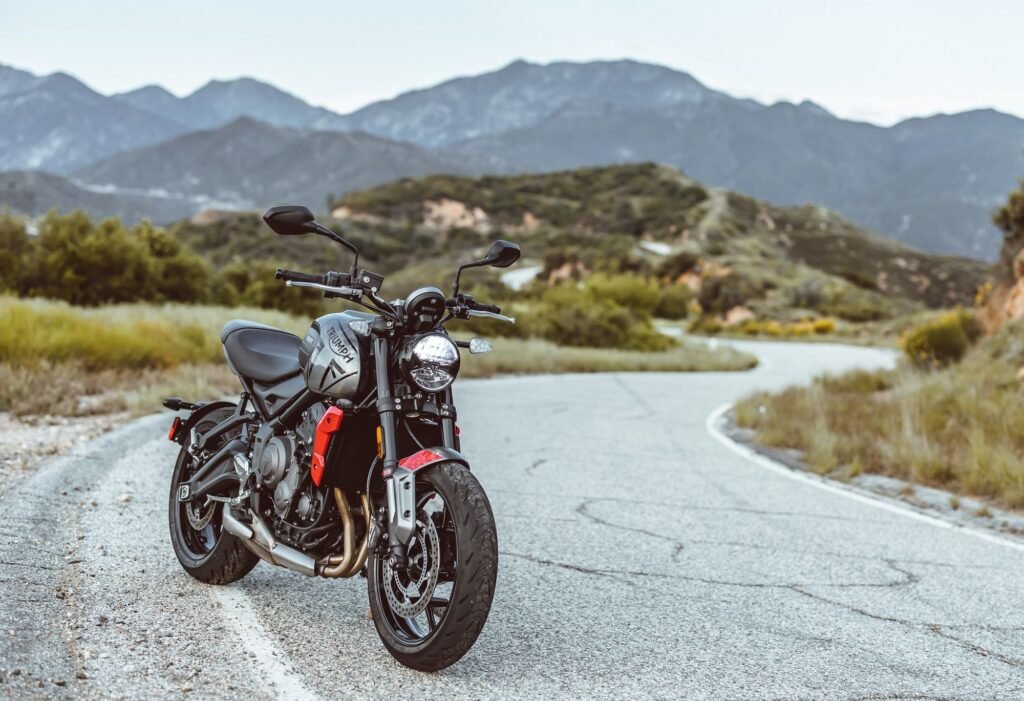
The Triumph Trident 660 tops out at 127 mph (204 km/h) in independently instrumented testing. The 0-60 mph time is 3.43 seconds, with the quarter mile completed in 12.00 seconds at 111 mph (MotoStatz, 2023). Triumph publishes no official top speed figure, so these independent numbers are the most reliable reference available.
Those numbers deserve some context. The Trident’s gearing is short — specifically tuned for street riding rather than high-speed runs. It hits the rev limiter fast in the first four gears, which means it requires crisp, on-the-redline shifts to extract its best times. MotoStatz notes that the short gearing works against raw sprint numbers: unlike some rivals that reach 60 mph in first gear, the Trident needs a shift to get there, adding a small but real time penalty (MotoStatz, 2023).
What the short gearing gives you in return is something far more useful on actual roads: pull from almost any rpm, in any gear. At 40 mph in fourth, you can roll the throttle and the bike moves. The engine delivers 40+ lb-ft of torque from 3,500 rpm all the way to 9,000 rpm (MotoStatz, 2023). Highway overtakes don’t require a downshift. Fuel economy sits at a manufacturer-claimed 60.1 mpg, with owners on Fuelly reporting real-world figures close to that number (Bennetts BikeSocial, 2025). With 3.7 US gallons on board, expect roughly 135 miles before the fuel light comes on.
The 660cc Triple: Why Three Cylinders Change Everything
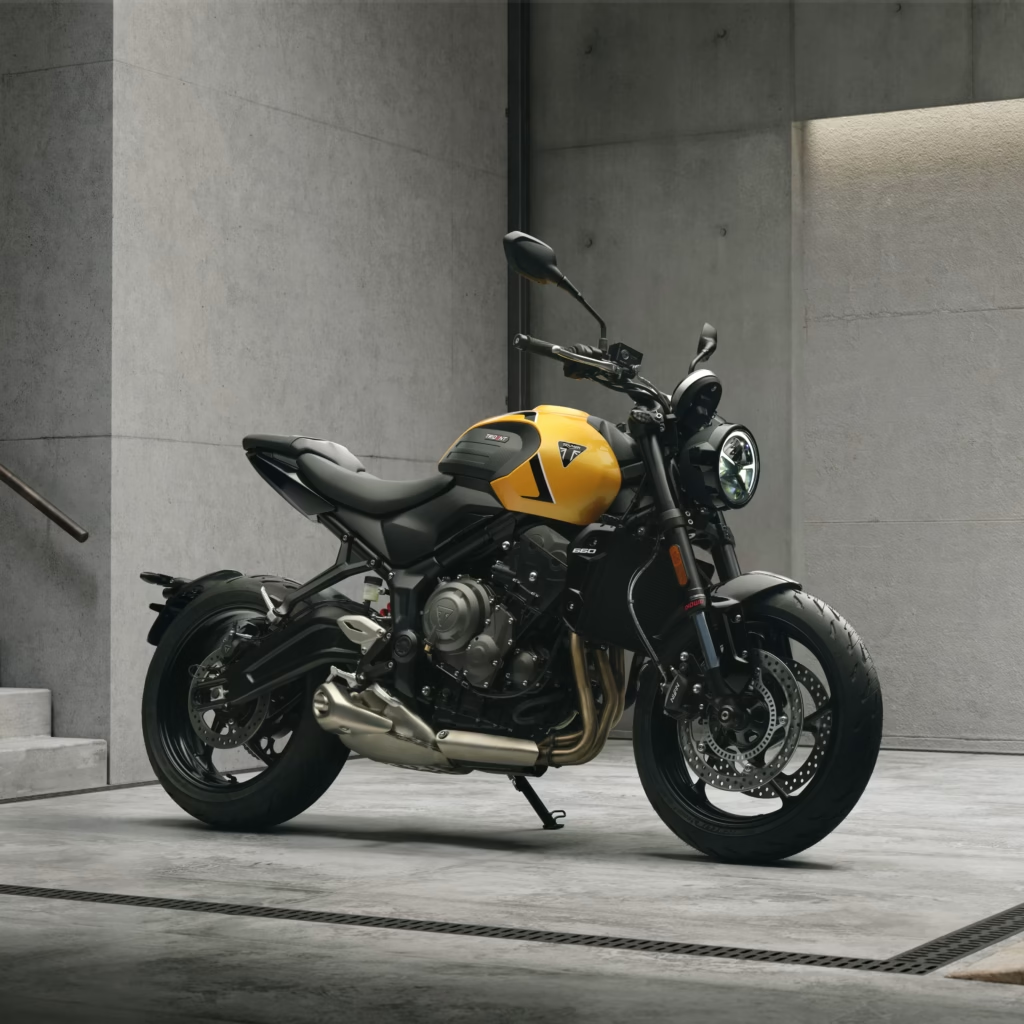
Triumph’s inline-triple engine is the single biggest reason this motorcycle exists. At peak output — 75 hp at the rear wheel per dyno testing — it’s not a power-first machine (MotoStatz, 2023). What it is, is a bike with a powerband that feels alive from idle.
The firing interval gives you a sound and feel you won’t find in any other 600-class naked. It’s not the flat buzz of an I4, and it’s not the lumpy push-pull of a twin. There’s a vibration character that feels purposeful without being fatiguing. Ride one for 20 minutes and you understand why Triumph has kept the triple format alive since the Daytona 675 era.
At part-throttle, the fueling can be slightly abrupt in lower gears — a known trait since 2021 that reviewers consistently flag. It settles in Road mode, and Sport mode sharpens throttle response for those who want more edge. Rain mode is genuinely useful for wet commutes and well worth using.
Chassis, Handling, and Brakes
The Trident 660 handles like a bike that cost more to engineer than its price suggests. The steel tubular perimeter frame is light and stiff enough that the bike changes direction with a flick of the wrist, not a shove. For canyon riding, that agility is addictive. For daily commuting in stop-and-go traffic, it makes lane filtering and U-turns easy.
The 2025 update brought revised Showa SFF-BP (Separate Function Big Piston) fork internals, which noticeably improve bump absorption over the earlier generation. The rear Showa monoshock is preload-adjustable only, which is fine for solo riding but limits tuning for heavier riders or two-up use.
The braking setup draws mixed opinions. On the positive side, dual 310mm discs with Nissin calipers and a six-axis IMU-backed cornering ABS give you capable stopping power. Ultimate Motorcycling described the braking as “spot-on,” noting progressive feel and barely perceptible ABS intervention (Ultimate Motorcycling, 2025). Motorcycle.com’s 2026 first ride noted that lever feel has a slightly spongy, vague quality at initial pull — the hardware has the power, but the feedback isn’t as sharp as Brembo radial-mount units deliver higher up the price ladder (Motorcycle.com, 2026). For the target rider, the system is more than sufficient. For anyone coming off a high-spec sportbike, it’s a step down.
Michelin Road 5 tires come standard. They’re a good choice for a do-everything street bike — sticky enough for spirited canyon riding, durable enough for commuting, and competent in wet conditions.
Electronics and Features: Punching Above Its Price Point
The 2025 model year is where the Trident 660 moved from “good value” to “hard to argue against.” Triumph added the following as standard equipment, at no increase in MSRP (Triumph, 2025; Cycle News, 2024):
- Six-axis IMU enabling cornering ABS and cornering traction control
- Triumph Shift Assist (up-and-down quickshifter)
- Cruise control (activates from 30 mph)
- Three riding modes: Rain, Road, Sport
- TFT display with My Triumph Bluetooth connectivity for turn-by-turn navigation, calls, and music
An A2 restriction kit is available for EU riders or new riders who want to start with a power-limited setup and derestrict later. The 10,000-mile / 16,000km service interval — oil changes, filter, and standard inspection — is Triumph’s claimed class leader, and it reduces the real cost of ownership meaningfully over the first few years (Triumph, 2025; maintenanceschedule.com, 2024).
What the Trident 660 Gets Right — and Where It Falls Short
The package at $8,720 is hard to match. You get a purpose-built street triple engine, a TFT dash, cornering ABS, a quickshifter, cruise control, and Michelin Road 5 tires straight from the dealer. The 31.7-inch seat height and 417-pound wet weight make it manageable for shorter and newer riders without sacrificing enough performance to bore the experienced ones. The three-cylinder exhaust note is a real feature — with an Akrapovic or Triumph’s own slip-on fitted, it becomes legitimately memorable.
The limits are real, though. Suspension adjustment is limited to preload-only at the rear, which matters if you carry a passenger or any meaningful weight. The Nissin brakes work, but they lack the sharp feedback that Brembo radial-mount units deliver higher up the price ladder. Traction control can intervene early in Sport mode, limiting playfulness at the limit (1000PS, 2025). Wind protection is minimal above 70 mph on longer trips. There are also no factory luggage mounting points — the clean tail design leaves bag-carrying to third parties like Hepco & Becker.
Who Should Buy the Triumph Trident 660
The Trident 660 suits three types of riders. New riders who want more than a beginner machine without buying something that punishes mistakes – the power is exploitable rather than intimidating, and the electronics are genuinely protective. Urban commuters who want character and quality in a daily machine – the triple sound, compact size, class-leading service intervals, and TFT connectivity make the routine feel less routine. And experienced riders who want a second bike they’ll actually use instead of leaving the superbike in the garage.
The rider who shouldn’t buy it: someone planning sustained highway trips, anyone chasing track-day suspension adjustability, or anyone who needs a dedicated luggage platform. For those use cases, the Tiger Sport 660 or Street Triple 765 RS are the better calls.
Frequently Asked Questions About the Triumph Trident 660
What is the top speed of the Triumph Trident 660?
Independently instrumented testing by MotoStatz puts the Triumph Trident 660’s top speed at 127 mph (204 km/h). Triumph does not publish an official top speed figure. Some third-party sources list figures up to 131 mph (210 km/h) via GPS or odometer readings, but MotoStatz’s tested result of 127 mph is the most verifiable reference available (MotoStatz, 2023).
How fast is the Triumph Trident 660 from 0-60 mph?
The Trident 660 covers 0-60 mph in 3.43 seconds and runs the quarter mile in 12.00 seconds at 111 mph, per MotoStatz instrumented testing (MotoStatz, 2023). The short gearing means the bike needs a gear change to reach 60 mph, which adds a small time penalty compared to rivals that hit that mark in first gear.
Is the Triumph Trident 660 good for beginners?
Yes, with some caveats. The 31.7-inch seat height, 417-pound wet weight, accessible power delivery, and cornering ABS all make the Trident 660 a manageable starting point for new riders. An A2-compliant restriction kit is available for those who need a power-limited setup. The bike is not as easygoing as a Honda CB650R in pure beginner terms, but it’s more engaging and comes with enough electronics to catch most mistakes.
What are the service intervals for the Triumph Trident 660?
Oil and filter changes are due every 10,000 miles or 12 months, whichever comes first. Spark plugs and the air filter go to 20,000 miles, with valve clearance and camshaft timing checks at the same interval. Drive chain maintenance is separate from scheduled services — check and lube after wet rides and anytime the chain looks dry (maintenanceschedule.com, 2024).
How does the 2025 Triumph Trident 660 compare to earlier models?
The 2025 update added a six-axis IMU enabling cornering ABS and cornering traction control, a standard quickshifter, cruise control, and a third riding mode (Sport), all at the same MSRP as the 2024 model. The front suspension received updated Showa SFF-BP internals. The engine and core chassis are unchanged from the 2021 launch. For anyone buying used, a 2021-2024 Trident 660 gets you the same triple character and basic platform, but misses the significantly upgraded electronics package