How Much Motorcycle Insurance
TL;DR
- Liability-only motorcycle insurance averages around $12–$13 per month nationally; full coverage averages about $33 per month (ValuePenguin, 2026).
- Sport bikes cost two to three times more to insure than cruisers or standard bikes at the same coverage level.
- Riders under 25 pay the highest premiums – sometimes $200 or more per month for full coverage on a sport bike in a high-cost state.
- Completing an MSF (Motorcycle Safety Foundation) RiderCourse can cut your premium by 5–15% with most major carriers.
- The gap between the cheapest and most expensive insurer for the same bike and rider can run $30 or more per month – always get at least three quotes.
What Motorcycle Insurance Actually Costs in 2026

The national average for full coverage motorcycle insurance is about $33 per month, or roughly $396 per year (Harley-Davidson Insurance, 2024). Liability-only coverage – the legal minimum in most states – runs closer to $12–$13 per month, or about $144–$156 annually (MoneyGeek, 2025). Those numbers are real, but they’re also averages, which means they can be wildly misleading depending on who you are and what you ride.
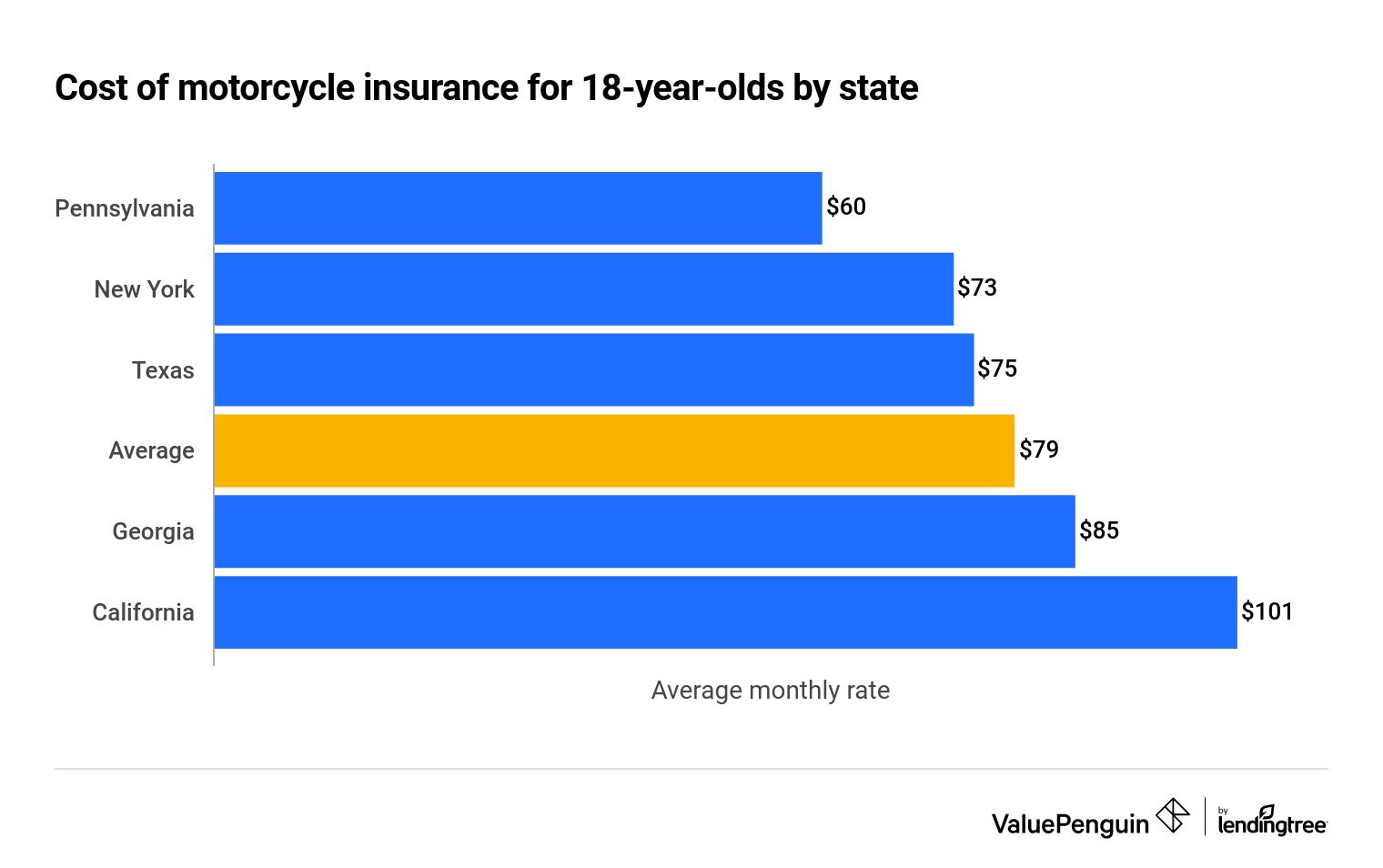
A 40-year-old with a clean record on a Honda Rebel 500 in Iowa will pay closer to the floor of that range. An 18-year-old on a Kawasaki ZX-6R in New York will pay closer to the ceiling – and then some. Understanding where you land starts with knowing what the variables are.
The Coverage Types You’ll Choose Between
Motorcycle insurance is built from three core coverage types. Most riders carry some combination of all three.
Liability coverage pays for injuries and property damage you cause to someone else in an accident. It does not pay for your bike or your injuries. Every state that requires insurance requires at least this, with minimums that vary by state. It’s the cheapest coverage to carry and the worst to rely on if the accident is serious.
Collision coverage pays to repair or replace your motorcycle after an accident, regardless of fault. If you finance or lease, your lender will require this.
Comprehensive coverage handles everything that’s not a collision: theft, fire, vandalism, hail, a deer walking into your path at night. On a new or high-value bike, this coverage is worth having. It’s also the only way a stolen bike gets replaced.
Full coverage is the term riders use when a policy includes all three: liability, collision, and comprehensive. It’s not a defined legal term, but you’ll hear it constantly when getting quotes.
Average Cost by Coverage Level
The table below reflects national averages for a mid-range motorcycle with a rider who has a clean record. Your number will shift based on the factors covered in the next sections.
| Coverage Type | Avg. Annual Cost | Avg. Monthly Cost |
|---|---|---|
| Liability only (state minimum) | $144–$156 | $12–$13 |
| Full coverage (liability + collision + comp) | $364–$396 | $30–$33 |
| High-performance sport bike, full coverage | $1,600–$3,500 | $133–$292 |
| New rider under 25, full coverage, sport bike | $2,000–$3,000+ | $167–$250+ |
Sources: MoneyGeek (2025); ValuePenguin (2026); Harley-Davidson Insurance (2024).
For riders with a clean record on a mid-range cruiser or standard bike, full coverage tends to land between $50 and $75 per month (Riders Share, 2026). That’s well below what most people budget for.
What Drives Your Motorcycle Insurance Rate
Insurance carriers build your premium by adding up risk signals. Some you control. Some you don’t.
| Factor | Impact on Premium | Notes |
|---|---|---|
| Bike type | High | Sport bikes cost 2–3x more than cruisers (ValuePenguin, 2026) |
| Engine displacement | Moderate-high | 1000cc+ bikes pay up to 40% more than sub-500cc bikes |
| Rider age | High | Under-25 riders face the steepest surcharges |
| Riding experience | Moderate | Under 2 years of experience adds a surcharge on top of age |
| State and ZIP code | High | New York averages $305/month; North Dakota averages $18/month for full coverage |
| Riding record | Moderate | A single at-fault accident can raise your rate 20–40% |
| Coverage level and deductible | High | Higher deductible lowers your premium; moving from $500 to $1,000 deductible cuts collision/comp ~10–15% |
| Anti-theft devices | Low | GPS trackers and disc locks can earn small discounts with some carriers |
| ABS | Low-moderate | Some carriers discount bikes with ABS because it reduces crash frequency |
| Bundling with auto or home | Moderate | Multi-policy discounts typically run 5–10% |
State matters more than most riders expect. Progressive’s data from April 2024 through March 2025 shows liability-only rates ranging from $145.67 per year in Pennsylvania to $359.81 per year in Delaware – more than double, just from geography (Progressive, 2025).
How Much Insurance Costs by Motorcycle Type
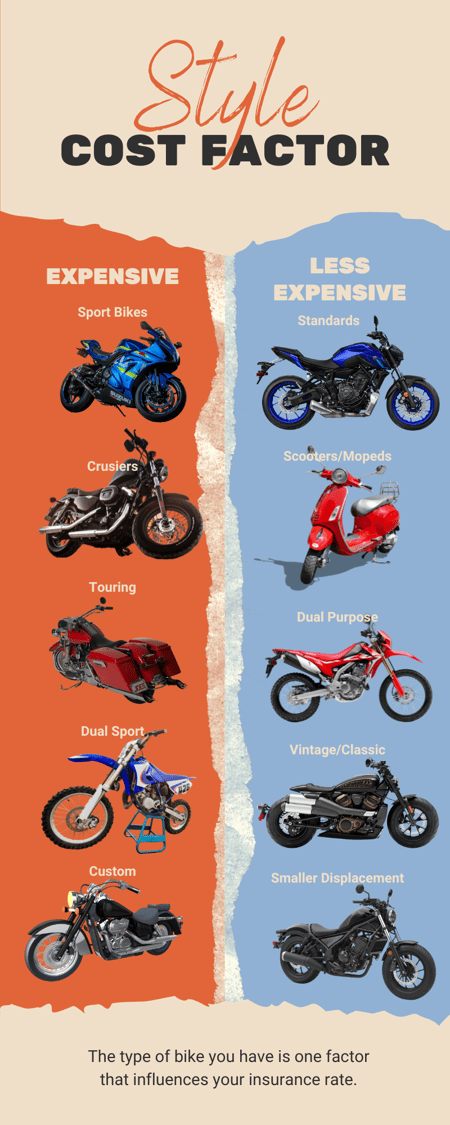
Your bike is the single biggest lever in your premium calculation, often more than your age or record. Carriers underwrite based on accident rates, theft rates, and repair costs – and those numbers vary sharply by category.
Cruisers sit at the low end of the insurance range. Bikes like the Harley-Davidson Softail, Indian Scout, and Honda Shadow carry lower horsepower, attract older and more experienced buyers, and aren’t primary theft targets. Annual full coverage for a cruiser typically runs $400–$900 (Riders Share, 2026).
Standard bikes – the Yamaha MT-07, Kawasaki Z650, Suzuki SV650 – land in similar territory. Parts are common, repair costs are predictable, and they don’t attract the aggressive riding profile that pushes sport bike rates up. Expect $200–$800 per year for full coverage (LA Insurance, 2026).
Touring bikes – the BMW R 1250 GS, Harley-Davidson Road Glide, Honda Gold Wing – have higher replacement costs, but they’re ridden by experienced riders who keep claim frequency low. Full coverage typically runs $800–$1,800 annually (Motoworks Chicago, 2025).
Sport bikes and supersports (CBR600RR, Yamaha R6, Kawasaki ZX-10R, Ducati Panigale) are the most expensive category to insure by a wide margin. Higher accident rates, higher theft targeting, and a younger buyer demographic stack up fast. Full coverage commonly runs $1,600–$3,500 per year, and a younger rider on a 1000cc supersport in California or New York can hit $3,000 or more without a bad record (Riders Share, 2026; Motoworks Chicago, 2025).
The practical upshot: the difference between a sport bike and a cruiser at the same price point isn’t just a style choice. On insurance alone, the gap can run $80 to $200 per month for the same rider.
How Age and Riding Record Change the Math
Age is the bluntest instrument in the carrier’s toolkit. A 16-year-old pays around $1,446 per year for full coverage nationally; a 25-year-old pays about $820; a 40-year-old drops to roughly $571 (MoneyGeek, 2025). Rates stabilize through middle age and start climbing again after 60 as reaction times and injury severity become factors.
Riding experience compounds with age. A new rider under 25 on a full-coverage sport bike in a high-cost state can pay $200 or more per month. The fastest path down is completing an MSF course, choosing a standard or cruiser under 750cc, and keeping a clean record through the first two to three years.
A single at-fault accident can push your rate 20–40% at renewal. A DUI is worse – many carriers will non-renew your policy entirely, and the carriers willing to cover you after one will price you accordingly. A clean record is worth protecting actively, not just as a safety matter but as a financial one.
Five Ways to Lower Your Motorcycle Insurance Bill
Complete the MSF RiderCourse. The Motorcycle Safety Foundation Basic RiderCourse earns a discount of 5–15% with most major carriers. Progressive, GEICO, Dairyland, and Harley-Davidson Insurance all recognize it. The course runs about $300–$400 total and typically pays for itself in the first year of savings.
Choose your bike strategically. If you’re early in your riding career or on a tight budget, displacement and bike type are the two variables with the most impact on your premium. A Honda Rebel 500, Kawasaki Vulcan S, or Yamaha MT-03 will cost a fraction of what a sport bike costs to insure – and they’re better learning platforms anyway.
Raise your deductible. Moving from a $500 to a $1,000 deductible typically cuts your comprehensive and collision premiums by 10–15%. It makes sense if your bike’s value is moderate and you have savings to cover a mid-range repair out of pocket.
Bundle with your existing policies. If you already have auto or home insurance, adding your motorcycle to the same carrier often earns a multi-policy discount of 5–10%. It’s one of the easiest discounts to get because it requires no behavior change.
Shop every renewal. Rates change year to year and carrier to carrier. Dairyland’s full-coverage average of $22 per month runs $33 less per month than Nationwide’s average for the same profile (ValuePenguin, 2026). The price spread between the cheapest and most expensive carrier for identical coverage on identical bikes is wide enough to matter significantly over a season.
Frequently Asked Questions About Motorcycle Insurance Costs
How much is motorcycle insurance for a beginner?
New riders pay more than experienced ones regardless of age, but the combination of being both new and young hits hardest. A new rider under 25 on a sport bike with full coverage can pay $150–$250 per month in higher-cost states. Choosing a standard or cruiser under 750cc and completing an MSF course before applying for coverage are the two most effective ways to bring that number down quickly.
Is motorcycle insurance cheaper than car insurance?
Yes, significantly. Full coverage car insurance averages around $175 per month nationally; full coverage motorcycle insurance averages $33 per month (ValuePenguin, 2026). The gap exists because motorcycles are cheaper to repair and replace than cars, and they spend more time parked. The exception is a young rider on a high-performance sport bike in a high-cost state, where motorcycle premiums can approach car insurance territory.
Does motorcycle insurance cover theft?
Theft is only covered if you carry comprehensive coverage. Liability-only policies do not cover a stolen bike. If your bike is stored outdoors, parked in an urban area, or is a model with a high theft rate (sport bikes and certain popular models are disproportionately targeted), comprehensive coverage is worth the added monthly cost.
What states have the highest motorcycle insurance rates?
New York consistently ranks as the most expensive state, with full-coverage averages around $305 per month. California, Florida, Louisiana, and Michigan also rank high due to traffic density, accident rates, and in Michigan’s case, no-fault insurance laws that push all motor vehicle premiums up. North Dakota, Iowa, and Pennsylvania consistently land among the cheapest states for motorcycle coverage (Progressive, 2025; LA Insurance, 2026).
Does the MSF course actually lower my insurance?
It does, at most major carriers. Progressive, GEICO, Dairyland, Nationwide, and Harley-Davidson Insurance all offer discounts for completing an approved safety course, typically 5–15% off your total premium. Some carriers require the course to have been completed within the last three to five years to qualify, so keep your certificate. Beyond the discount, riders who complete the course have measurably lower accident rates, which keeps your record clean and your rate from climbing at renewal.