Yamaha YZF-R9 Top Speed, Specs & Review
TL;DR
- The Yamaha YZF-R9 has a top speed of 161 mph (260 km/h), confirmed by GPS-instrumented testing at the electronic rev limiter in sixth gear.
- Power comes from the 890cc CP3 inline-triple producing 117 hp at 10,000 rpm and 69 lb-ft of torque at 7,000 rpm — figures verified by Yamaha and independently tested by Rider Magazine (2025).
- The R9 runs 0–60 mph in approximately 3.0 seconds and covers the quarter mile in the mid-10-second range trapping around 130 mph.
- US MSRP is $12,499, and the bike ships with Brembo Stylema calipers, fully adjustable KYB suspension, a six-axis IMU, and cruise control as standard.
- The R9 won both the 2025 MotoAmerica Supersport and WorldSSP championships in its debut season, which matters if you want to know whether the platform can actually race.
Yamaha YZF-R9 Specifications
| Spec | Detail |
|---|---|
| Engine | 890cc liquid-cooled DOHC inline 3-cylinder |
| Bore x Stroke | 78.0 mm × 62.1 mm |
| Compression Ratio | 11.5:1 |
| Claimed Peak Power | 117 hp @ 10,000 rpm |
| Claimed Peak Torque | 69 lb-ft @ 7,000 rpm |
| Transmission | 6-speed, wet multiplate clutch with Assist & Slipper |
| Final Drive | Chain (16/45 sprocket ratio) |
| Frame | Gravity-cast Deltabox aluminum twin-spar |
| Front Suspension | 43mm KYB inverted fork, fully adjustable, 4.7 in travel |
| Rear Suspension | KYB single shock, fully adjustable, 4.6 in travel |
| Front Brakes | Dual 320mm discs, Brembo Stylema monoblock calipers, ABS |
| Rear Brake | 220mm disc, ABS |
| Front Tire | 120/70ZR17 Bridgestone Battlax Hypersport S22 |
| Rear Tire | 180/55ZR17 Bridgestone Battlax Hypersport S22 |
| Wheelbase | 55.9 in |
| Seat Height | 32.7 in |
| Rake / Trail | 22.6° / 3.7 in |
| Wet Weight | 430 lb |
| Fuel Capacity | 3.7 gal |
| Fuel Economy | 48 mpg (estimated) |
| US MSRP | $12,499 |
Sources: Yamaha Motorsports USA specifications page (2026); Rider Magazine first ride (2025)
What Powers the YZF-R9: The 890cc CP3 Engine

The YZF-R9 runs the same 890cc CP3 inline-triple that powers the MT-09, XSR900, and Tracer 9 — but Yamaha fitted the R9 with a dedicated ECU tune, a taller rear sprocket (45 teeth vs. 43 on the MT-09), a curved radiator borrowed from the R1, and a 60-degree throttle rotation angle in place of the MT-09’s 78-degree unit, all of which sharpens response for track duty without gutting street usability (Rider Magazine, 2025).
Yamaha claims 117 hp at 10,000 rpm and 69 lb-ft at 7,000 rpm at the crankshaft. Independent dyno testing of the identical MT-09 platform consistently shows 104–110 rear-wheel horsepower after drivetrain losses, so a reasonable working figure for the R9 is approximately 105 hp at the wheel (Motorcycle.com, 2025; MotoStatz, 2025). No widely circulated R9-specific rear-wheel dyno has been published as of mid-2026.
The CP3 torque curve is its calling card. RevZilla’s first-ride review noted that torque stays above 50 lb-ft from the moment you release the clutch all the way to the rev limiter, peaking at 68 lb-ft at the wheel — a very different character from the narrow, top-end-focused inline-fours that dominated supersport before the R6 era ended (RevZilla, 2025). That broadband delivery makes the R9 genuinely fast on the street without requiring you to live in 9,000 rpm all day.
One honest flag: both Cycle News’s first-ride and long-term tests (2025) noted a pronounced throttle flat spot between 5,000 and 6,500 rpm caused by emissions-related ECU programming. It doesn’t stop the bike from being fast; it just creates an awkward surge-and-stumble moment before the engine clears and takes off. An aftermarket ECU flash largely eliminates it, but stock buyers will feel it.
Yamaha YZF-R9 Top Speed and Acceleration
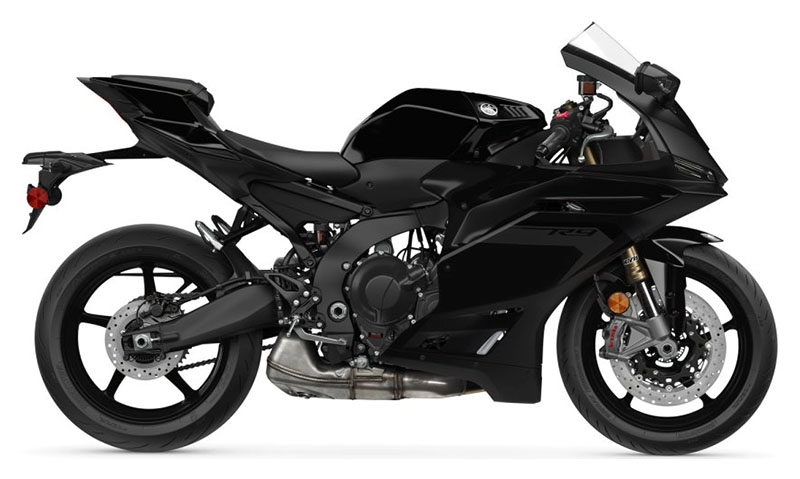
The Yamaha YZF-R9 top speed is 161 mph (260 km/h), reached in sixth gear at the electronic rev limiter. GPS-instrumented testing from MotoStatz and multiple European press outlets confirmed the 260 km/h figure within a 2–3 km/h margin (Corner Speed Blog, 2026). Indicated speedometer readings typically climb to around 165 mph in a full tuck, which is normal speedo optimism rather than a real-world difference.
The 0–60 mph run takes approximately 3.0 seconds based on instrumented testing and press consensus (Corner Speed Blog, 2026). Quarter-mile time lands in the mid-10-second range, with a trap speed around 130 mph. Launch control via the six-axis Inertial Measurement Unit (IMU) helps reproduce those numbers consistently; without it, most riders will see 3.1–3.2 seconds as the front wheel unloads.
The taller final-drive gearing Yamaha fitted for top-speed and circuit work gives the R9 longer legs in each gear than the MT-09, but it also means the engine works slightly harder at low speeds compared to the naked bike. That’s a deliberate trade-off for a supersport. On a racetrack, the gearing makes sense. Commuting across town, you’ll notice you shift a touch earlier.
| Performance Metric | Figure | Source |
|---|---|---|
| Top Speed | 161 mph (260 km/h) | MotoStatz GPS, 2025 |
| 0–60 mph | ~3.0 sec | Corner Speed Blog, 2026 |
| Quarter Mile | mid-10 sec @ ~130 mph | Corner Speed Blog, 2026 |
| Estimated Rear-Wheel HP | ~105 hp | Motorcycle.com dyno extrapolation, 2025 |
Chassis, Electronics, and Ergonomics
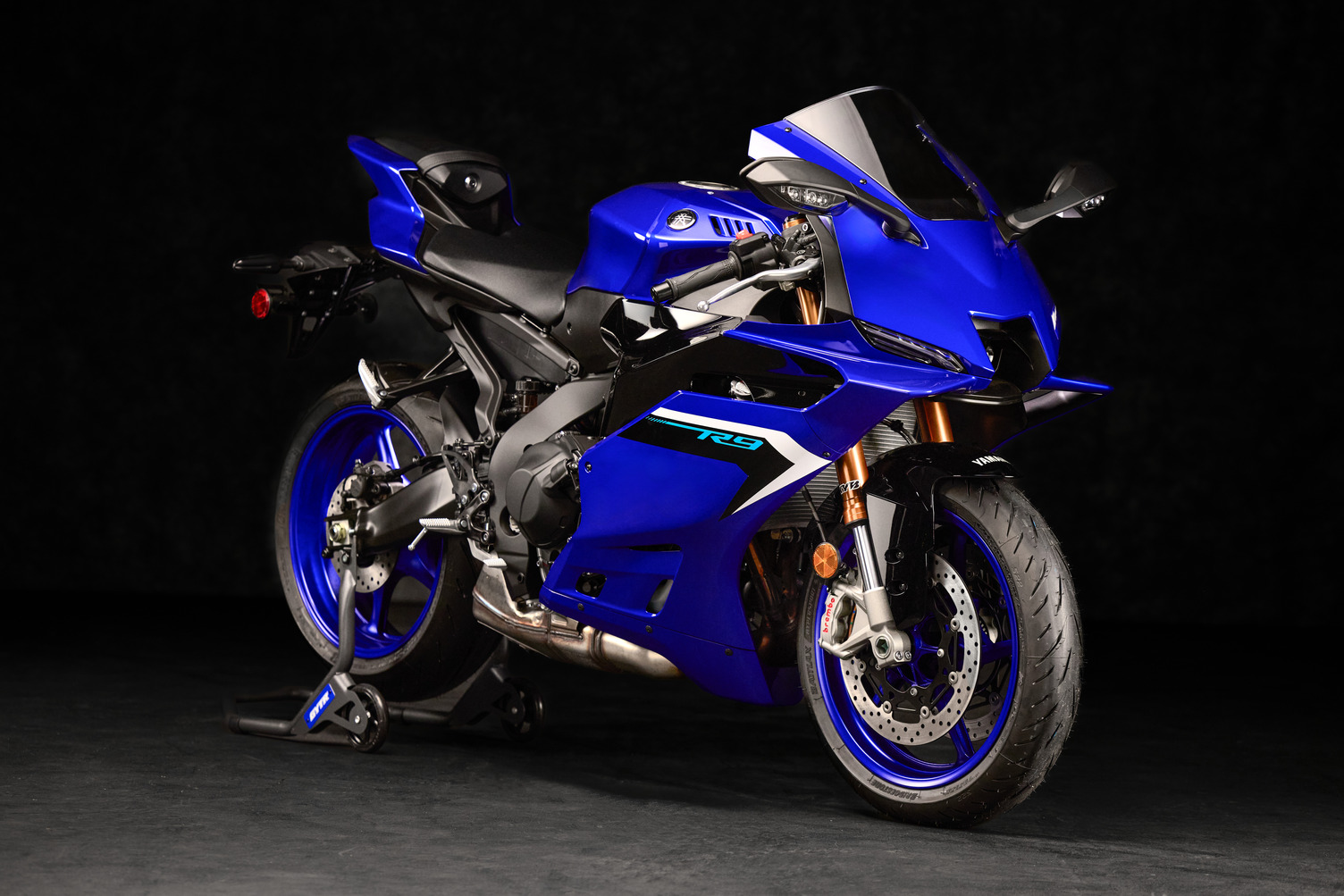
The YZF-R9’s Deltabox aluminum frame is specific to the R9, not a repurposed MT-09 structure. Yamaha says it’s the lightest frame they’ve ever put on a supersport, and it’s 10% lighter than the MT-09’s unit while being stiffer in key bending planes (RevZilla, 2025). Rake is 22.6 degrees and trail is 3.7 inches — sportier geometry than the MT-09 but more relaxed than a traditional 600cc track-focused supersport.
The fully adjustable KYB suspension package is serious hardware. The 43mm inverted fork offers high/low-speed compression plus rebound and preload adjustment; the rear shock matches it. Bridgestone Battlax Hypersport S22 tires come fitted from the factory. Brembo Stylema monoblock calipers work through 320mm front rotors via a radial master cylinder and stainless braided lines — genuine race-spec stopping power without an upgrade.
Electronics are where the R9 separates from bikes that cost significantly more. The six-axis IMU supports nine-level traction control, three-mode slide control, three-mode wheelie control, ABS (disengageable at the rear), engine brake management, back-slip regulation, and launch control. There are four street ride modes, four customizable track modes, and a bi-directional quickshifter. Cruise control is standard. So is a 5-inch full-color TFT with smartphone connectivity and a Y-TRAC lap timer (Yamaha Motor Canada, 2025).
MotoGP-inspired aerodynamic winglets built into the front bodywork activate above 93 mph, reducing front-end lift by 6–7% in a straight line and up to 10% in corners while cutting aerodynamic drag below that of the discontinued R6 (MCN, 2025).
Ergonomics sit between “street-friendly” and “full commitment.” The clip-ons are 8mm higher and 10mm further forward than a traditional inline-four 600, so the reach isn’t brutal. Cycle News described 60 track laps at Sonoma without feeling wrecked afterward, which is a meaningful endorsement. The 32.7-inch seat height is accessible for average-height riders, though shorter riders will feel the 430-pound wet weight on both feet at a stop.
Where the R9 Earns Its Price and Where It Doesn’t
At $12,499, the R9 is extremely well equipped. The standard hardware — Brembo Stylemas, fully adjustable KYB, IMU-based electronics, quickshifter — typically appears on bikes priced $3,000–$5,000 higher. It won the 2025 WorldSSP championship with Stefano Manzi taking 11 race wins in the first season, and it won MotoAmerica Supersport domestically, meaning the race engineers found the platform capable enough to do their jobs with it (Cycle News, 2025).
The honest drawbacks: the R9 is heavier and lazier in direction changes than the R6 it effectively replaced. Cycle News’s long-term test noted that the bike requires more rider input to initiate corner entry — more like muscling a superbike than flicking a traditional 600 (Cycle News long-term, 2025). The 430-pound wet weight is real. The narrow powerband above 7,000 rpm means the last 2,500 rpm of the rev range are where the fun lives, and the emissions flat spot at 5,000–6,500 rpm is annoying on a sport bike that you want to drive hard coming off slow corners.
For street riders and entry-level track day riders, the R9 is likely to be the better choice over the old R6 because of the torque delivery, the electronics suite, and the more forgiving chassis. For riders who want the sharpest-handling 600-class tool available, the comparison may not favor the R9.
Frequently Asked Questions About the Yamaha YZF-R9
What is the top speed of the Yamaha YZF-R9?
The Yamaha YZF-R9 has a top speed of 161 mph (260 km/h), confirmed by GPS-instrumented testing from MotoStatz and multiple European press outlets at the electronic rev limiter in sixth gear. Speedometer readings typically read around 165 mph at that point, which reflects standard speedo over-read rather than actual ground speed. This figure is consistent across 2025 and 2026 model years since Yamaha has not changed the engine, gearing, or rev limiter.
How much horsepower does the Yamaha YZF-R9 make?
Yamaha claims 117 hp at 10,000 rpm and 69 lb-ft at 7,000 rpm at the crankshaft. Rear-wheel figures for the R9 specifically have not been widely published, but the identical 890cc CP3 engine in the MT-09 and XSR900 consistently produces 104–110 hp at the wheel on independent dynos after accounting for drivetrain losses (Motorcycle.com, 2025; MotoStatz, 2025). Expect the R9 to land around 105 rear-wheel horsepower in stock form.
How fast is the 0–60 mph time on the Yamaha YZF-R9?
The R9 reaches 60 mph from a standstill in approximately 3.0 seconds using launch control, based on instrumented testing consensus (Corner Speed Blog, 2026). Without launch control, most riders will see 3.1–3.2 seconds as front-wheel lift scrubs time. The quarter mile takes approximately 10.7 seconds at a trap speed of around 130 mph.
What engine does the Yamaha YZF-R9 use?
The R9 uses Yamaha’s 890cc CP3 inline three-cylinder engine with a 120-degree crossplane crankshaft and a 270-degree firing order. The engine is shared with the MT-09 naked bike but receives a dedicated ECU tune, reduced throttle rotation angle, different final-drive gearing (16/45 vs. the MT-09’s 16/43), and a larger curved radiator sourced from the YZF-R1 (Rider Magazine, 2025; Yamaha Motor Canada, 2025).
Is the Yamaha YZF-R9 a good bike for beginners?
The R9 is not an ideal first bike, but it’s one of the more approachable sportbikes in the 100-plus horsepower class. The CP3’s broad torque delivery means you don’t need to be deep in the rev range to make progress, and the IMU-managed traction control and wheelie control give a less experienced rider meaningful protection. The 32.7-inch seat height and 430-pound wet weight both need consideration. A new rider with some experience on a smaller bike — say, a year on an R3 or MT-07 — could manage the R9, especially with the rider aids dialed up.