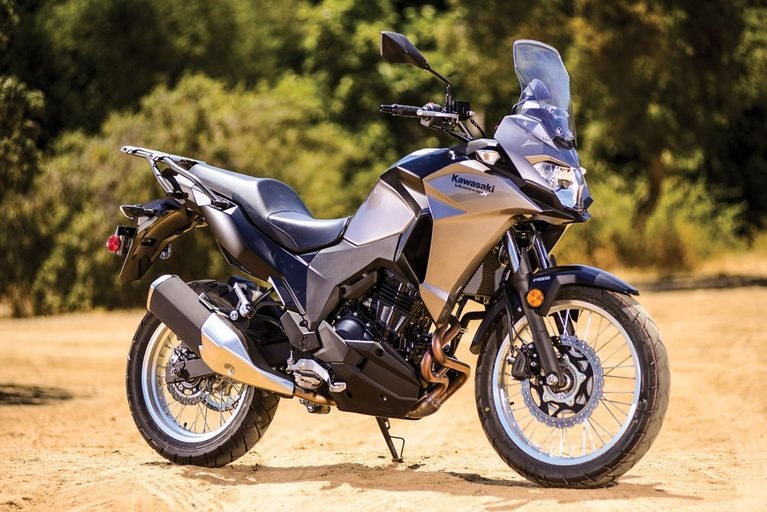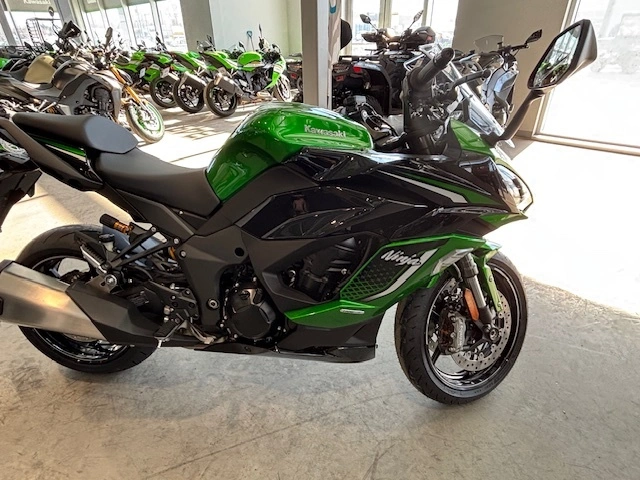
Kawasaki Versys 1000 Specs, Top Speed & Review
TL;DR
- The Kawasaki Versys 1000 runs a 1,043cc liquid-cooled inline-four producing 120 hp at 9,000 rpm and 75.2 lb-ft of torque at 7,500 rpm.
- Top speed is approximately 136-140 mph based on independent testing; Kawasaki does not publish an official figure.
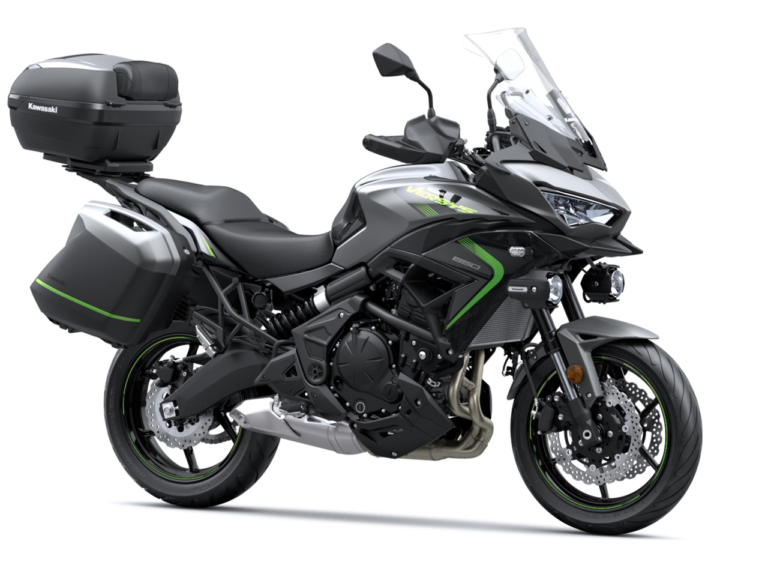
- The SE trim adds Showa Skyhook electronically controlled semi-active suspension, cornering lights, quick shifter, and heated grips.
- Wet weight is 255-257 kg (562-566 lb) depending on trim; seat height is 840 mm (33.1 in) on the SE.
- The 2023 Versys 1000 SE LT+ carried an MSRP of $18,899; Kawasaki replaced the platform with the 1100 for 2025.
Kawasaki Versys 1000 Full Specs (2019-2024)
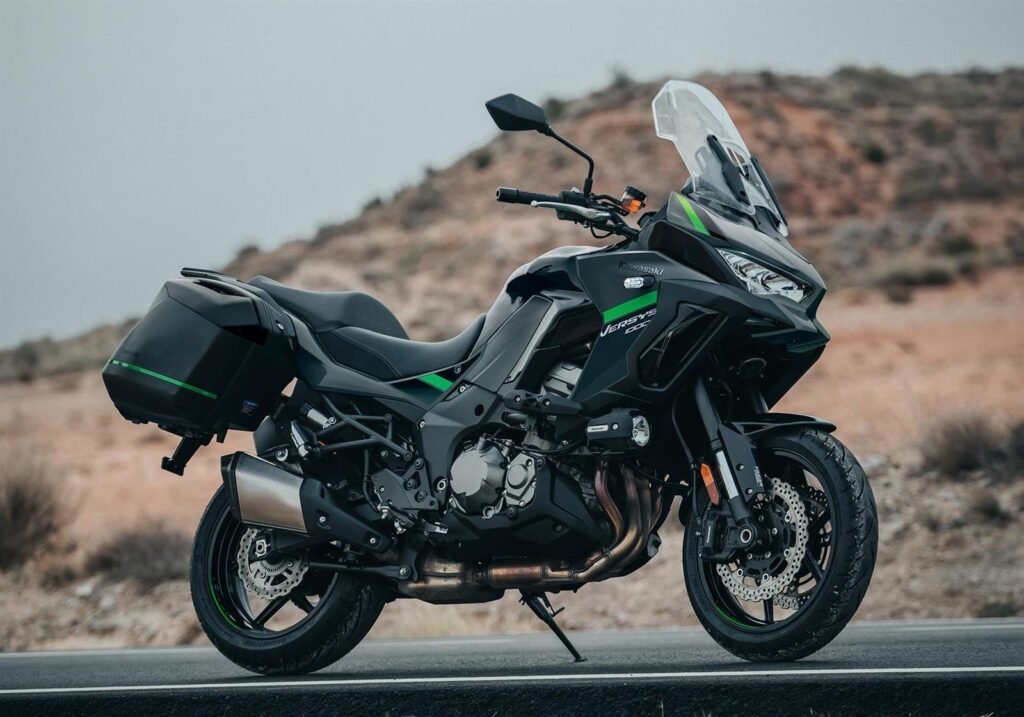
The Versys 1000 ran the same drivetrain from 2019 through 2024. The 1,043cc inline-four is tuned for mid-range pull, not redline heroics, and output figures were unchanged across the entire run.
| Spec | Standard / S | SE / SE LT+ |
|---|---|---|
| Engine | 1,043cc liquid-cooled inline-four | Same |
| Bore x Stroke | 77.0 mm x 56.0 mm | Same |
| Peak Power | 120 hp @ 9,000 rpm | Same |
| Peak Torque | 102 Nm (75.2 lb-ft) @ 7,500 rpm | Same |
| Transmission | 6-speed, chain final drive | Same |
| Front Suspension | 43mm inverted fork, adj. preload/rebound | 43mm Showa KECS semi-active |
| Rear Suspension | Horizontal back-link, remote preload | Showa Skyhook EERA semi-active |
| Front Brake | Dual 300mm discs, radial 4-piston calipers | Same |
| ABS | Cornering ABS (IMU-assisted) | Same |
| Tires | 120/70-ZR17 front, 180/55-ZR17 rear | Same |
| Wheelbase | 1,520 mm (59.8 in) | Same |
| Seat Height | 820 mm (32.3 in) | 840 mm (33.1 in) |
| Wet Weight | ~255 kg (562 lb) | ~257 kg (566 lb) |
| Fuel Tank | 21 liters (5.5 gal) | Same |
| Instrumentation | LCD | TFT color + Bluetooth |
| Quick Shifter | Optional | Standard (KQS up/down) |
| Heated Grips | Optional | Standard |
| Cornering Lights | No | LED cornering lights |
| US MSRP (2023) | ~$11,399 (base) | $18,899 (SE LT+) |
Kawasaki Versys 1000 Top Speed
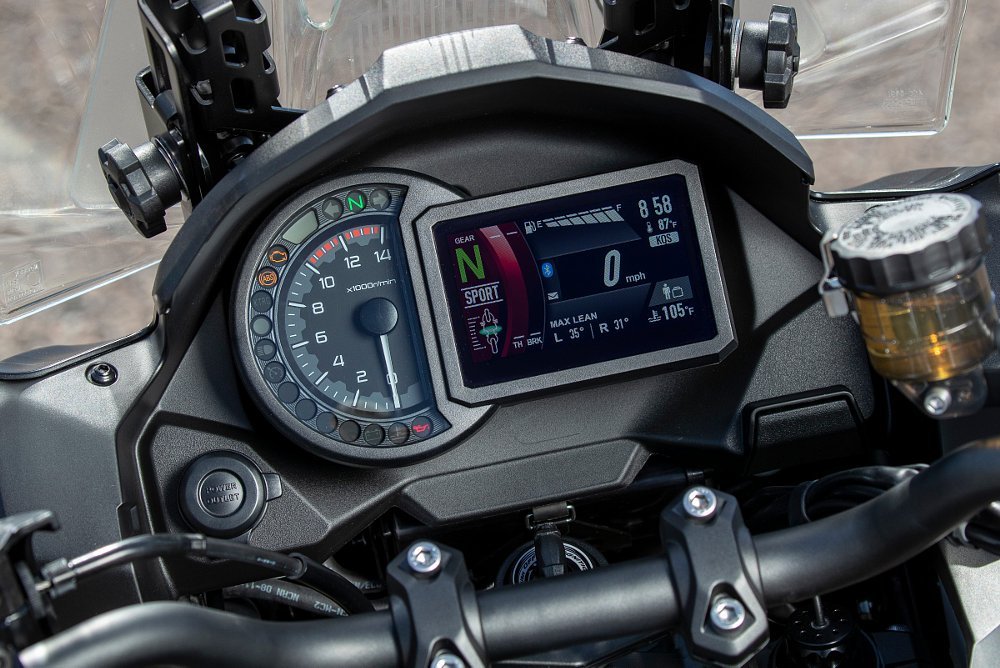
The Versys 1000 reaches approximately 136-140 mph (219-225 km/h) under real-world conditions. Kawasaki does not publish an official top speed figure for this model.
The 120 hp engine has more than enough power, but the upright riding position and tall windscreen generate enough drag to cap things well short of what the motor could manage in a prone tuck. Owner testing places sustained comfortable cruising around 120-125 mph before wind pressure becomes genuinely unpleasant. Track testing of the 2024 SE has put peak speed at approximately 220 km/h (136.7 mph), which aligns with what the bike’s aerodynamics and gearing produce.
Kawasaki Versys 1000 Acceleration
Kawasaki does not publish official 0-60 or 0-100 mph times for the Versys 1000.
Independent testing and owner data consistently put 0-60 mph in the 3.1-3.4 second range for a skilled rider on a warmed-up bike. The 120 hp figure sounds strong, but the 562 lb wet weight tempers the launch. That weight also means the Versys rewards smooth riders more than aggressive ones off the line.
Where the bike genuinely impresses is roll-on acceleration. From 50-80 mph in fourth or fifth gear, the inline-four pulls hard and cleanly without the snatchiness you’d get from a more aggressive tune. For two-up touring, that everyday usability matters far more than a quarter-mile time.
Engine and Chassis
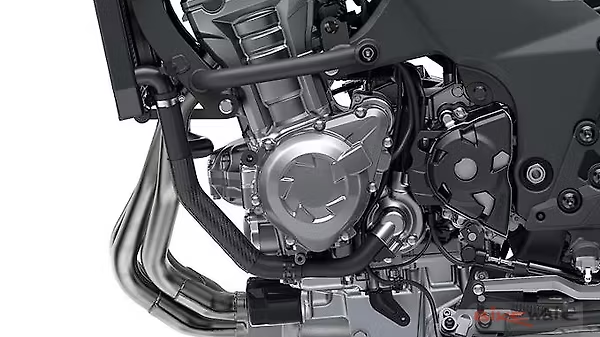
The Versys 1000 engine is a direct relative of the motor in the Kawasaki Z1000 and Ninja 1000 SX, retuned with different cam profiles and fueling to move peak torque down to 7,500 rpm. The result is an engine that pulls strongly from around 3,500 rpm – you don’t have to chase the tach to make progress.
The twin-tube aluminum frame is paired with long-travel suspension – 150 mm front, 152 mm rear – which gives the Versys real ability to absorb broken pavement without upsetting the chassis. On the SE, the Showa Skyhook system reads road inputs in real time and adjusts damping accordingly. Two-up over rough interstate is noticeably better than what a passive shock delivers.
Braking comes from dual 300mm front discs with radial-mount 4-piston calipers – competent hardware, not exotic. IMU-assisted cornering ABS means you can brake mid-corner without drama if you get caught out.
Strengths and Limitations
The engine is tractable across the entire rpm range. No flat spots, no sudden hit – just steady, confident pull that you can manage with two fingers at most throttle openings. Cruise control is standard across all 2019+ models, which matters on long highway days.
The stock windscreen is one of the better units at this price point. Taller riders report staying in clean air at highway speeds without the buffeting that plagues many sport-tourers.
At 255+ kg wet, the Versys is heavy for its segment. Low-speed maneuvering requires awareness. If you’re under 5’8″ and not a confident handler, the SE’s 840mm seat height combined with that weight makes stop-and-go traffic less relaxed than it could be.
The standard shock on non-SE models is adequate but not exceptional. Regular two-up riding or loaded touring warrants an upgrade to an Öhlins or Wilbers unit.
Who the Versys 1000 Is For
The Versys 1000 is a high-mileage touring motorcycle at a price most riders can reach. It fits riders who put 10,000-20,000 miles per year on a bike, want to cover ground quickly and comfortably, and don’t need exotic styling.
The SE LT+ with hard bags, Skyhook suspension, and heated grips is the practical choice for overnight and multi-day tours, especially in shoulder seasons. The standard and S trims make sense if you’re adding your own luggage and can live without semi-active damping.
The Versys’s natural home is the interstate and smooth back road. It tolerates gravel fire roads but it’s not a proper adventure bike – the 17-inch wheels and road tires make clear where the limits are.
Frequently Asked Questions
What is the top speed of the Kawasaki Versys 1000?
Kawasaki does not publish an official figure. Independent testing and owner data put the 2019-2024 Versys 1000 at approximately 136-140 mph. The upright ergonomics and windscreen create drag that limits the top end more than the engine itself does.
How much horsepower does the Kawasaki Versys 1000 make?
The 2019-2024 Versys 1000 produces 120 hp at 9,000 rpm and 102 Nm (75.2 lb-ft) of torque at 7,500 rpm from its 1,043cc liquid-cooled inline-four. Output was unchanged across the full production run.
What is the difference between the Versys 1000, S, and SE?
All three share the same engine and basic chassis. The standard model has manual suspension and an LCD dash. The S adds IMU-linked electronics and a TFT display. The SE adds Showa Skyhook semi-active suspension, LED cornering lights, heated grips, and hard luggage on the LT+ trim.
Is the Kawasaki Versys 1000 still in production?
No. Kawasaki announced the Versys 1100 for 2025, replacing the 1000 platform entirely. The 1100 produces 132.7 hp according to Kawasaki’s figures. The 2024 model was the last year of the 1,043cc Versys.
How heavy is the Kawasaki Versys 1000?
The standard and S models weigh approximately 255 kg (562 lb) wet. The SE comes in at about 257 kg (566 lb). The SE LT+ with hard bags installed adds further to that figure.
Key Takeaways
- The Versys 1000 produces 120 hp and 75.2 lb-ft of torque from a 1,043cc inline-four unchanged from 2019-2024.
- Top speed is approximately 136-140 mph; 0-60 mph runs approximately 3.1-3.4 seconds based on independent data.
- The SE’s Showa Skyhook semi-active suspension is the standout upgrade and makes a real difference two-up or on rough roads.
- At 255-257 kg wet, the Versys 1000 rewards experienced, confident riders – not a beginner machine.
- The platform was discontinued after 2024; the Versys 1100 replaces it with 132.7 hp for 2025.
- Used 2019-2024 examples are solid touring value; a 2023 SE LT+ listed new at $18,899 and used examples trade well below that.