Kawasaki KLX110R Specs, Horsepower & Performance Review
TL;DR
- The 2026 Kawasaki KLX110R runs a 112cc air-cooled SOHC single making roughly 6 to 7 horsepower at the rear wheel, based on independent test data rather than a factory-published figure.
- Base MSRP is $2,999 plus a $315 destination charge, with a 26.8-inch seat height built for younger, shorter riders.
- It uses a 4-speed transmission with an automatic centrifugal clutch, so there’s no clutch lever to manage while a new rider learns throttle control.
- Suspension travel is 4.3 inches at both ends, less than the taller KLX110R L, which trades the auto clutch for a manual 4-speed and adds suspension travel and ground clearance.
- Curb weight sits at 167.5 pounds, light enough for a parent to pick up the back end and reposition it on a trailer without a ramp.
How Much Horsepower Does the KLX110R Make?
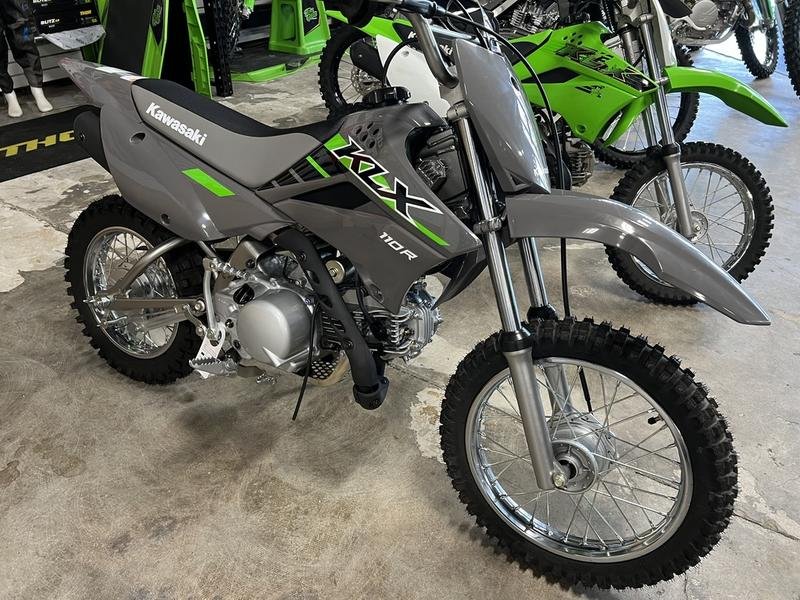
Kawasaki doesn’t publish a horsepower figure for the KLX110R, which is normal for this class of youth off-road bike. The most reliable number comes from independent dyno testing rather than a factory spec sheet.
In a 2021 dirt bike shootout that put the KLX110R on a dyno alongside its direct Honda and Yamaha rivals, testers measured stock 110cc minibikes producing single-digit horsepower at the rear wheel, with peak output typically arriving in the 6 to 7 hp range around 7,000 rpm (Vital MX, 2021).
A separate review of the same generation KLX110R clocked output at just over six horsepower at 7,000 rpm, describing the powerband as broad and confidence-building for trail riding rather than peaky (Ultimate Motorcycling, 2021). Both figures come from independent testers, not from Kawasaki, since the factory doesn’t publish a crank or rear-wheel horsepower number for this model (Kawasaki Motors Corp., 2026).
That’s plenty for the bike’s job. A youth-oriented 112cc single isn’t built to impress on a spec sheet; it’s built to be predictable at low rpm so a nine-year-old doesn’t loop it out on a hill climb. The screw-type throttle limiter on the grip housing lets a parent physically cap how far the throttle can open, which matters more to real-world safety than a peak horsepower number ever will.
What Engine Is Inside the KLX110R?
The KLX110R uses a 112cc four-stroke, single-cylinder, SOHC, air-cooled engine with a 53.0 x 50.6mm bore and stroke and a 9.5:1 compression ratio. Fueling comes from a Keihin PB18 carburetor, not fuel injection, which keeps the bike simple to service and easy to jet if altitude or climate calls for it.
Ignition is DC-CDI, a straightforward capacitor discharge system with no battery-dependent ECU logic to troubleshoot. Final drive is a standard chain, same as nearly every dirt bike in this class, so sprockets and chains are cheap and easy to source at any powersports shop.
The carbureted setup is worth calling out because most 2026-model motorcycles above the entry-level tier have moved to fuel injection. Kawasaki keeps the KLX110R carbureted on purpose: it’s simpler for a first-time wrench (often a parent) to diagnose a rough idle or a fouled jet than to chase an EFI fault code on a machine this small.
How Does the 4-Speed Automatic Clutch Work?
The KLX110R pairs a 4-speed, return-shift transmission with an automatic centrifugal clutch and a wet, multi-disc clutch pack. In practice, that means the rider shifts with a foot lever like any manual bike, but there’s no clutch lever at the bar to squeeze.
A centrifugal clutch engages automatically as engine rpm rises, similar to how a torque converter behaves in an automatic car. That removes one of the two hardest skills a brand-new rider has to learn simultaneously (clutch feel and throttle control) and lets them focus on balance and where to look.
This is the single biggest mechanical difference between the KLX110R and its sibling, the KLX110R L, which swaps in a full manual clutch for riders ready to learn traditional shifting technique.
What’s the Suspension and Chassis Setup?
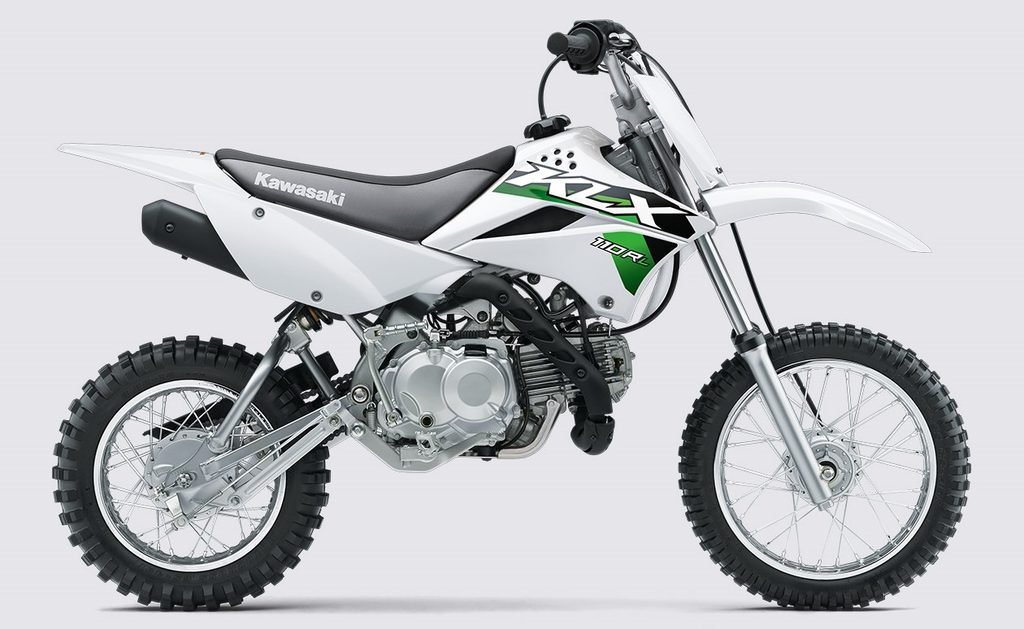
The KLX110R runs a 30mm hydraulic telescopic fork up front and a single hydraulic shock on a swingarm out back, each providing 4.3 inches of wheel travel. Neither end is adjustable for compression or rebound, which is standard for a bike at this price point and intended user.
The frame is a high-tensile steel backbone design with a 24.8-degree rake and 2.0 inches of trail, geometry tuned for stability at low speed rather than quick direction changes. Ground clearance is 8.5 inches, and the whole package sits on a 42.3-inch wheelbase.
Front and rear wheels use wire spokes wrapped in a 2.50 x 14 front tire and 3.00 x 12 rear tire, both off-road tread patterns. Brakes are mechanical drums front and rear (90mm front, cable-actuated; 110mm rear, rod-actuated) rather than hydraulic discs, which keeps maintenance simple but means brake feel is noticeably softer than on a bike with disc brakes.
KLX110R Full Spec Sheet
| Spec | KLX110R |
|---|---|
| Engine | 112cc, 4-stroke, SOHC, air-cooled single |
| Bore x Stroke | 53.0 x 50.6mm |
| Compression Ratio | 9.5:1 |
| Fuel System | Keihin PB18 carburetor, screw-type throttle limiter |
| Transmission | 4-speed, automatic centrifugal clutch |
| Front Suspension / Travel | 30mm telescopic fork / 4.3 in |
| Rear Suspension / Travel | Single shock / 4.3 in |
| Front / Rear Brakes | 90mm drum / 110mm drum (mechanical) |
| Front / Rear Tire | 2.50 x 14 / 3.00 x 12 |
| Seat Height | 26.8 in |
| Ground Clearance | 8.5 in |
| Curb Weight | 167.5 lb |
| Fuel Capacity | 1.0 gal |
| Base MSRP | $2,999 (+ $315 destination) |
KLX110R vs. KLX110R L: What Changes for a Taller Rider?
The core engine, carburetor, and frame are identical between both bikes. What changes is the clutch, suspension travel, seat height, and ground clearance, all aimed at a taller, more experienced rider stepping up from the base KLX110R.
| Spec | KLX110R | KLX110R L |
|---|---|---|
| Clutch | Automatic centrifugal | Manual, wet multi-disc |
| Front Travel | 4.3 in | 5.5 in |
| Rear Travel | 4.3 in | 5.2 in |
| Seat Height | 26.8 in | 28.7 in |
| Ground Clearance | 8.5 in | 10.4 in |
| Rake/Trail | 24.8°/2.0 in | 24.2°/1.9 in |
| Curb Weight | 167.5 lb | 167.5 lb |
| Base MSRP | $2,999 | $3,199 |
The extra 1.9 inches of seat height and 1.9 inches of ground clearance on the L version matter more than they sound like on paper. That gap is often the difference between a kid who can flat-foot the bike confidently at a stop and one who’s tip-toeing, which affects how relaxed they are riding in the first place.
Who Is the KLX110R Actually Built For?
This bike is built for younger or smaller riders who are new to two wheels and need the clutch decision removed from the equation. The low 26.8-inch seat height and automatic centrifugal clutch are both aimed squarely at that rider.
It’s not the right choice for a teenager or smaller adult who already has some dirt bike experience and wants to learn proper clutch and shift coordination; the KLX110R L or a full-size trail bike fits that rider better. It’s also not a track or motocross bike; the suspension travel and drum brakes aren’t built for jumps or aggressive braking at speed.
Frequently Asked Questions About the Kawasaki KLX110R
How much horsepower does the Kawasaki KLX110R have?
Kawasaki doesn’t publish an official horsepower figure. Independent dyno testing on the same-generation engine has measured output in the 6 to 7 horsepower range at the rear wheel around 7,000 rpm.
Is the KLX110R fuel injected?
No. It uses a Keihin PB18 carburetor rather than fuel injection. That keeps servicing straightforward for a first-time home mechanic and makes rejetting simple if you’re riding at high altitude.
What’s the difference between the KLX110R and the KLX110R L?
The base KLX110R has an automatic centrifugal clutch, a 26.8-inch seat height, and 4.3 inches of suspension travel at both ends. The KLX110R L has a manual clutch, a 28.7-inch seat height, and more suspension travel and ground clearance for a taller or more experienced rider.
What size rider fits on a KLX110R?
The 26.8-inch seat height suits younger or smaller riders who need to flat-foot the bike confidently. Most owners put kids in roughly the 7 to 11 age range on this model, though it comes down to inseam more than age.
Does the KLX110R have disc brakes?
No. Both the front and rear brakes are mechanical drums (90mm front, 110mm rear), not hydraulic discs. Drum brakes are simpler to maintain but require more lever and pedal effort than discs.
How much does the Kawasaki KLX110R cost?
Base MSRP is $2,999, plus a $315 destination charge that varies by dealer. Dealer setup, taxes, and any accessories are separate from that base price.
What transmission does the KLX110R use?
A 4-speed, return-shift gearbox paired with an automatic centrifugal clutch and a wet, multi-disc clutch pack. The rider shifts with a foot lever but never touches a clutch lever.