Kawasaki KX112 Specs, Horsepower & Performance Review
TL;DR
- The 2026 Kawasaki KX112 runs a 112cc liquid-cooled two-stroke single with a 28mm Keihin carburetor and KIPS power valve.
- Kawasaki does not publish a horsepower figure for the KX112; this is standard for the youth Supermini class and no independent dyno data is available as of this writing.
- Curb weight is 164.9 lb without fuel, and rear wheel travel jumps to 12.0 inches for 2026, matching Kawasaki’s full-size KX motocross bikes.
- MSRP is $5,749, and the bike is built for 12-to-16-year-old riders moving up from 85cc machines into the Supermini class.
- The engine carries over unchanged from 2025; every update this year is in the chassis, suspension, and brakes.
What Does the Kawasaki KX112 Engine Put Out?
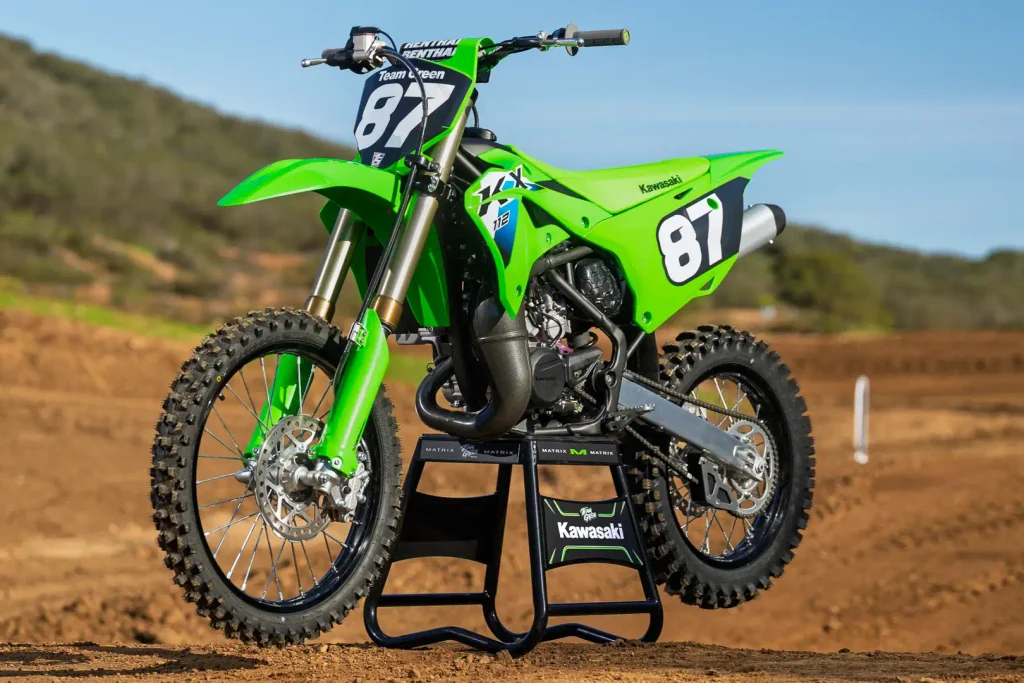
Kawasaki doesn’t publish a crank or rear-wheel horsepower number for the KX112, and that’s normal for this class of bike. Youth Supermini machines are built for closed-course racing, not street use, so manufacturers skip the horsepower spec sheet entirely and let lap times do the talking.
What you do get is a 112cc liquid-cooled, two-stroke single with a bore and stroke of 52.5 x 51.6mm, a 28mm Keihin carburetor, and Kawasaki’s KIPS exhaust power valve system, which widens the usable powerband by adjusting exhaust port timing as revs climb (Kawasaki, 2026).
Compression sits at 9.9:1 at low speed and 8.6:1 at high speed, a dual-range setup that’s part of how KIPS manages the power delivery.
The engine itself carries over unchanged from 2025. Riders and testers who’ve spent time on it describe strong low-end torque and a hard-hitting top end, which suits kids stepping up from an 85 and still building throttle control.
If you want an actual number, your best bet is a private dyno run once more owners get 2026 bikes on the ground; treat any horsepower figure you see online for this engine as an estimate until it’s sourced.
Kawasaki KX112 Full Spec Sheet
| Spec | 2026 Kawasaki KX112 |
|---|---|
| Engine | 112cc liquid-cooled two-stroke single, KIPS power valve |
| Bore x Stroke | 52.5 x 51.6mm |
| Compression Ratio | 9.9:1 (low) / 8.6:1 (high) |
| Fuel System | 28mm Keihin carburetor |
| Transmission | 6-speed, wet multi-disc clutch |
| Front Suspension | KYB 43mm inverted fork, adjustable compression/rebound, 10.8 in travel |
| Rear Suspension | KYB Uni-Trak shock, fully adjustable, 12.0 in travel |
| Front / Rear Brakes | 240mm / 220mm petal discs |
| Seat Height | 34.1 in |
| Curb Weight | 164.9 lb (without fuel) |
| Fuel Capacity | 1.32 gal |
| MSRP | $5,749 |
Source: Kawasaki official spec sheet
What Changed on the 2026 KX112’s Suspension?
The 2026 KX112 gets a genuinely reworked chassis while the engine stays the same. Rear wheel travel grows from 10.8 inches to a full 12.0 inches, putting it on par with Kawasaki’s adult-size KX motocross bikes (Ultimate Motorcycling, 2026).
That extra travel comes from revised Uni-Trak linkage geometry, and the shock itself grew 10mm longer with a thicker 14mm shock rod to handle the added stroke. Up front, the 43mm KYB inverted fork now has fully adjustable compression and rebound damping (previous years were more limited), plus Kashima coating on the fork tubes for smoother action under repeated hits.
Practically, this means a young rider who’s already comfortable pushing suspension travel on an 85 has real adjustability to grow into on the 112, instead of outgrowing the chassis before they outgrow the engine.
How Do the KX112’s Brakes and Ergonomics Hold Up?
The 2026 KX112 gets a meaningful brake upgrade: a 240mm front petal disc (up from 220mm) with a dual-piston Nissin caliper borrowed from the KX250’s master cylinder, plus a 220mm rear disc (up from 184mm). More rotor and a bigger caliper mean more stopping power and better modulation for a rider still learning to trail-brake into corners.
Ergonomics got wider too. The rider triangle is roomier for 2026, the handlebar mount uses wider Renthal Fatbars, and Kawasaki’s ERGO-FIT system lets you adjust the reach to bars and pegs as a kid grows through a race season. Seat height lands at 34.1 inches, tall enough that this isn’t a bike for a rider fresh off a 65cc machine.
Who Should Buy the Kawasaki KX112?
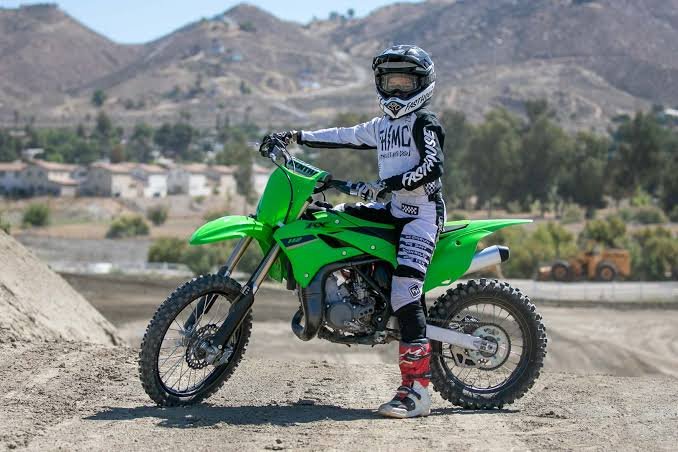
The KX112 is built for a specific window: riders roughly 12 to 16 years old who’ve outgrown an 85cc bike but aren’t ready for a full-size 125 or 250. It’s a Supermini-class racer first, meaning it’s set up for closed-course motocross, not trail riding or street use.
A Cycle News test with a 15-year-old, 118-pound rider praised the KX112’s low center of gravity and smooth power delivery, noting it let him stand flat-footed and move around the bike with confidence after just a few laps of adjustment (Cycle News, 2026). If your rider currently races an 85 and is aging out of that class, the KX112’s low seat feel and predictable low-end torque are worth a test ride before you commit.
It’s not the right bike for a beginner. Riders need real dirt experience and race craft before stepping onto a Supermini, given the torque and top-end pull on tap.
Frequently Asked Questions
Does the Kawasaki KX112 have a listed horsepower rating?
No. Kawasaki doesn’t publish a horsepower figure for the KX112, which is typical for youth Supermini motocross bikes. No independent dyno test results are publicly available for the 2026 model as of this writing.
What’s new on the 2026 Kawasaki KX112?
The engine is unchanged from 2025, but the chassis gets a full overhaul: 12.0 inches of rear wheel travel (up from 10.8), a fully adjustable 43mm KYB fork, bigger front and rear brake discs, and a roomier ergonomic package.
How much does the 2026 Kawasaki KX112 cost?
MSRP is $5,749, plus a dealer-set destination charge. Pricing and availability can vary by dealer, so confirm out-the-door cost before you buy.
What age or size rider is the KX112 built for?
It’s designed for riders roughly 12 to 16 years old transitioning up from 85cc machines into the Supermini class, with a 34.1-inch seat height that requires real inseam and dirt-riding experience.
Is the KX112 a two-stroke or four-stroke?
It’s a 112cc liquid-cooled two-stroke single with KIPS power valve technology, a 28mm Keihin carburetor, and a 6-speed transmission.