Kawasaki KLX300 Specs, Top Speed & Review
TL;DR
- The Kawasaki KLX300 puts 23 hp and 15.2 lb-ft to the rear wheel on a dyno.
- Kawasaki publishes no official top speed; tested flat-ground top speed is 82-83 mph.
- Seat height is 35.2 in., curb weight is 302 lb., and 2024 MSRP started at $5,799.
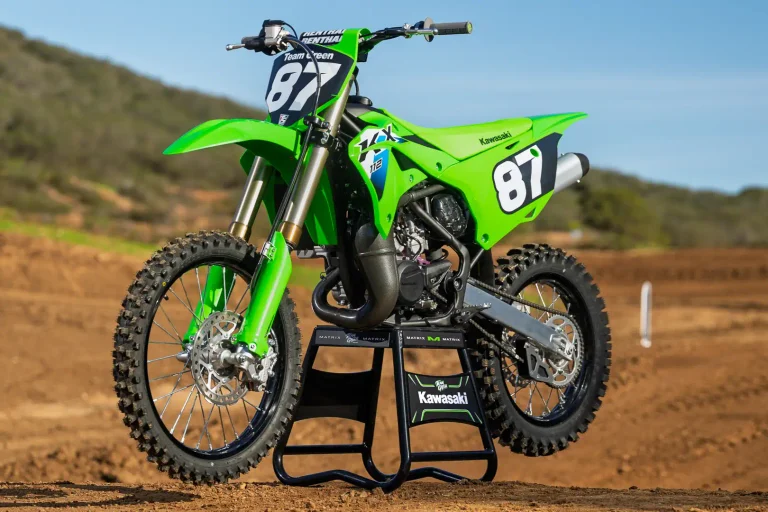
- The KLX300 is the street-legal sibling of the KLX300R trail bike – same engine, longer wheelbase, DOT lighting, and street-legal tires.
- Best fit for new riders, part-time commuters who want weekend dirt access, and anyone on a tight first-bike budget.
Kawasaki KLX300 Full Spec Table
| Spec | 2024 KLX300 |
|---|---|
| Engine | 292cc liquid-cooled DOHC 4-stroke single |
| Bore x Stroke | 78.0 x 61.2 mm |
| Compression Ratio | 11.1:1 |
| Fuel System | Fuel injection, 34mm throttle body |
| Transmission | 6-speed, cable-operated wet clutch |
| Final Drive | O-ring chain |
| Front Suspension | 43mm inverted fork, 16-way compression adj., 10 in. travel |
| Rear Suspension | Uni-Trak piggyback shock, 20-way compression, 30-way rebound |
| Front Tire | 80/100-21 Dunlop D605 |
| Rear Tire | 100/100-18 Dunlop D605 |
| Wheelbase | 56.7 in. |
| Seat Height | 35.2 in. |
| Ground Clearance | 9.8 in. |
| Fuel Capacity | 2.0 gal. |
| Curb Weight | 302 lb. |
| MSRP (2024) | $5,799 |
KLX300 Engine and Power: What the Numbers Actually Mean
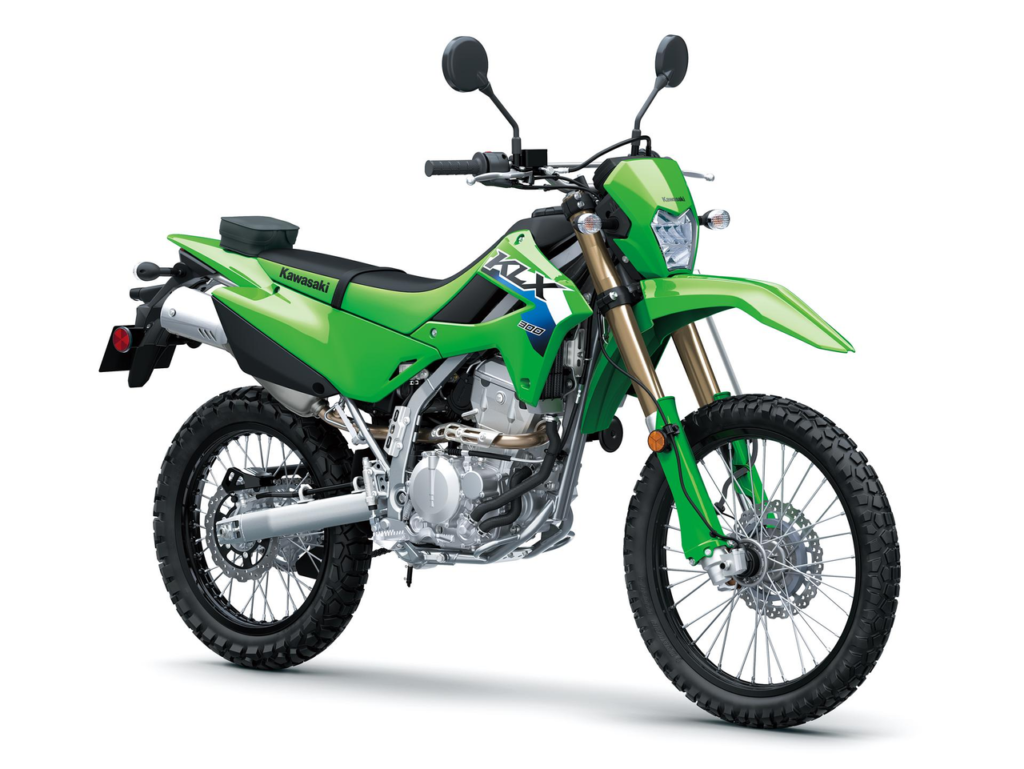
The KLX300 puts 23 hp and 15.2 lb-ft of torque to the rear wheel – those are dynoed figures from Motorcycle.com’s 2021 comparison test, not estimates. Kawasaki doesn’t publish official output numbers for this model.
That power lands low and stays linear. The sweet spot is 6,000-9,000 rpm, which is where you’re riding on dirt trails and back roads. You’re not chasing a peak number at redline. The 292cc single pulls cleanly from idle, the fuel injection doesn’t surge, and the bike is nearly impossible to stall at low speed.
The DOHC four-valve head and 11.1:1 compression ratio came directly from the KLX300R trail bike when this platform launched in 2021. It replaced the KLX250, gaining 43cc through a 6mm bore increase while keeping the same 61.2mm stroke.
KLX300 Top Speed: Tested Figures
Kawasaki does not publish a top speed for the KLX300. Independent road tests put the figure at 82-83 mph on flat ground, with one tester reaching 87 mph on a downhill run. Cycle News’ 2021 test reported “a little over 80 mph on flat ground” as the realistic ceiling.
Comfortable cruising speed is a different matter. Most testers settled on 65-70 mph as a pace where vibration stays manageable. RevZilla’s 2024 test noted the bike loped along around 65 mph on back-country roads before seat buzz became noticeable.
The KLX300 handles brief highway stints without drama. Extended 75-80 mph freeway miles are another story – you’ll feel it in the footpegs and take a faceful of wind with no protection. Built to commute and trail ride, not to cover interstate distance.
KLX300 Acceleration: 0-60 mph
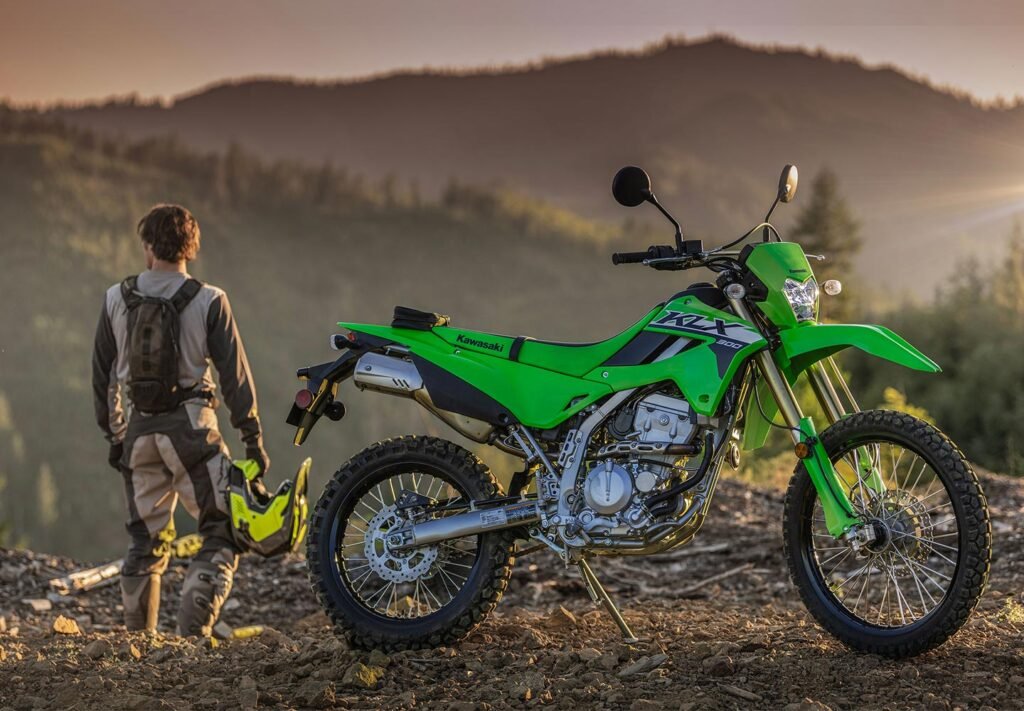
Kawasaki publishes no 0-60 mph figure, and no major publication has run a calibrated acceleration test on the KLX300. Based on 23 hp, a 302 lb. curb weight, and the tested top speed data, a 0-60 mph time in the 5.5-6.5 second range is a reasonable estimate consistent with other 300cc dual sports. Treat that as an approximation until a formal timed test is published.
What riders and testers consistently report is strong, predictable low-end pull that makes the KLX feel quicker than raw numbers suggest. The 6-speed gearbox has well-spaced ratios, and the broad torque curve means you’re rarely hunting for gear on trail.
Suspension and Chassis: The Real Value Proposition
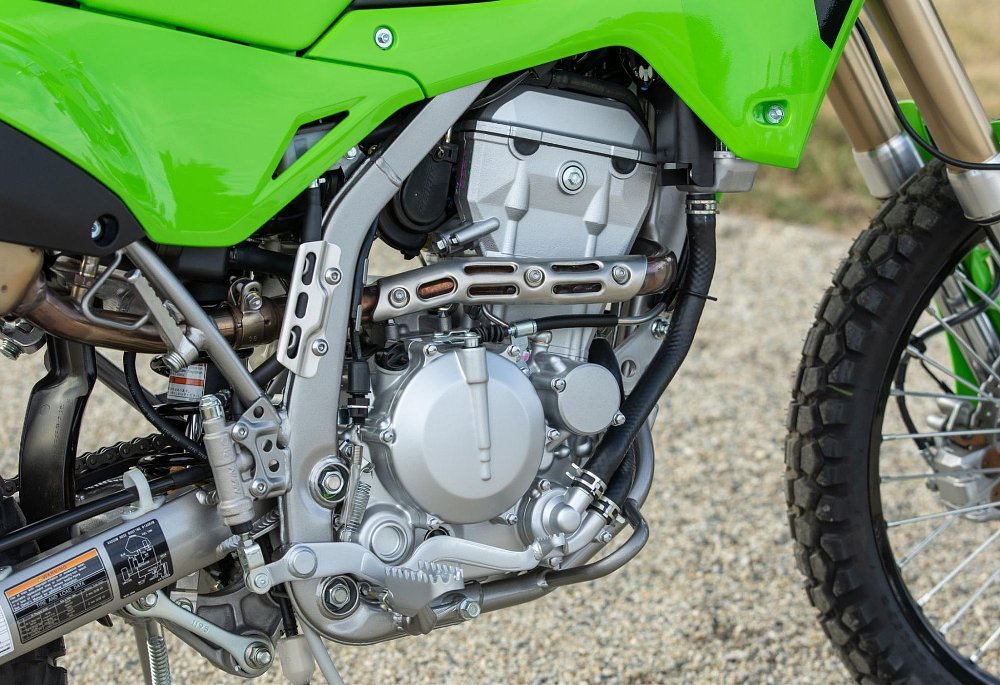
The KLX300’s suspension is what sets it apart at this price point. Up front, a 43mm inverted cartridge fork with 16-way compression damping adjustment and 10 inches of travel is hardware you’d pay considerably more for elsewhere. Out back, the Uni-Trak piggyback shock offers 20-way compression and 30-way rebound adjustment plus preload.
That adjustability is practical, not decorative. A 130-pound beginner and a 220-pound experienced rider need very different spring rates to make the same fork work. The ability to tune it without buying aftermarket parts is a genuine ownership advantage.
The 21-inch front and 18-inch rear wheels with factory D605 knobbies handle graded gravel and mild single-track well. The D605s aren’t aggressive enough for wet roots or deep mud – most riders swap to a Dunlop Geomax AT81 after their first season.
Ground clearance is 9.8 inches, lower than the KLX300R’s 12 inches due to the longer street-legal chassis.
Who Should Buy the KLX300
The KLX300 is a first-bike for people who know they want to ride dirt. New riders who commute on weekdays and want to explore fire roads on weekends without owning two bikes will find it fits cleanly. It’s also a solid step up from 200cc entry-level dual sports – more pull where it counts, same manageable character.
Where it falls short: sustained highway miles, two-up riding, and loaded touring. The 2.0-gallon tank gives roughly 80-100 miles of mixed riding per fill. The 35.2-inch seat height is a challenge for riders under about 5’4″, who’ll be on one tippy-toe at stops.
Strengths: Fully adjustable suspension under $6,000. Fuel injection and electric start. Long valve clearance intervals at every 12,000 km. Light enough to pick up solo after a tip-over.
Limitations: No ABS at any trim level. Small 2.0-gallon tank. Tall seat for shorter riders. Street-legal detuning means noticeably less off-road aggression than the KLX300R.
Frequently Asked Questions About the Kawasaki KLX300
How much horsepower does the Kawasaki KLX300 make?
Approximately 23 hp at the rear wheel, measured on a Dynojet dyno during Motorcycle.com’s 2021 comparison test. Kawasaki does not publish official output figures for this model.
What is the top speed of the Kawasaki KLX300?
Independent tests recorded 82-83 mph on flat ground, with 87 mph on a downhill run. Comfortable sustained speed is 65-70 mph. Kawasaki publishes no official top speed figure.
Is the KLX300 good for beginners?
Yes. Fuel injection prevents cold-start and high-altitude stumbles, the power is manageable and progressive, and the adjustable suspension works for a wide range of rider weights. The 35.2-inch seat height is a challenge for riders under roughly 5’4″.
What’s the difference between the KLX300 and KLX300R?
The KLX300 is street-legal; the KLX300R is off-road only. Both share the 292cc DOHC engine. The 300R runs a shorter 56.5-inch wheelbase, 12 inches of ground clearance, and weighs 282 lb. wet versus the KLX300’s 302 lb. The 300R’s suspension tune is more aggressive.
How often does the KLX300 need valve clearance checks?
Every 12,000 km. That’s a longer interval than many competing singles, which helps keep maintenance costs down over time.
Does the KLX300 have ABS?
No. The KLX300 does not offer ABS on any trim level as of the 2024 model year.
What tires come stock on the KLX300?
Dunlop D605 dual-sport tires – 80/100-21 front, 100/100-18 rear. The D605 performs well on gravel and hardpack but struggles in wet or muddy conditions. Many owners move to a Dunlop Geomax AT81 after their first off-road season.
Key Takeaways
- The KLX300 makes 23 hp and 15.2 lb-ft to the wheel from a 292cc DOHC single.
- Real-world top speed is 82-83 mph on flat ground; comfortable highway speed is 65-70 mph.
- The 43mm inverted fork with 16-way compression adjustment and the fully adjustable rear shock are the standout specs for the price.
- No ABS, a 2.0-gallon tank, and a 35.2-inch seat are the three main sticking points for prospective buyers.
- At $5,799, the KLX300 is one of the most accessible dual-sport entries on the US market with genuinely tunable suspension from the factory.