Kawasaki Ninja ZX-4R Top Speed, 0-60 & Specs
TL;DR
- The Kawasaki Ninja ZX-4R’s top speed lands between 138 and 147 mph depending on gearing, rider position, and whether the test came off a dash reading or a dyno.
- US-spec 0-60 mph runs land around 4.3 seconds, with quarter-mile times in the low 12-second range at 108-112 mph trap speed.
- The ZX-4R and ZX-4RR share the same 399cc inline-four engine; the RR adds a quickshifter, adjustable Showa suspension, and a $700 higher price tag.
- US models make 56 hp at 11,500 rpm due to emissions tuning, well below the 76-77 hp international-market version of the same engine.
- 2026 MSRP starts at $9,299 for the base ZX-4R ABS and $9,999 for the ZX-4RR ABS, both before destination charge.
Kawasaki Ninja ZX-4R Specs at a Glance
| Spec | ZX-4R ABS | ZX-4RR ABS |
|---|---|---|
| Engine | 399cc inline-four, DOHC, 16-valve | Same |
| Horsepower | 56 hp @ 11,500 rpm (US) | Same |
| Torque | 26.5 lb-ft @ 11,000 rpm (US) | Same |
| Front suspension | Showa SFF-BP fork, preload only | Showa SFF-BP fork, preload adjustable both legs |
| Rear shock | Showa gas-charged, preload adjustable | Showa BFRC Lite, fully adjustable |
| Quickshifter | Not included | Kawasaki Quick Shifter (KQS) |
| Curb weight | 414.5 lb | 414.5 lb |
| Seat height | 31.5 in | 31.5 in |
| 2026 MSRP | $9,299 | $9,999 |
This is a spec sheet a rider can act on: same engine and chassis dimensions across both trims, with the RR’s extra $700 going almost entirely into suspension adjustability and the quickshifter (Kawasaki, 2026). If you don’t track the bike or chase lap times, the base ZX-4R gets you the same motor for less money.
How Fast Is the Kawasaki Ninja ZX-4R’s Top Speed?
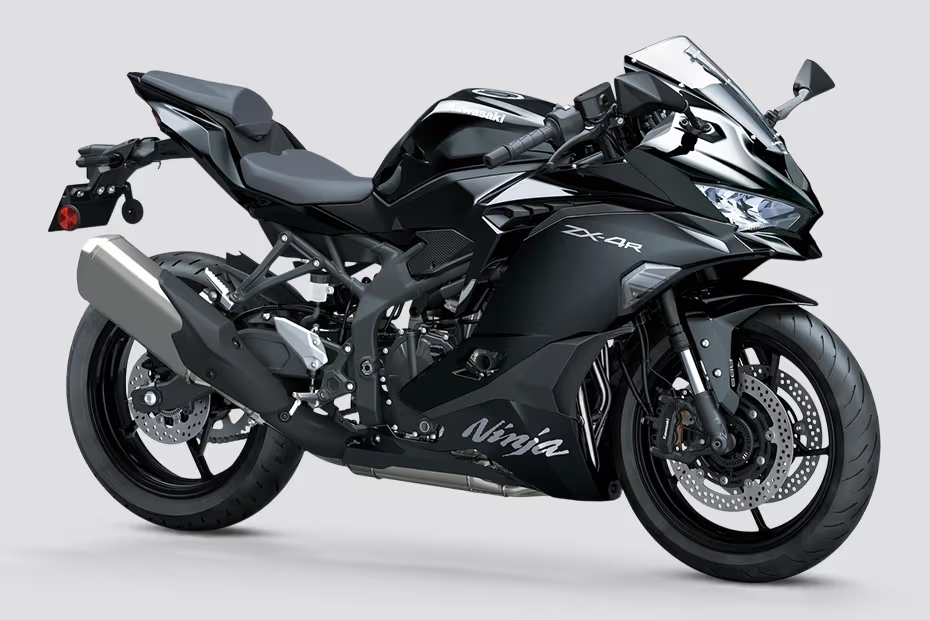
Top speed sits in a range rather than one clean number, and that’s normal for a bike Kawasaki doesn’t publish an official figure for. Independent testers have clocked everything from 138 mph on a dash-indicated public road run to 147.9 mph on a controlled dyno pull, with a factory-sanctioned Indonesian dyno session hitting 157 mph (RideApart, 2023).
That spread comes down to methodology. Dash speedometers on this bike read roughly 9% optimistic compared to true GPS or dyno speed, so a dash showing 162 mph corresponds to a real 147.9 mph (TST Industries, 2023). Treat any single top speed claim with that correction in mind, and treat 138-148 mph as the realistic real-world window for a stock US-spec bike.
The 399cc inline-four needs every one of its 16,000 rpm to get there. This engine makes little usable power below 8,000 rpm and wants to live above 10,000 rpm to build real thrust, which means a top speed run takes longer and more road than the raw number suggests.
What’s the 0-60 Time on the ZX-4R?
US-spec ZX-4R and ZX-4RR models hit 0-60 mph in roughly 4.3 seconds, based on independent testing of the 56 hp US model (SlashGear, 2025). Quarter-mile runs land in the low 12-second range, typically 12.0 to 12.4 seconds at a trap speed of 108-112 mph.
That’s quick for a 399cc machine, but the way it gets there is unusual. Peak torque doesn’t show up until 11,000 rpm per the official spec sheet, so the engine has to be spinning hard well before the launch even starts.
Getting a clean 0-60 run on this bike takes technique. Because the powerband is so peaky, launch feel matters more here than it would on a torque-rich engine: slip the clutch, keep weight forward, and use the quickshifter (RR only) to bang through gears without losing drive.
ZX-4R vs ZX-4RR: What Does the Extra Money Buy?
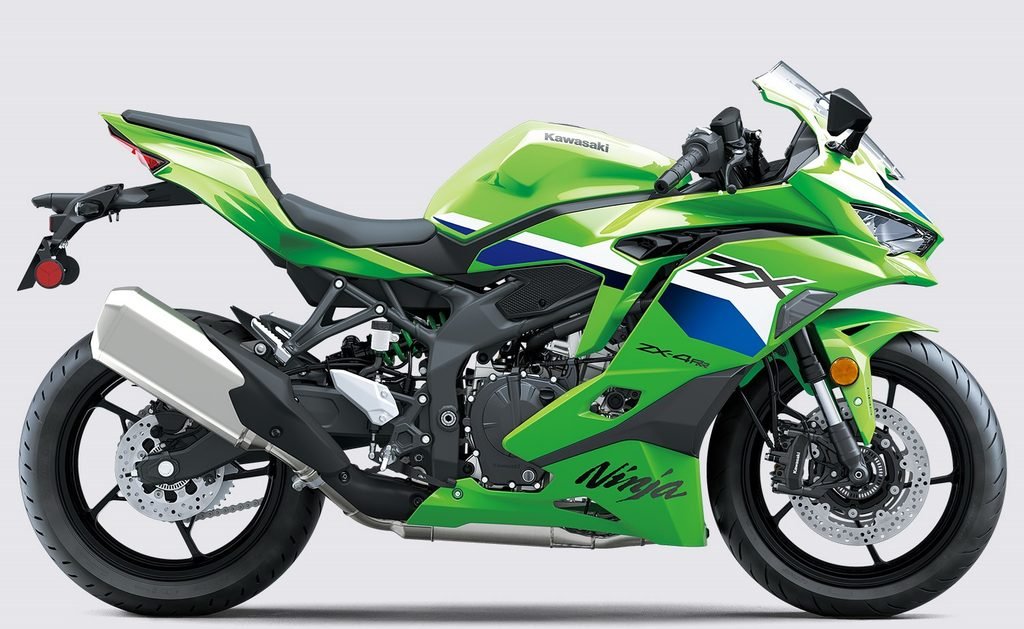
The ZX-4R and ZX-4RR share an identical engine, frame, brakes, and curb weight, so the extra $700 for the RR trim buys chassis refinement, not more speed. Both make the same 56 hp and 26.5 lb-ft in US trim, and both weigh 414.5 lb wet.
The RR’s Showa BFRC Lite rear shock and dual-adjustable fork let a rider dial in compression and rebound independently, which matters on track days and aggressive canyon riding but does little for a commuter loop. The RR also gets the bidirectional Kawasaki Quick Shifter (KQS) standard, letting you clutchless upshift and downshift.
If lap times and suspension tuning aren’t part of your riding, the base ZX-4R gets identical acceleration and top speed for $700 less, plus a stock Showa shock that’s still fully serviceable and preload-adjustable.
Why Does a 400cc Bike Cost This Much?
The ZX-4R sits well above typical 400cc pricing because it’s the only inline-four in the class, and that engine architecture costs more to build and tune than a simpler two-cylinder layout (Cycle World, 2024). Four cylinders, four throttle bodies, and a 16,000 rpm redline require tighter tolerances and more expensive internals to hold together at that speed.
Kawasaki also fits genuine race-derived hardware standard: radial-mount monobloc calipers on dual 290mm discs, a trellis frame, and fully specced Showa suspension across both trims. None of that is typical at this displacement, and it shows up directly in the price tag.
The tradeoff is real-world usability. That high-strung inline-four is happiest above 8,000 rpm, which means it’s louder and less relaxed at legal highway speeds than the engine’s displacement number might suggest.
Kawasaki Ninja ZX-4R FAQ
What is the top speed of the Kawasaki ZX-4R?
Real-world testing puts it between 138 and 147 mph, depending on whether the test used a dash reading, GPS, or a dyno. Kawasaki does not publish an official top speed figure for either trim.
How fast does the ZX-4R go from 0-60?
US-spec models run 0-60 mph in approximately 4.3 seconds and complete the quarter mile in the low 12-second range. International 76-77 hp versions of the same bike are noticeably quicker off the line.
What’s the difference between the ZX-4R and ZX-4RR?
Both share the same engine, frame, and weight. The ZX-4RR adds a fully adjustable Showa BFRC Lite rear shock, dual-adjustable front fork, and a standard quickshifter for about $700 more.
How much horsepower does the Kawasaki ZX-4R make?
US-spec bikes make 56 hp at 11,500 rpm and 26.5 lb-ft of torque at 11,000 rpm. International markets without the same emissions restrictions get 76-77 hp from the identical 399cc engine.
Is the Kawasaki ZX-4R good for a new rider?
The seat height, weight, and brakes are approachable, but the powerband is not. This engine makes little usable power below 8,000 rpm, so a new rider gets a very different experience than the numbers suggest until they learn to ride it up in the rev range.