Kawasaki W800 Specs, Top Speed & Review | 773cc Retro Twin
TL;DR
- The W800 runs a 773cc air-cooled parallel-twin making approximately 47–52 hp and 44–46 lb-ft of torque, depending on market and year.
- Kawasaki estimates top speed at 110 mph; independent tests clock 0–62 mph in 6.12 seconds.
- Curb weight is 496 lb (225 kg), seat height is 31.1 in, and dual-channel ABS is standard.
- MSRP at launch was $9,199 (W800) and $9,799 (W800 Cafe) for the 2020 model year.
- Best for commuters and weekend riders who want retro looks with modern reliability underneath.
Kawasaki W800 Full Specs
The W800 runs a 773cc SOHC eight-valve air-cooled vertical twin with a 77 mm bore and 83 mm stroke — a long-stroke undersquare layout that prioritizes low-end pull. Compression sits at 8.4:1, mild enough for regular 87-octane pump gas. Dual Keihin 34 mm throttle bodies handle fuel delivery, tucked behind a cover so you’re not staring at injector hardware on a bike that’s supposed to look like 1966.
The camshaft runs on bevel gears rather than a chain, identical in principle to the original W1. The 360-degree crankshaft fires both cylinders together, producing the W800’s distinct exhaust thrum — closer to a vintage Bonneville than any modern parallel-twin.
| Specification | Detail |
|---|---|
| Engine | 773cc SOHC air-cooled parallel-twin |
| Bore x Stroke | 77 mm x 83 mm |
| Compression Ratio | 8.4:1 |
| Power (claimed) | ~47–52 hp @ 6,500 rpm |
| Torque (claimed) | 44–46.4 lb-ft @ 4,800 rpm |
| Transmission | 5-speed, chain final drive |
| Clutch | Assist and slipper |
| Frame | Double-cradle, high-tensile steel |
| Front Suspension | 41 mm telescopic forks |
| Rear Suspension | Dual shocks, spring-preload adjustable |
| Front Brake | 320 mm disc, 2-piston caliper (Cafe); 300 mm (Street) |
| Rear Brake | 270 mm disc, 2-piston caliper (Cafe) |
| ABS | Dual-channel, standard |
| Front Tire | 100/90-18 |
| Rear Tire | 130/80-18 |
| Seat Height | 31.1 in (790 mm) |
| Curb Weight | 496 lb (225 kg) |
| Fuel Capacity | 4.0 US gal |
| MSRP (2020, USA) | $9,199 (W800) / $9,799 (Cafe) |
Kawasaki W800 Top Speed and Acceleration
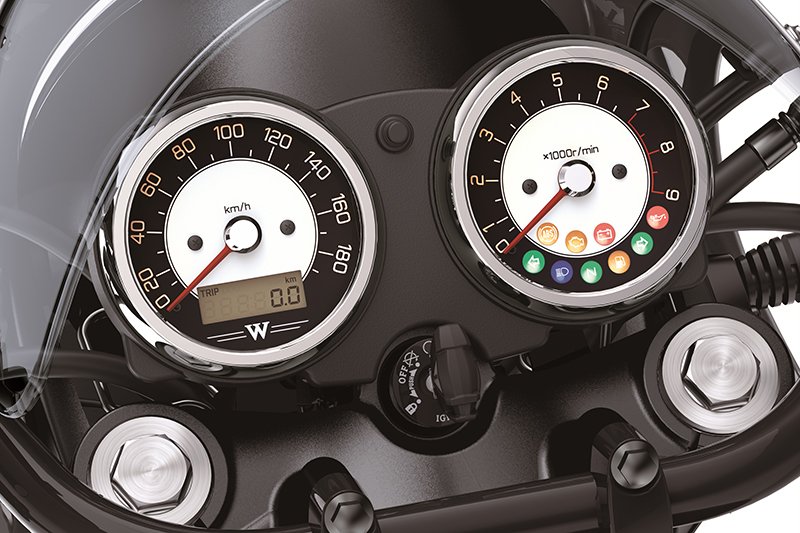
Kawasaki does not publish official top speed or 0–60 figures. The factory estimate is 110 mph (177 km/h) (TopSpeed, 2022). MCN’s 2019 test confirmed the bike is comfortable at 80 mph and capable of topping just over 100 mph — that’s near its practical ceiling, not a cruise.
For hard numbers, Autocar India’s 2020 road test recorded 0–60 km/h in 2.84 seconds and 0–100 km/h (0–62 mph) in 6.12 seconds. That puts the 0–60 mph figure in the 4.5–5 second range — credible for a 496 lb air-cooled twin at this power level.
| Performance Metric | Figure | Source |
|---|---|---|
| Top Speed (factory est.) | 110 mph (177 km/h) | TopSpeed, 2022 |
| 0–62 mph (0–100 km/h) | ~6.12 sec | Autocar India, 2020 |
| 0–37 mph (0–60 km/h) | 2.84 sec | Autocar India, 2020 |
| Peak Torque | 44–46.4 lb-ft @ 4,800 rpm | Kawasaki USA |
The numbers look modest next to anything with a sport pedigree, but the point of the W800 is torque delivery, not top-end reach. The long-stroke motor pulls cleanly from below 2,000 rpm in any gear. You won’t be rowing through five speeds constantly to keep pace in traffic.
Engine and Chassis: What It Actually Feels Like
The 8.4:1 compression means less heat stress on internals and tolerance for cheap gas — a quiet benefit over 3,000 miles a summer. The engine has an elastic midrange that doesn’t really care which gear you’re in, which is what a 360-degree long-stroke twin does well. It gathers speed rather than accelerates in any dramatic sense, and that’s entirely by design.
The bevel-gear cam drive adds a subtle mechanical whir to the soundtrack and keeps the aesthetic honest. Most modern engines use a camchain. Kawasaki retained the bevel drive to honor the W1’s construction, and it shows in how the engine sounds and feels at idle.
Chassis-wise, the double-cradle steel frame handles well for 496 lb. The non-adjustable 41 mm forks and preload-only rear shocks suit a two-lane backroad at 65 mph, not a canyon carve. The 18-inch wire wheels are right for the riding profile and the look, though they narrow your tire options compared to a 17-inch rim.
One thing worth noting: the standard W800 has no fuel gauge. There’s a low-fuel warning light and a trip meter. Authentic, and also mildly inconvenient on unfamiliar roads.
W800 Variants: Street vs. Cafe
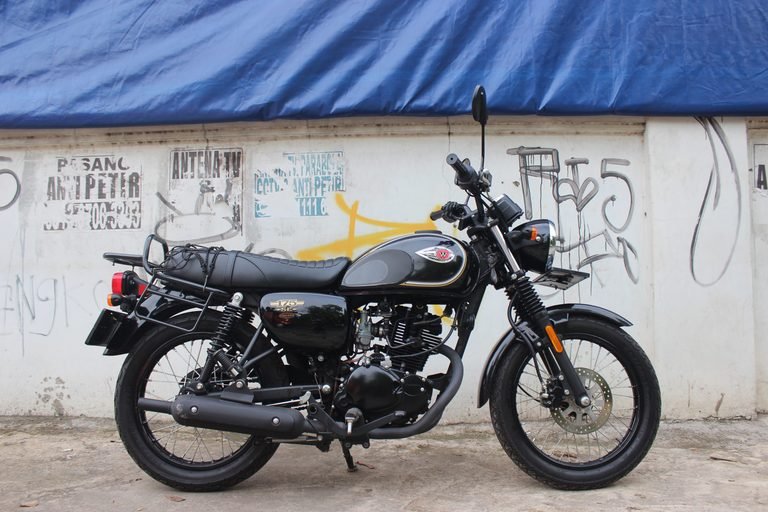
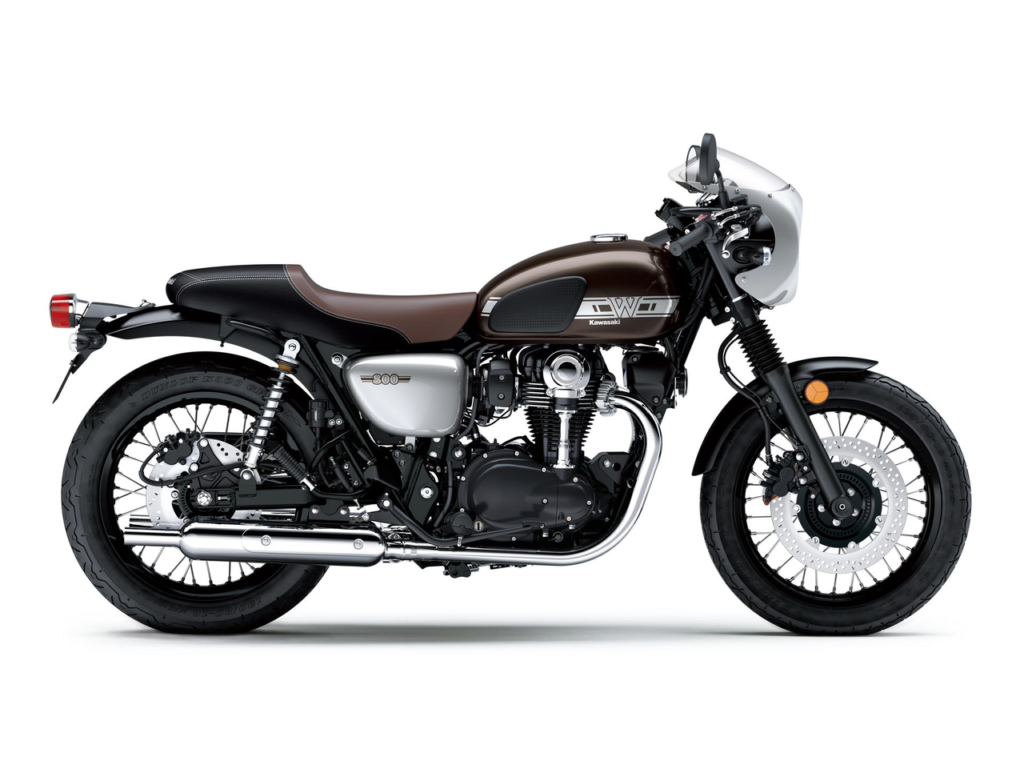
Both variants share the same engine, frame, and mechanicals. The standard W800 gets upright chrome bars, chrome fenders, and a tuck-and-roll seat — the cleaner retro look. The W800 Cafe adds clip-on-style bars, a bikini fairing, and a cafe racer seat with a bolstered rear pad for $600 more. The Cafe’s forward lean works for shorter rides; the standard W800’s upright ergonomics hold up better over a full day.
Strengths and Limitations
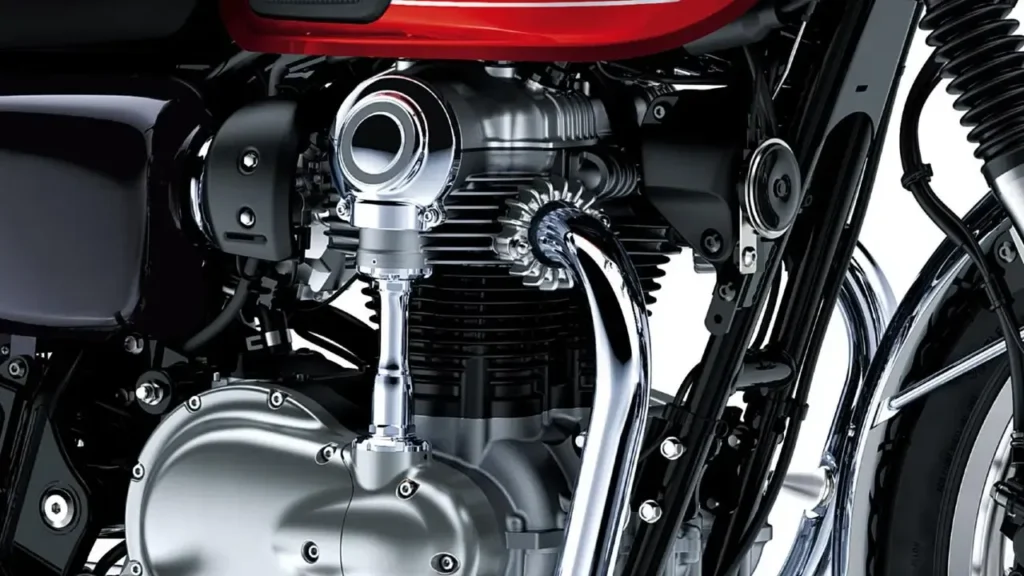
The exhaust note is the W800’s best feature — the 360-degree crank and bevel cam drive produce a sound no other current parallel-twin replicates. Dual-channel ABS, a slipper clutch, and fuel injection come standard at the price. The low compression ratio means regular fuel, and the reliability record is good. At 31.1 inches, seat height fits a wide range of riders.
The drawbacks are real. A five-speed gearbox on a bike most owners will use for highway miles means a busy 3,500 rpm at 60 mph in fifth. Rear suspension is preload-only, so two-up riding with any real passenger weight will have it bottoming. At 496 lb, slow-speed maneuvering takes attention.
Who the W800 Is For
The W800 makes sense for riders who want the feel of a vintage British twin without owning a vintage British twin. Daily commuters and weekend riders who want a bike that earns attention without demanding constant maintenance will find it a sound proposition. The neutral ergonomics hold up for medium-length days, ABS is standard, and fuel injection eliminates cold-start rituals.
Wrong fit for regular two-up touring, sustained highway miles above 75 mph, or anyone expecting sport performance. Maintenance runs on 7,500-mile intervals with valve clearance checks at each service — more frequent than liquid-cooled competition, but manageable at home given the accessible shim-and-bucket valve design (Maintenanceschedule.com, 2024).
Frequently Asked Questions
What is the Kawasaki W800 top speed?
Kawasaki’s factory estimate is 110 mph (177 km/h). Independent testers confirm the bike is comfortable at 80 mph and capable of just over 100 mph, which is near its practical ceiling (TopSpeed, 2022).
How fast is the 0–60 mph on the W800?
Kawasaki does not publish an official figure. Autocar India’s 2020 test recorded 0–62 mph in 6.12 seconds. The 0–60 mph figure falls in the 4.5–5 second range based on that test.
What engine is in the Kawasaki W800?
A 773cc SOHC air-cooled parallel-twin with a 77 mm bore, 83 mm stroke, 8.4:1 compression, dual 34 mm Keihin throttle bodies, and a bevel-gear cam drive. The 360-degree crankshaft fires both cylinders together.
How much does the Kawasaki W800 weigh?
The curb weight is 496 lb (225 kg), with a full tank and all fluids. That’s on the heavier side for a retro twin at this displacement.
Does the Kawasaki W800 have ABS?
Yes. Dual-channel ABS is standard on all current variants, along with an assist-and-slipper clutch.
What fuel octane does the W800 require?
Regular 87-octane. The 8.4:1 compression ratio is low enough to run standard fuel without detonation risk.
What are the W800 service intervals?
Every 7,500 miles or annually — whichever comes first. Each service includes an oil and filter change, spark plug replacement, and valve clearance inspection (Maintenanceschedule.com, 2024).
Key Takeaways
- The W800’s 773cc long-stroke twin makes 47–52 hp and 44–46 lb-ft of torque with a factory top speed estimate of 110 mph.
- Independent testing puts 0–62 mph at approximately 6.12 seconds — unhurried, but adequate for real-world street use.
- Dual-channel ABS and an assist-and-slipper clutch are standard on a 496 lb bike, which matters.
- Service intervals are 7,500 miles with valve checks at each service — more frequent than liquid-cooled competition, manageable at home.
- The W800 is the right buy for commuters and weekend riders who want retro authenticity with modern reliability; wrong for touring or performance riding.