Kawasaki Z400 Specs, Top Speed, Acceleration, Performance & Review
TL;DR
- The Kawasaki Z400 is a 399cc naked parallel-twin making approximately 45 hp and 27.3 lb-ft of torque, built on the same platform as the Ninja 400.
- Real-world testing by MotoStatz clocks the Z400 at 0-60 mph in 4.34 seconds and a quarter-mile in 13.34 seconds at 98 mph.
- Top speed is approximately 112 mph (180 km/h) – wind resistance from the naked riding position caps it below the faired Ninja 400.
- MSRP was $5,399 new for the 2023 model; used examples sell for around $4,500-$5,000 (1000PS, 2024).
- It’s a strong pick for new riders and urban commuters who want real performance without overwhelming power.
Kawasaki Z400 Specs: The Full Numbers
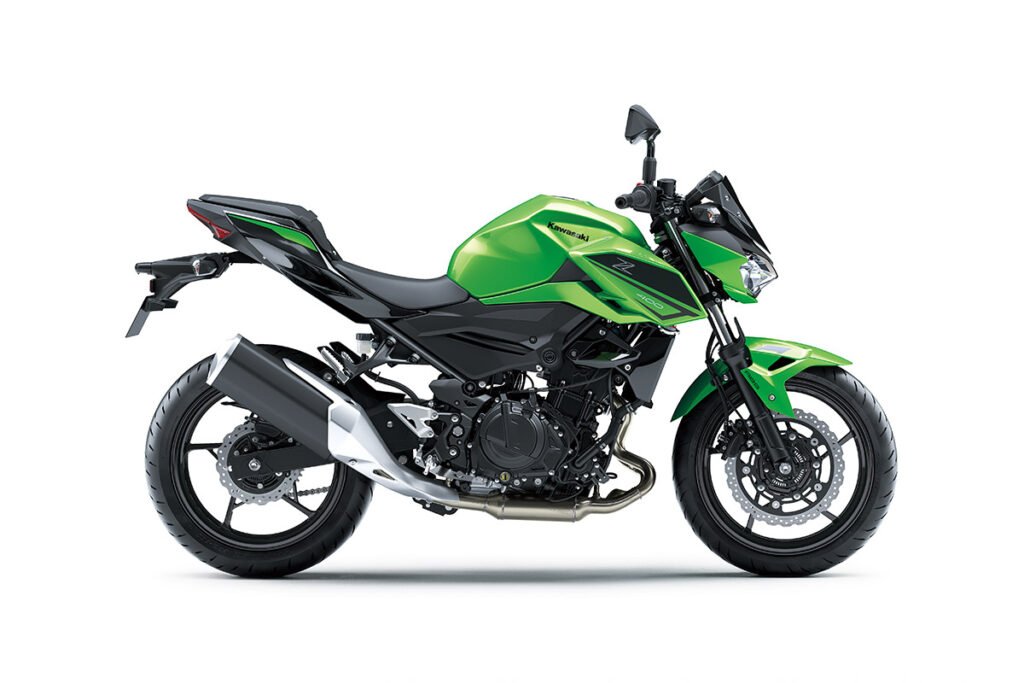
The Z400 is built around a 399cc liquid-cooled DOHC parallel-twin with fuel injection. Kawasaki doesn’t publish official horsepower figures, but dyno testing by Cycle World on the mechanically identical Ninja 400 produced 44.1 hp at 9,830 rpm and 25.1 lb-ft of torque at the rear wheel (Cycle World, 2023). Crank figures from independent sources like MotoNewsWorld sit at approximately 45 hp and 27.3 lb-ft, which aligns with Kawasaki’s Euro5-certified output of 33.4 kW.
| Spec | Detail |
|---|---|
| Engine | 399cc liquid-cooled DOHC parallel-twin |
| Bore x Stroke | 70.0 mm x 51.8 mm |
| Compression Ratio | 11.5:1 |
| Power (crank) | ~45 hp @ 10,000 rpm |
| Torque (crank) | ~27.3 lb-ft @ 8,000 rpm |
| Transmission | 6-speed, assist & slipper clutch |
| Fuel System | Fuel injection, 32mm x 2 throttle bodies |
| Seat Height | 30.9 in (785 mm) |
| Curb Weight | 363.8 lb (167 kg) |
| Wheelbase | 53.9 in (1,370 mm) |
| Ground Clearance | 5.7 in (145 mm) |
| Fuel Capacity | 3.7 gal (14 L) |
| Front Brake | 310mm petal disc, 2-piston Nissin caliper, ABS |
| Rear Brake | 220mm disc, single-piston caliper, ABS |
| Front Suspension | 41mm Showa telescopic fork, non-adjustable |
| Rear Suspension | Bottom-link Uni-Trak, preload-adjustable KYB shock |
| Front Tire | 110/70-17 |
| Rear Tire | 150/60-17 |
| MSRP (2023, US) | $5,399 |
Kawasaki Z400 Top Speed: What It Actually Does
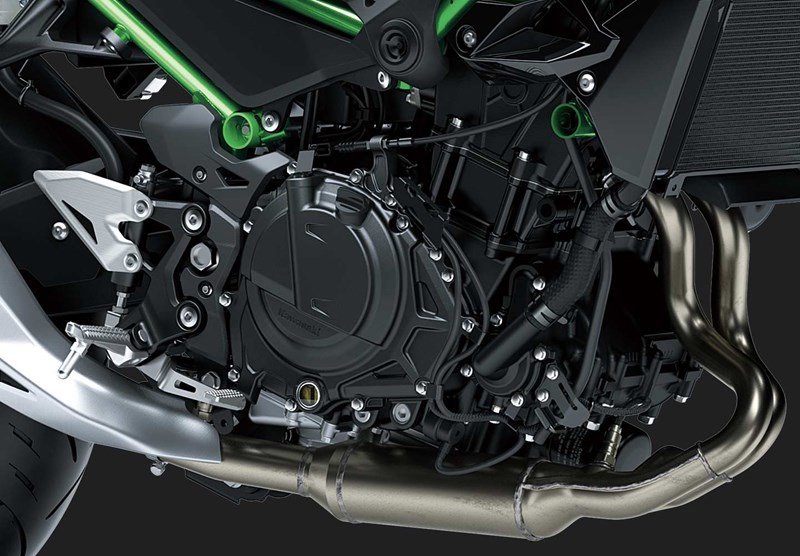
The Z400’s real-world top speed is approximately 112 mph (180 km/h). MotoStatz, who test and log acceleration data for production motorcycles, recorded a top speed of 112 mph in controlled testing. Some sources cite 115 mph as achievable in favorable conditions, but 112 mph is the reliable, repeatable figure.
The naked riding position is the main limiting factor above 90 mph. You’re sitting upright into a wall of wind while the faired Ninja 400 – same engine, same gearing – tucks the rider behind a screen and pulls a few more mph out of the same power. That’s not a flaw; it’s what a naked bike is. Below 90 mph, where you’ll spend virtually all of your riding time, the Z400 and Ninja 400 perform identically.
Kawasaki Z400 Acceleration: 0-60, Quarter-Mile, and Real Feel
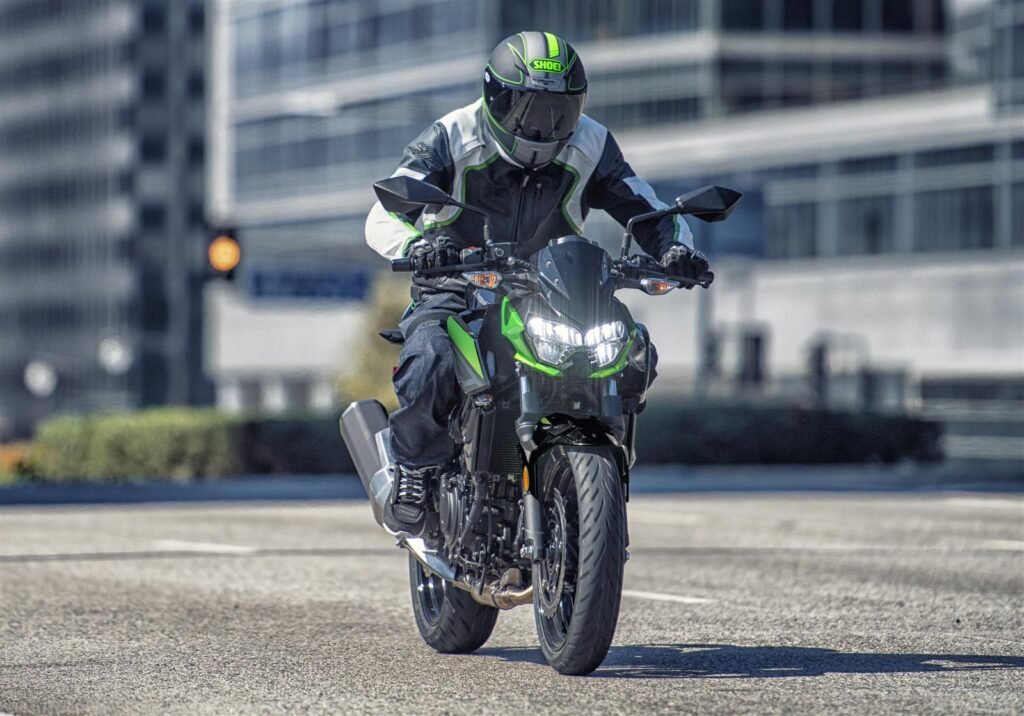
The Z400 hits 60 mph in 4.34 seconds and covers the quarter-mile in 13.34 seconds at 98 mph terminal speed. These are verified figures from MotoStatz (2024), recorded with GPS data logging under consistent conditions.
That 0-60 time is quicker than a stock Honda CBR500R by nearly half a second. The gap to the Ninja 400 is 0.27 seconds – a difference that widens above 60 mph due to aerodynamics, not power.
Getting the best launch requires a confident clutch dump rather than slipping the clutch. The engine pulls hard from low rpm without bogging. Optimal shift points for quarter-mile runs fall between 11,000 and 12,000 rpm, where the power band is flat and broad (MotoStatz, 2024).
Throttle response is crisp and linear. Torque peaks at 8,000 rpm, so the engine has real pull through the midrange before signing off at the top. It builds progressively – exactly what a new rider needs to learn throttle control without getting surprised.
How the Z400 Engine and Chassis Work Together
The Z400 uses a high-tensile steel trellis frame – lighter and more communicative than a pressed steel alternative. Wheelbase is 53.9 inches and trail is 3.62 inches, a geometry that balances quick steering with enough stability that the bike doesn’t feel nervous at speed.
The 41mm Showa fork up front is non-adjustable, tuned soft for road compliance rather than track sharpness. The KYB rear shock is preload-adjustable, which matters when you’re carrying a passenger or a loaded bag. Neither unit will impress anyone used to Ohlins hardware, but both work well for street use.
The assist and slipper clutch (ASC) is worth calling out. The assist function reduces lever effort for stop-and-go commuting; the slipper function prevents rear wheel hop on hard downshifts. Both features are typically found on bikes two to three times this price.
Where the Z400 Actually Performs Well (And Where It Doesn’t)
The Z400 is at its best in the city, on B-roads, and through technical twisties at legal speeds. At 363.8 lbs, it steers with almost no effort. The 30.9-inch seat height works for riders from about 5’5″ upward. Fuel economy runs 50-60 mpg (Cycle World, 2023), and the 3.7-gallon tank gives roughly 150-180 miles per fill.
Where it shows its limits: sustained highway riding above 80 mph gets tiring fast. Wind blast is real on a naked bike, and at 45 hp, passing maneuvers at 75 mph need a downshift. If you’re doing long daily freeway commutes, a windscreen accessory is worth the $80-$120.
The LCD dash covers gear position, fuel level, speed, and trip data. It reads well in daylight. There’s no color TFT or Bluetooth – it has what a new rider actually needs.
Kawasaki Z400 Maintenance Intervals to Know
The Z400 shares its service schedule with the Ninja 400. Valve clearance checks are due every 15,000 miles. Chain lube should happen every 300-400 miles in dry conditions. Oil changes are due every 4,000 miles with a quality 10W-40 – Motul 5100 or Castrol Power 1 both work well. NGK CR9EIA-9 iridium plugs are factory-installed and typically go 15,000 miles before replacement. Air filter inspection is due at 7,500 miles and annually.
Frequently Asked Questions About the Kawasaki Z400
What is the top speed of the Kawasaki Z400?
The Z400 tops out at approximately 112 mph (180 km/h) in real-world GPS testing by MotoStatz. Wind drag from the naked riding position is the limiting factor – the faired Ninja 400 uses the same engine but pulls a few extra mph because the rider is tucked behind a screen.
How fast does the Kawasaki Z400 go from 0-60 mph?
MotoStatz recorded a 0-60 mph time of 4.34 seconds in controlled GPS-logged testing. The quarter-mile takes 13.34 seconds at 98 mph terminal speed – competitive for the 400cc class.
How much does the Kawasaki Z400 weigh?
Curb weight is 363.8 lbs (167 kg) with all fluids. That’s among the lightest naked bikes at this displacement, and it shows in how responsive the bike feels in traffic and tight turns.
Is the Kawasaki Z400 good for beginners?
Yes. The 30.9-inch seat height, 363.8-pound weight, progressive power delivery, and standard ABS make it one of the more sensible first bikes at 400cc. The slipper clutch reduces rear wheel hop on aggressive downshifts, which new riders often trigger accidentally.
What is the Kawasaki Z400 MSRP?
The 2023 Z400 ABS listed at $5,399 in the United States. Used 2022-2023 examples sell for $4,500-$5,000 depending on mileage and condition (1000PS, 2024).
Does the Kawasaki Z400 have ABS?
Yes. Two-channel ABS is standard on all US-market Z400 ABS models. It’s not switchable in the standard configuration.
What oil does the Kawasaki Z400 use?
Kawasaki specifies SAE 10W-40. Motul 5100, Castrol Power 1, and Mobil 1 Racing 4T 10W-40 are all solid choices. Change interval is every 4,000 miles or annually.
Key Takeaways
- The Z400 makes approximately 45 hp and 27.3 lb-ft of torque from its 399cc parallel-twin.
- Verified 0-60 mph time is 4.34 seconds; quarter-mile is 13.34 seconds at 98 mph (MotoStatz, 2024).
- Top speed is approximately 112 mph – limited by aerodynamics, not the engine.
- Curb weight of 363.8 lbs and a 30.9-inch seat height make it physically accessible for most riders.
- Standard ABS, assist and slipper clutch, and predictable power delivery make it a strong choice for new riders and commuters.
- MSRP was $5,399 new; used market runs $4,500-$5,000 for 2022-2023 models in good condition.