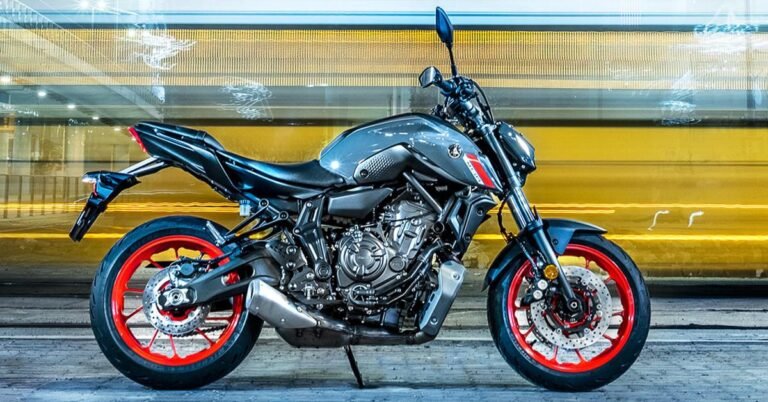
Yamaha MT-09 Top Speed, Specs & Review
TL;DR
- The Yamaha MT-09 reaches a GPS-recorded top speed of 147.9 mph and runs 0–60 mph in 2.95 seconds, making it one of the fastest sub-liter nakeds on the market.
- The 890cc CP3 inline-triple produces 119 PS (approximately 117 hp at the crank) at 10,000 rpm and 68.6 lb-ft of torque at 7,000 rpm.
- US MSRP is $10,899 for the 2026 base model and $12,699 for the MT-09 SP with KYB fork, Öhlins shock, and Brembo Stylema calipers.
- Real-world pros include an addictive engine character, class-leading electronics, and a well-balanced chassis; the main drawbacks are a firm stock seat and a noted second-gear flat spot on 2024 models.
- The MT-09 suits confident intermediate and experienced riders — average buyer has nine years of riding experience.
Yamaha MT-09 Full Specs (2026)
The 2026 MT-09 carries over the same 890cc CP3 platform introduced in 2021. Yamaha publishes no official top speed or 0–60 figure; the performance numbers below come from independent instrumented testing.
| Spec | Detail |
|---|---|
| Engine | 890cc liquid-cooled DOHC inline-three (CP3) |
| Bore x Stroke | 78.0 mm × 62.1 mm |
| Compression Ratio | 11.5:1 |
| Peak Power | 119 PS (87.5 kW) @ 10,000 rpm |
| Peak Torque | 93 Nm (68.6 lb-ft) @ 7,000 rpm |
| Transmission | 6-speed constant mesh, chain final drive |
| 0–60 mph | 2.95 sec (MotoStatz GPS-instrumented, 2026) |
| 0–100 mph | 5.82 sec (MotoStatz GPS-instrumented, 2026) |
| Quarter Mile | 10.69 sec @ 129 mph (MotoStatz GPS-instrumented, 2026) |
| Top Speed | 147.9 mph (MotoStatz GPS-instrumented, 2026) |
| Frame | Diamond cast alloy |
| Front Suspension | 41 mm inverted fork, preload/compression/rebound adj., 130 mm travel |
| Rear Suspension | Single shock, preload/rebound adj., 117 mm travel |
| Front Brakes | Dual 298 mm discs, ABS, Brembo radial master cylinder |
| Rear Brake | Single 245 mm disc, ABS |
| Tires | 120/70ZR17 front / 180/55ZR17 rear (Bridgestone Battlax S23) |
| Seat Height | 825 mm (32.5 in) |
| Wet Weight | 193 kg (425 lb) |
| Fuel Tank | 14 L (3.7 gal) |
| Fuel Economy | ~47 mpg (Yamaha claim) |
| US MSRP (2026) | $10,899 (base) / $12,699 (SP) |
Yamaha MT-09 Top Speed: What the Numbers Actually Mean
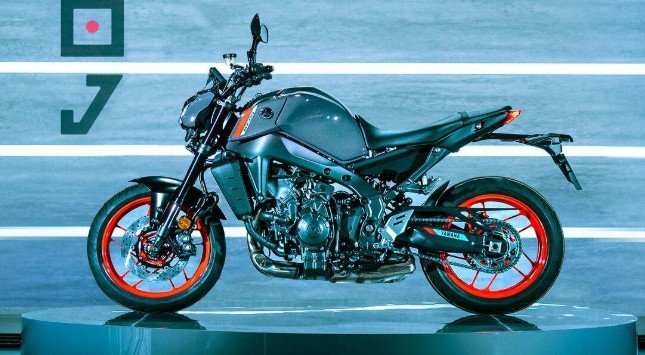
The Yamaha MT-09 hits 147.9 mph in GPS-instrumented testing by MotoStatz (2026), with a 0–60 mph time of 2.95 seconds and a quarter-mile run of 10.69 seconds at 129 mph. Those numbers put it on par with many 1,000cc superbikes from a decade ago — in a bike that weighs 425 lb wet and costs under $11k.
Yamaha does not publish an official top speed, and no independently verified figure from a US-spec dyno run exists in the public record. The MotoStatz data is the most widely cited GPS-instrumented result available, and it was recorded on the older 847cc-engined model. The current 890cc version produces more low-to-mid range torque by most accounts, though a direct back-to-back comparison on the same setup has not been published. Treat the top speed as a solid floor, not a ceiling.
The quarter-mile is where the MT-09’s character really shows. At 10.69 seconds, a competent street rider pulling realistic launches can expect high-ten to low-eleven-second runs. Mid-ten-second passes are doable for a jockey-weight rider on a perfect launch, but that’s bracket-racing territory. On the road, none of that matters — what you notice is that the CP3 feels savagely fast from 30 mph in second gear all the way to triple digits without ever feeling like you’ve reached the end of it.
What the CP3 Engine Feels Like on the Road
The 890cc inline-triple is the whole reason people buy the MT-09. The engine produces more than 50 lb-ft of torque from as low as 2,500 rpm (MotoStatz, 2026), which means it pulls hard in any gear, at any legal speed, without needing to be rung out. You can short-shift it through town, cruise at 4,000 rpm on the highway, or pin it wide open at the top of third — and it responds the same way each time: immediately, and with authority.
That torque curve does have a small dip between 5,000 and 5,500 rpm, almost certainly due to emissions tuning. It recovers quickly, with the peak surge hitting right around 6,600 rpm. In daily riding, you rarely notice the dip.
The 2024 refresh brought a revised gearbox and quickshifter combination that most reviewers rate as one of the cleanest in the class. RevZilla (2024) noted a second-gear flat spot under hard acceleration out of slow corners on their test unit — a real-world complaint worth knowing about before you buy, though it did not appear in all long-term tests. MCN ran the 2024 MT-09 as a long-term test bike and reported the overall package as essentially faultless across the entire test period (MCN, 2024).
The 2025 and 2026 models carry forward the same 890cc architecture with no significant powertrain changes. If the 2024 second-gear issue was a concern for you, worth checking current owner forums for whether it persists.
Handling and Suspension: Where the MT-09 Earns Its Reputation
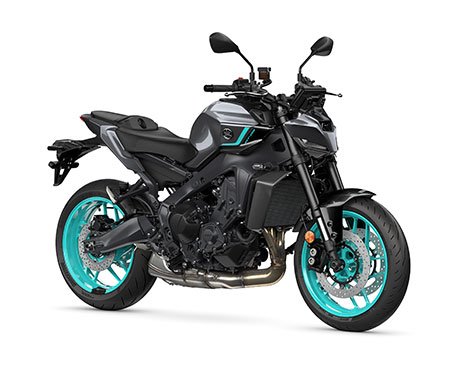
The MT-09 handles the way a 425-lb naked bike with 119 horsepower should: quickly, with direct steering and a light feel at the bar that inspires confidence on twisty roads. The 41 mm inverted fork offers preload, compression, and rebound adjustability — genuine track-day spec — with 130 mm of travel that soaks up broken pavement without washing out the front end.
The base model’s rear shock is the weak link at aggressive pace. At stock preload settings, it’s calibrated for a heavier rider, and lighter pilots (under 160 lb) will want to drop the preload immediately. Push the rear hard through a bumpy mid-corner and you may get some chatter, which Bike Review (2025) noted in extended testing. It’s not dangerous, but it’s the first thing experienced riders notice when transitioning from a sportbike. The MT-09 SP addresses this directly with a fully adjustable Öhlins shock and a KYB fork with DLC coating — hardware that dramatically tightens the chassis feel at the limit.
Bridgestone Battlax S23s come standard on both models. They deliver good feedback in mixed conditions — RevZilla reported confidence-inspiring grip on a damp, debris-covered road during first-ride testing (RevZilla SP review, 2024) — but they’re a sport-touring compound, not a full hypersport tire. If you’re doing track days on the base model, a set of Michelin Power GP2s or Pirelli Diablo Rosso IVs will make a noticeable difference.
Electronics and Tech: A Lot of Bike for $10,899
The 2026 MT-09 runs a 6-axis IMU (inertial measurement unit) that feeds traction control (TCS), slide control (SCS), lift control (LIF), and back-slip regulator (BSR). In plain terms: the bike actively manages wheelspin, slides, wheelies, and engine braking on corner entry. Four riding modes (Sport, Street, Rain, Custom) adjust throttle response, power delivery, and intervention thresholds. A bidirectional quickshifter is standard.
Cruise control is included on the base model and operates above 25 mph in third gear or higher — a useful feature for a naked bike that most competitors charge extra for or don’t offer at all. The 5-inch TFT display handles navigation, phone connectivity, and menu control through a well-organized left-hand switch. Bike-Urious (2024) described the MT-09’s menus as among the easiest to navigate in the class.
One oddity: the left turn signal placement confuses a lot of first-time MT-09 riders into hitting the horn instead. It’s a real thing. You’ll adapt in about a week, but expect at least one accidental honk in a parking garage.
Who Should Buy the MT-09 — and Who Shouldn’t
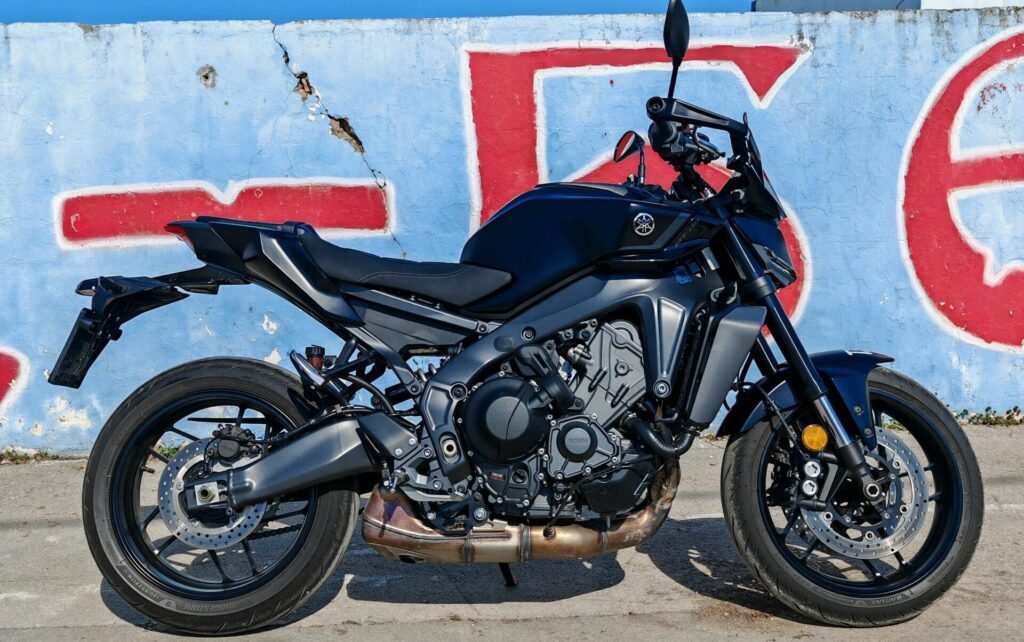
The MT-09 is a strong fit for experienced riders who want a sub-$11,000 naked that rewards skill without demanding sacrifice. Its 825 mm seat height is manageable for average-height riders (around 5’7″ and above) with a confident flat-foot approach. The 193 kg wet weight feels lighter than the spec sheet suggests at speed, though it’s not a short-rider’s bike if you need both feet solidly planted.
Newer riders — those with under two or three years on the road — should think hard about whether 119 horsepower and 2.95-second 0–60 is the right introduction to nakeds. The electronics package softens the bike considerably in Rain or Street mode, but the CP3’s character still requires respect. The MT-07 at around $8,100 is the smarter choice if you’re still building muscle memory.
Genuine drawbacks worth knowing:
- The stock two-piece seat is noticeably less comfortable than the outgoing single-piece unit on highway runs over an hour.
- The 3.7-gallon tank limits range to roughly 170 miles at highway pace, which means frequent stops on a long day.
- The base model’s rear shock undersupports aggressive riders; the SP’s Öhlins hardware costs $1,800 more but is worth every cent if you ride hard.
- Mirrors vibrate at certain RPM ranges and lose their usefulness at highway speeds on many units.
Frequently Asked Questions About the Yamaha MT-09
What is the top speed of the Yamaha MT-09?
The Yamaha MT-09 reaches a GPS-recorded top speed of 147.9 mph in instrumented testing by MotoStatz (2026). Yamaha publishes no official top speed figure. The independently sourced number applies to the 847cc-era model tested by MotoStatz; the current 890cc version is expected to match or slightly exceed it, but a direct back-to-back comparison has not been published.
How fast does the Yamaha MT-09 go from 0 to 60 mph?
The MT-09 runs 0–60 mph in 2.95 seconds in GPS-instrumented testing (MotoStatz, 2026). That figure was recorded with electronic aids disabled. A realistic street launch with traction control active will add roughly half a second. The quarter-mile time is 10.69 seconds at 129 mph under the same testing conditions.
How much horsepower does the Yamaha MT-09 make?
Yamaha rates the 890cc CP3 engine at 119 PS (approximately 117 hp at the crank) at 10,000 rpm and 68.6 lb-ft of torque at 7,000 rpm. US-market dyno results typically show 105–115 rear-wheel horsepower, with California emissions calibration placing most US-spec bikes toward the lower end of that range (MotoStatz, 2026).
What is the difference between the MT-09 and MT-09 SP?
Both use the same 890cc CP3 engine. The SP adds a fully adjustable KYB fork with DLC coating and high/low-speed compression circuits, a remote-preload Öhlins rear shock, Brembo Stylema radial calipers, and a 5-inch TFT with Garmin StreetCross navigation. US MSRP is $12,699 for the SP versus $10,899 for the base model, a $1,800 premium. If you ride on track or push hard on twisty roads, the suspension upgrade alone justifies the difference.
Is the Yamaha MT-09 good for beginners?
The MT-09 is not a beginner’s bike. Its 119 PS and sub-3-second 0–60 time suit riders with several years of experience who can manage a bike with real power. Yamaha’s own data shows the average MT-09 buyer has nine years of riding experience (Bike-Urious, 2024). New riders would be better served by the MT-07, which shares the same MT family ergonomics and electronics philosophy at a more manageable power level.