Indian Scout Top Speed, Specs & Review
TL;DR
- The 2025 Indian Scout lineup runs a 1,250cc liquid-cooled SpeedPlus V-Twin producing a claimed 105 hp and 82 lb-ft of torque in standard trim, and 111 hp in the top-spec 101 Scout (Indian Motorcycle, 2024).
- Indian publishes no official top speed figure; third-party estimates place the standard Scout at 115-120 mph and the 101 Scout at approximately 124 mph under ideal conditions.
- No published instrumented 0-60 time exists from a major outlet; expect somewhere in the 3.5-5 second range depending on model and rider weight.
- The 2025 Scout is a complete second-generation redesign with a new steel frame, six-speed transmission with slip/assist clutch, and a 60-degree V-Twin that grew from 1,133cc to 1,250cc.
- MSRP starts at $12,999 for the Scout Bobber and reaches $16,999 for the 101 Scout; a 999cc Scout Sixty sub-lineup starts at $9,999.
2025 Indian Scout Specs
| Spec | Scout Bobber | Sport Scout | 101 Scout |
|---|---|---|---|
| Engine | 1,250cc SpeedPlus V-Twin | 1,250cc SpeedPlus V-Twin | 1,250cc SpeedPlus V-Twin |
| Horsepower (claimed) | 105 hp @ 7,250 rpm | 105 hp @ 7,250 rpm | 111 hp @ 7,250 rpm |
| Torque (claimed) | 82 lb-ft @ 6,300 rpm | 82 lb-ft @ 6,300 rpm | 82 lb-ft @ 6,300 rpm |
| Bore x Stroke | 104mm x 73.6mm | 104mm x 73.6mm | 104mm x 73.6mm |
| Compression Ratio | 12.5:1 | 12.5:1 | 12.5:1 |
| Transmission | 6-speed w/ slip/assist clutch | 6-speed w/ slip/assist clutch | 6-speed w/ slip/assist clutch |
| Final Drive | Belt | Belt | Belt |
| Seat Height | 25.6 in | 25.7 in | 25.7 in |
| Wet Weight | 542 lb | 547 lb | 549 lb |
| Fuel Capacity | 3.4 gal | 3.4 gal | 3.4 gal |
| Front Suspension | 41mm fork, 4.7 in travel | 41mm fork, 4.7 in travel | Inverted 43mm cartridge, 5.9 in travel |
| Rear Suspension | Preload-adj. shocks, 2.0 in | Preload-adj. shocks, 3.0 in | Fully adj. piggyback shocks, 3.0 in |
| Front Brake | 298mm disc, 2-piston caliper | 298mm disc, 2-piston caliper | Dual 320mm discs, 4-piston Brembo |
| ABS | Standard | Standard | Standard |
| Tires | Pirelli MT60RS | Metzeler Cruisetec | Metzeler Cruisetec |
| Est. Top Speed | ~115-120 mph* | ~115-120 mph* | ~124 mph* |
| MSRP (base) | $12,999 | $13,499 | $16,999 |
Estimated. Indian publishes no official top speed. Figures based on third-party assessments and are not instrumented test results.
What the 2025 Scout Lineup Includes
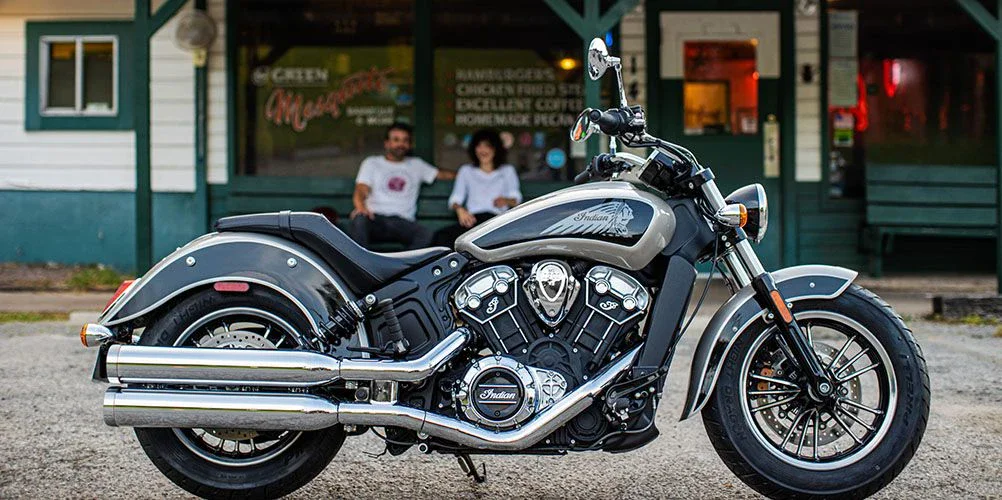
The 2025 Indian Scout comes in five 1,250cc models: the Scout Bobber ($12,999), Sport Scout ($13,499), Scout Classic ($13,999), Super Scout ($16,499), and 101 Scout ($16,999). Indian added a Scout Sixty sub-lineup powered by a 999cc SpeedPlus engine (85 hp, 65 lb-ft) starting at $9,999 (Cycle News, 2024).
All five 1,250cc models share a 60-degree liquid-cooled V-Twin, six-speed gearbox, belt drive, and 25.6-25.7-inch seat height. The Bobber is slammed and minimalist with only two inches of rear suspension travel. The Sport Scout adds a quarter fairing, 19-inch front wheel, and six-inch riser bars. The Classic goes chrome-and-flares for the traditional look. The Super Scout adds a quick-release windshield for light touring. The 101 Scout is the performance leader: Brembo brakes, adjustable inverted fork, piggyback shocks, and 6 extra horsepower from the factory.
All models come standard with ABS and LED lighting. The Limited trim adds traction control, three ride modes, cruise control, and a USB port for $700 over base. The Limited +Tech adds Ride Command touchscreen navigation for $1,700 over base (Rider Magazine, 2024).
Indian Scout Engine: What the SpeedPlus 1250 Delivers on the Road
The 2025 Scout is powered by the SpeedPlus 1250, a liquid-cooled, 60-degree V-Twin that grew from the previous 1,133cc unit by punching the cylinders out to 104mm while holding the 73.6mm stroke. The result is an oversquare, high-revving engine by cruiser standards, with a 12.5:1 compression ratio and dual overhead cams timing four-valve heads.
Claimed output is 105 hp at 7,250 rpm and 82 lb-ft at 6,300 rpm for the standard Scout, and 111 hp for the 101 Scout via different ECU tuning. Rider Magazine’s first-ride review noted that the torque curve starts building around 3,000 rpm, stays flat and strong through the mid-range, and doesn’t taper until past peak power at 7,250 rpm before hitting the 8,500 rpm rev limiter. That’s a wide, usable power band – not a peaky sportbike hit, and not a fat-but-lazy torque lump either.
This is a 14% torque increase over the outgoing 1,133cc Scout (72 lb-ft to 82 lb-ft), and it shows. Roll-on passing power from 50 mph in fifth gear is confident and linear. The ride-by-wire throttle manages to keep things smooth without feeling over-filtered. One small practical note: the 12.5:1 compression ratio means this engine wants premium fuel to avoid any knock on hot days (Top Speed, 2024).
The new 2-into-1 exhaust is tidier than before, and the slip/assist clutch cuts lever effort noticeably while preventing rear-wheel hop during sloppy downshifts. These are real-world improvements any rider will appreciate during city traffic or mountain passes.
Indian Scout Top Speed: What to Realistically Expect
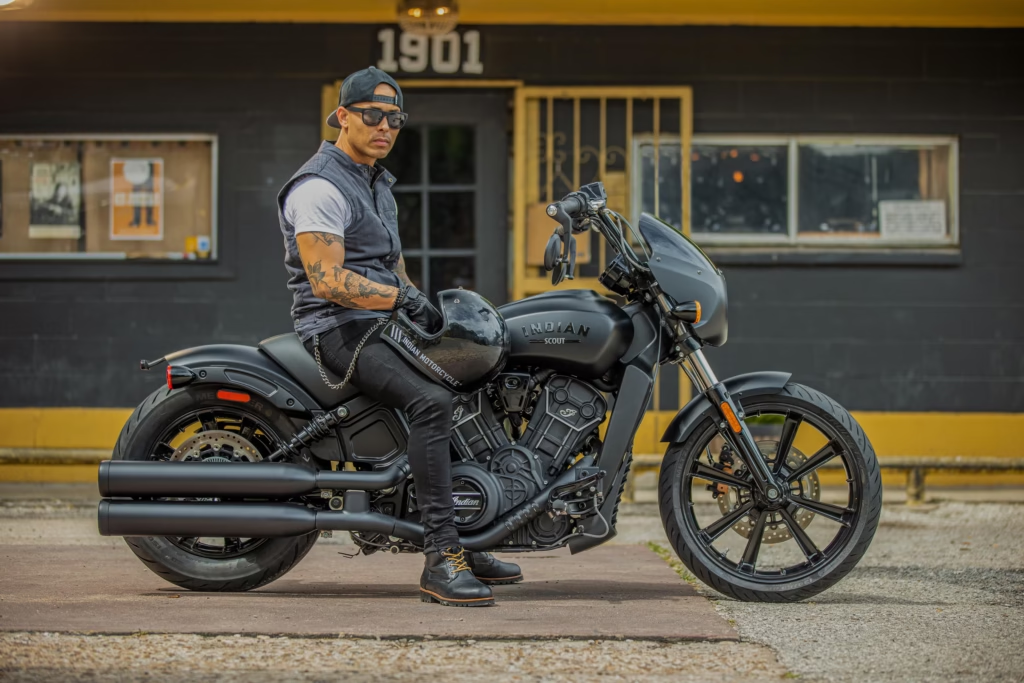
Indian Motorcycle does not publish an official top speed for any Scout model – that’s common practice among cruiser manufacturers. Third-party non-instrumented estimates put the standard 105 hp Scout models at 115-120 mph, and the 111 hp 101 Scout at approximately 124 mph. None of these are confirmed dyno-to-track results; treat them as directionally accurate, not precisely verified.
No major outlet has published an instrumented 0-60 time for the 2025 Scout. Viking Bags estimated 3.5-4 seconds for the 101 Scout based on its roughly 0.20 hp/lb power-to-weight ratio. Previous-generation 1,133cc Scout Bobbers were reported at approximately 4.5 seconds to 60 by multiple sources. The 14% torque gain and shorter final drive gearing on the 2025 models should improve on that benchmark meaningfully.
What the top speed number doesn’t tell you: the Scout’s upright seating position and minimal wind protection make sustained speeds above 90 mph genuinely fatiguing. You’ll hit triple digits without drama, but at 110+ mph you’ll be fighting windblast more than the bike’s power ceiling.
Chassis, Suspension, and Ride Quality
The 2025 Scout uses a new steel tube frame with accessory mounting improved across the board – over 100 new accessories are available in four categories. Frame geometry is unchanged from the previous generation: relaxed cruiser rake, not sporty.
Standard Scout models (Bobber, Classic, Sport Scout) get a non-adjustable 41mm fork with 4.7 inches of travel and preload-adjustable dual rear shocks. Motorcycle.com’s first-ride review was blunt: the standard suspension absorbs bumps adequately but lacks the feedback and progression of the 101’s units. The Bobber’s two-inch rear travel keeps it slammed-looking but limits composure on rough pavement.
The 101 Scout’s suspension is a different story. The fully adjustable inverted 43mm cartridge fork gives 5.9 inches of travel, and the piggyback rear shocks are adjustable for preload, compression, and rebound. The brakes follow the same gap: dual 320mm Brembo four-piston calipers up front on the 101 versus a single 298mm two-piston setup on every other Scout. Motorcycle.com noted they reached for the rear brake more aggressively on standard models to compensate for the weaker front setup.
Tires vary by model: the Bobber runs Pirelli MT60RS rubber, the Sport Scout and 101 Scout use Metzeler Cruisetecs, and the Super Scout runs Pirelli MT60RS all around (Ultimate Motorcycling, 2024).
Honest Strengths and Real Limitations
Where the Scout earns its keep:
The 25.6-inch seat height is genuinely low – Indian claims class-leading accessibility – and the 542-549 lb wet weight keeps the bike manageable at slow speeds. The SpeedPlus 1250 pulls cleanly from 2,500 rpm, delivers strong roll-on flexibility, and the liquid cooling means it won’t bake your leg in summer gridlock. Belt drive eliminates chain maintenance entirely. The trim level system is well-structured, and the $700 jump to Limited (traction control, ride modes, cruise control) is money well spent.
Where it falls short:
The standard suspension is the Scout’s biggest weak point, particularly the Bobber’s two-inch rear travel. You feel rough pavement. The 3.4-gallon tank paired with approximately 40-45 mpg real-world fuel consumption gives you roughly 130-150 miles of range – fine for day rides, limiting on longer trips. The 101 Scout’s suspension and brake upgrade is substantial, but at $16,999 it needs to compete against the value picture offered by everything below it in the lineup.
Which Indian Scout Is Right for You
The Scout Bobber at $12,999 is for riders who want the look – slammed, blacked-out, minimal – and won’t be putting in 500-mile days. It’s an excellent commuter and weekend bike. The Sport Scout Limited at $14,199 is the sweet spot for most buyers: the 19-inch front wheel and mini-fairing improve handling, and the Limited trim adds the electronic rider aids that actually matter day-to-day.
The Scout Classic at $13,999 suits buyers who want the traditional chrome-and-fender American cruiser aesthetic. The 101 Scout at $16,999 is for riders who want legitimate performance from a small-displacement American V-Twin and are willing to pay for proper suspension and brakes. If you’re a shorter rider who’s looked at full-size baggers but wanted something lighter and faster, this is a serious option.
The Scout Sixty models starting at $9,999 are the right starting point for newer riders or those who prefer a more forgiving power delivery.
Frequently Asked Questions About the Indian Scout
What is the top speed of the 2025 Indian Scout?
Indian Motorcycle doesn’t publish an official top speed for the Scout. Based on third-party assessments (not instrumented dyno-to-track testing), the standard 105 hp Scout models are estimated at 115-120 mph, and the 111 hp 101 Scout is estimated at approximately 124 mph. These figures are representative, not verified by an independent outlet like Cycle World or Motorcycle.com.
How fast is the Indian Scout 0-60 mph?
No major outlet has published an instrumented 0-60 time for the 2025 Scout. Estimates from third-party sources suggest around 3.5-4 seconds for the 101 Scout and 4-5 seconds for the standard Scout models, which would be competitive for a mid-displacement cruiser. The 14% torque increase over the previous-generation 1,133cc Scout and shorter final drive gearing should make the 2025 models meaningfully quicker off the line than the outgoing bikes.
What engine does the 2025 Indian Scout use?
The 2025 Indian Scout runs the SpeedPlus 1250, a 1,250cc liquid-cooled, 60-degree V-Twin with dual overhead cams, four-valve heads, and a 12.5:1 compression ratio. It produces a claimed 105 hp and 82 lb-ft in standard trim, with the 101 Scout bumped to 111 hp via ECU tuning. The engine uses ride-by-wire throttle and a slip/assist clutch (Indian Motorcycle, 2024).
How does the 2025 Scout differ from older Scout models?
The 2025 Scout is a complete second-generation redesign. The engine grew from 1,133cc to 1,250cc with revised heads, larger valves, new cams, and a higher compression ratio. The frame is new steel tubing designed for easier accessory mounting. The gearbox added a sixth gear. The exhaust moved to a 2-into-1 layout. The Scout’s seat height, belt drive, and general cruiser geometry are carried over from the previous generation.
Is the Indian Scout good for beginners?
The Scout’s 25.6-inch seat height is accessible for shorter riders, and the low-speed handling is manageable. The SpeedPlus 1250 is not a learner engine, though – 105 hp and immediate roll-on torque from a 540-lb motorcycle needs respect. Newer riders would be better served starting with the Scout Sixty (999cc, 85 hp), which delivers a more forgiving power delivery while keeping the Scout’s character. The 1,250cc Scout is genuinely approachable but rewards riders who already know how to manage power.