Honda CB500 Hornet Top Speed, 0-60 Time & Specs Review
TL;DR
- The Honda CB500 Hornet’s 471cc parallel twin makes 47 hp at 8,500 rpm and 32 lb-ft of torque at 6,500 rpm.
- No independent GPS-tested top speed or 0-60 figure exists yet for the current Hornet chassis; the closest verified data comes from the outgoing CB500F, which shares the same engine and power output.
- 2026 US pricing starts at $5,899 base MSRP ($6,499 with destination), down from the 2025 CB500F’s $6,899 base.
- Curb weight is 414 lbs wet, seat height is 31.1 inches, and the bike carries ABS, a slipper clutch, and Honda Selectable Torque Control as standard.
- This is a 47-hp naked bike built for A2/learner-class riders and commuters, not a highway blaster; expect a real-world top end around 105-112 mph.
How Fast Is the Honda CB500 Hornet in a Straight Line?
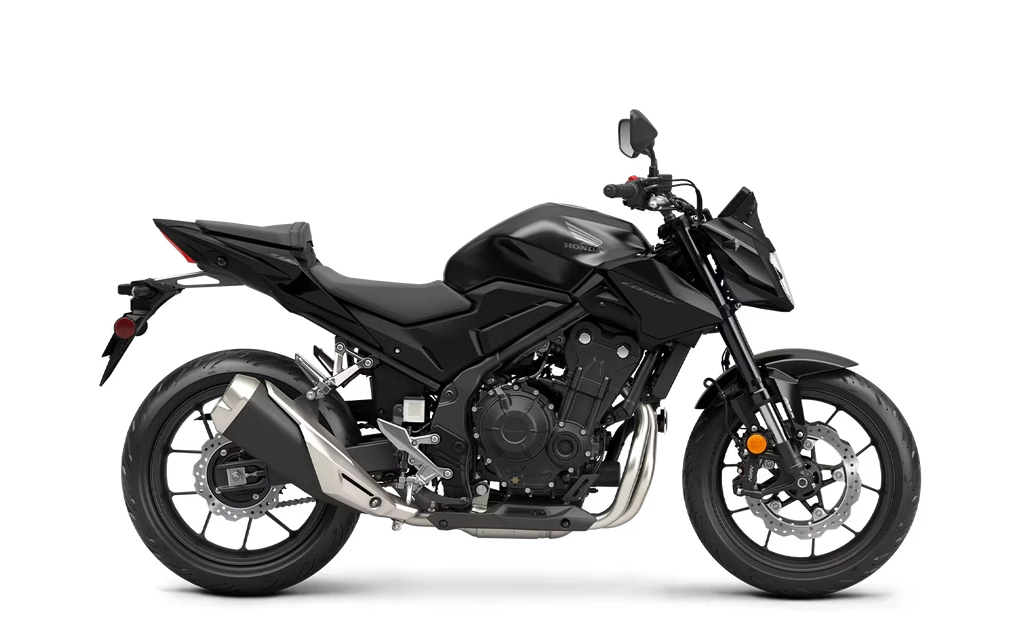
Honda hasn’t published an official top speed or 0-60 mph figure for the CB500 Hornet, and no outlet has run GPS-verified acceleration testing on the current-generation bike yet. That’s a real gap, not an oversight on our part, so here’s what’s actually verifiable.
The Hornet’s 471cc engine is the same displacement, bore, stroke, and power output as the outgoing CB500F: 47 hp at 8,500 rpm and 43 Nm (32 lb-ft) of torque at 6,500 rpm (Honda Powersports, 2026). MotoStatz ran GPS-instrumented testing on the CB500F and recorded a 0-60 mph time of 4.34 seconds and a top speed of 112 mph, with quarter-mile times of 13.36 seconds at 98 mph (MotoStatz, 2022).
Because the Hornet uses the same engine and a very similar chassis, those numbers are a reasonable proxy, but they’re not a Hornet-specific test. Treat them as an educated estimate, not a confirmed figure for the current bike.
For a second reference point, aggregator site ProfessCars publishes a formula-derived estimate of 0-60 mph in about 5 seconds for the 2024 CB500 Hornet (ProfessCars, 2024). That’s slower than the MotoStatz CB500F number, which lines up with the reality that clutch dumps and rider weight swing 500cc-class 0-60 times by close to a full second.
What’s Under the Hood?
The CB500 Hornet runs a 471cc liquid-cooled parallel twin with dual overhead cams and four valves per cylinder, fed by Programmed Fuel Injection through a 34mm throttle body. Bore and stroke are 67.0mm x 66.8mm with a 10.7:1 compression ratio.
Power peaks at 47 hp at 8,500 rpm, with torque topping out at 32 lb-ft at 6,500 rpm. That’s a broad, usable spread for a twin this size, and it’s why the Hornet doesn’t feel gutless around town despite the modest peak numbers.
A six-speed manual transmission sends power through an O-ring chain to a 15T/41T final drive, and the clutch is a slipper unit that Honda says cuts lever pull by 45 percent.
Chassis, Suspension, and Brakes: What Are You Actually Riding On?
The Hornet’s chassis is built around a 35mm steel diamond-tube mainframe, suspended by a 41mm inverted Showa SFF-BP fork with 4.7 inches of travel up front and a single Prolink shock with 4.7 inches of travel out back. Rake is 25.5 degrees with 4.0 inches of trail, and the wheelbase runs 55.5 inches.
Braking comes from dual 296mm front discs with four-piston radial-mount Nissin calipers, backed by a single 240mm rear disc. ABS is standard on both ends, not an option you have to pay extra for.
The bike rolls on lightweight cast aluminum wheels in a 120/70R-17 front and 160/60-17 rear combination, which is standard sportbike-derived rubber sizing that opens up a wide range of tire choices from brands like Michelin and Pirelli when it’s time to replace the stock set.
Full Spec Sheet: 2026 Honda CB500 Hornet
| Spec | 2026 CB500 Hornet |
|---|---|
| Engine | 471cc liquid-cooled parallel twin, DOHC |
| Horsepower | 47 hp @ 8,500 rpm |
| Torque | 32 lb-ft @ 6,500 rpm |
| Transmission | 6-speed manual, chain final drive |
| Front suspension | 41mm inverted Showa SFF-BP fork, 4.7 in travel |
| Rear suspension | Single shock, 4.7 in travel |
| Front brake | Dual 296mm discs, 4-piston calipers, ABS |
| Rear brake | 240mm disc, ABS |
| Seat height | 31.1 in |
| Curb weight | 414 lbs (wet) |
| Fuel capacity | 4.5 gal |
| Base MSRP | $5,899 |
| Total MSRP (with destination) | $6,499 |
Source: Honda Powersports, 2026
Is the CB500 Hornet Fast Enough to Not Feel Like a Toy on the Highway?
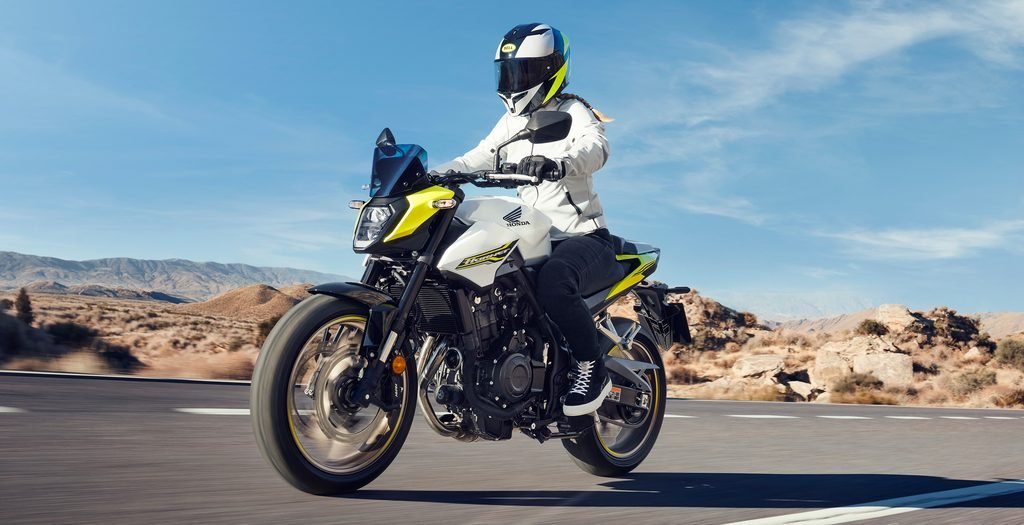
Yes, but it’s not going to win any arguments with a liter bike. With a real-world top end likely in the 105-112 mph range and a sub-5-second 0-60 time under ideal conditions, the Hornet has enough grunt to merge, pass, and hold 80 mph on the interstate without feeling stressed.
Where it shows its limits is anything above that; the parallel twin runs out of steam past 100 mph the way most 500cc-class bikes do.
That’s by design. The Hornet is built to the 35 kW power cap that defines Europe’s A2 license class, and Honda brought that same tuning to the US market rather than building a separate, more powerful version.
If you’re cross-shopping this against something like a KTM 390 Duke or Kawasaki Z500, know that all three bikes are chasing the same power ceiling, so the differences come down to chassis feel and ergonomics more than outright speed.
How Does It Compare to the Bike It Replaced?
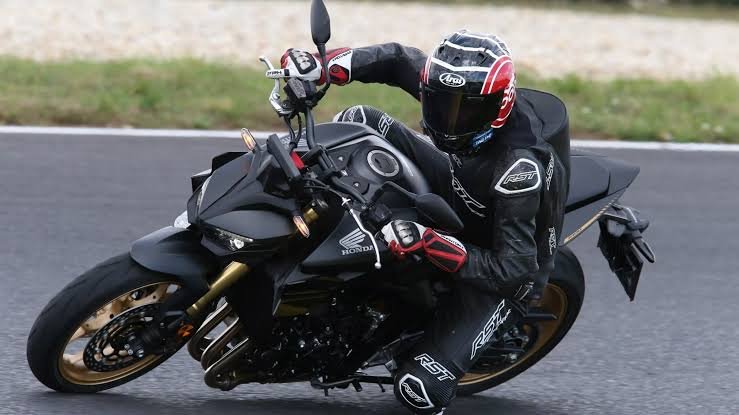
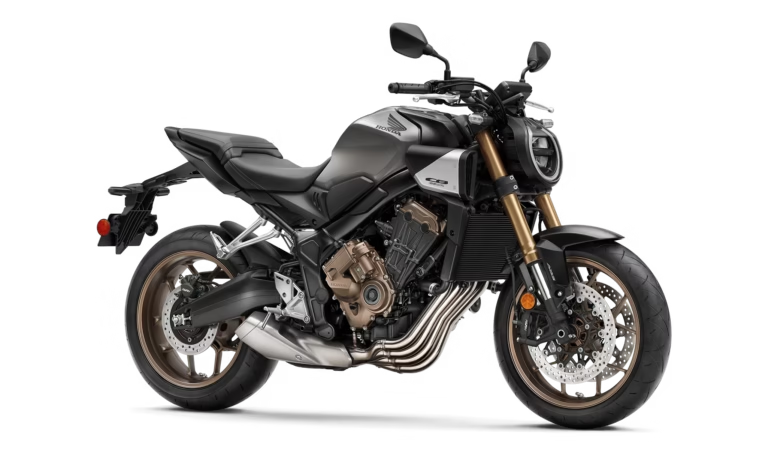
The CB500 Hornet is a direct evolution of the CB500F, not a clean-sheet redesign. The engine, frame architecture, and power output carry over essentially unchanged; what’s new is the styling, a 5-inch TFT dash with Honda RoadSync navigation, Selectable Torque Control, and E-Clutch availability on some trims.
Pricing actually dropped for 2026: base MSRP fell to $5,899 from the CB500F’s $6,899, making the Hornet one of the more affordable ways into Honda’s 500cc lineup.
If you’ve ridden a 2022-2023 CB500F with the Showa fork and dual front discs, you already know most of what the Hornet feels like from the seat. The bones are the same bike wearing a sharper suit.
Frequently Asked Questions
What is the top speed of the Honda CB500 Hornet?
No GPS-verified top speed exists yet for the current Hornet. The closest verified data point is the outgoing CB500F, which MotoStatz tested at 112 mph (MotoStatz, 2022). Given the identical engine and power output, a similar top end is a reasonable estimate for the Hornet.
How fast does the CB500 Hornet go 0-60 mph?
Honda hasn’t published an official figure, and no independent GPS test exists for the current model. MotoStatz recorded 4.34 seconds for the mechanically identical CB500F engine (MotoStatz, 2022), while aggregator ProfessCars estimates closer to 5 seconds for the Hornet specifically (ProfessCars, 2024). Real-world times will land somewhere in that range depending on rider weight and launch technique.
How much horsepower does the CB500 Hornet have?
47 hp at 8,500 rpm, with 32 lb-ft of torque at 6,500 rpm (Honda Powersports, 2026). That figure is capped to meet Europe’s A2 license limit, and Honda uses the same tune globally.
How much does the 2026 Honda CB500 Hornet cost?
Base MSRP is $5,899, with a total MSRP of $6,499 once you add Honda’s $600 destination charge (Honda Powersports, 2026). That’s down from the outgoing CB500F’s $6,899 base price.
Is the CB500 Hornet a good bike for new riders?
Yes. The 31.1-inch seat height, 414-lb curb weight, and capped 47-hp output make it manageable for riders stepping up from a smaller displacement bike, and standard ABS plus a slipper clutch add a real safety margin while you’re still learning throttle and brake control.