Kawasaki KLR650 Specs, Top Speed & Performance Review
TL;DR
- The 2025 Kawasaki KLR650 runs a 652cc liquid-cooled DOHC single producing 34-37 rear-wheel hp depending on the dyno run
- Kawasaki does not publish official horsepower figures; independently tested wheel output ranges from 34.6 to 36.9 hp.
- Top speed is approximately 90 mph; sustained comfortable highway riding sits closer to 65-75 mph due to single-cylinder vibration.
- The 2025 KLR650 starts at $6,899 (non-ABS) across three variants: standard, S (lower seat), and Adventure ABS
- It’s a smart pick for budget-conscious adventure riders and commuters who want a durable, globally serviceable dual-sport.
2025 Kawasaki KLR650 Full Specs
| Specification | Detail |
|---|---|
| Engine | 652cc liquid-cooled DOHC single-cylinder, 4-valve |
| Bore x Stroke | 100.0 x 83.0 mm |
| Compression Ratio | 9.8:1 |
| Fuel System | DFI with 40mm throttle body |
| Transmission | 5-speed, wet multi-disc clutch |
| Final Drive | Sealed O-ring chain |
| Peak Torque (claimed) | 39.1 lb-ft @ 4,500 rpm |
| Seat Height (standard) | 34.3 in |
| Seat Height (KLR650 S) | 32.1 in |
| Curb Weight (ABS model) | ~460 lb |
| Fuel Tank | 6.1 gallons |
| Front Suspension | 41mm telescopic fork, 7.9 in travel |
| Rear Suspension | Uni-Trak single shock, adj. rebound/preload, 7.3 in travel |
| Front Brake | 300mm disc, 2-piston caliper |
| Rear Brake | 240mm disc, single-piston caliper |
| Front Wheel | 21-inch spoked |
| Rear Wheel | 17-inch spoked |
| Wheelbase | 60.6 in |
| Rake/Trail | 30°/4.8 in |
| MSRP (2025, non-ABS) | $6,899 |
| MSRP (2025, ABS) | $7,199 |
| MSRP (Adventure ABS) | $8,099-$8,199 |
(Kawasaki USA, 2025; Cycle World, 2025; Rider Magazine, 2022)
KLR650 Horsepower: Why Kawasaki Won’t Give You a Number
Kawasaki does not publish official horsepower figures for the KLR650. That leaves buyers relying on third-party dyno results.
Cycle World put a 2023 KLR650 S on their Dynojet 250i and recorded 36.9 hp at 6,080 rpm and 35.4 lb-ft of torque at 4,590 rpm at the rear wheel (Cycle World, 2023). A separate run on the 2022 model came in at 34.6 wheel horsepower at 5,910 rpm (Top Speed, 2023). The engine is unchanged across all three 2025 variants, so expect real-world wheel output in the 34-37 hp range.
More useful than the peak number is where the power lives. Torque peaks at 4,500 rpm and stays accessible well below that. For trail riding, loaded touring, or stop-and-go commuting, that flat curve is more practical than headline horsepower.
KLR650 Top Speed and Highway Comfort
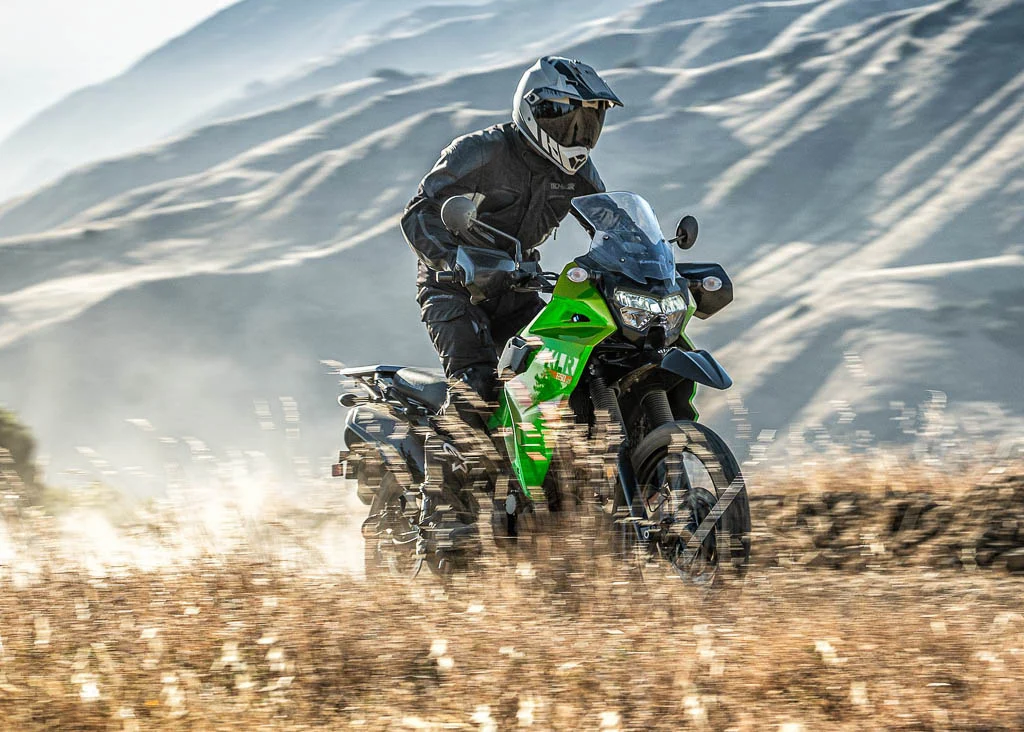
The KLR650 tops out at approximately 90 mph, though that ceiling is gearing-limited rather than power-limited. Kawasaki doesn’t publish a top speed figure, and the five-speed final drive ratio is what puts the brakes on before the engine does.
Sustained comfort is another matter. At 90 mph, single-cylinder vibration is hard to ignore. Most owners report 65-75 mph as the realistic long-haul cruising range. A 16-tooth front sprocket swap in place of the stock 15-tooth drops rpm at highway speeds and makes extended stints noticeably smoother without sacrificing peak speed.
The upright seating position and half fairing manage windblast reasonably well up to 70 mph. Above that, a taller aftermarket windscreen makes a real difference on all-day rides.
KLR650 Acceleration: 0-60 mph
Kawasaki has not published a 0-60 mph figure for the KLR650. Based on independent estimates, the bike covers 0-60 mph in under 6 seconds (Top Speed, 2023). For a 460-lb dual-sport with 35-37 wheel horsepower, that’s respectable. The accessible low-rpm torque means initial pull from a stop feels stronger than the peak numbers suggest – you don’t need to rev it hard to get moving.
The five-speed gearbox is biased toward low-end use, which serves off-road and city riding well. The trade-off is elevated rpm at highway speeds compared to what a six-speed would allow.
Engine and Chassis
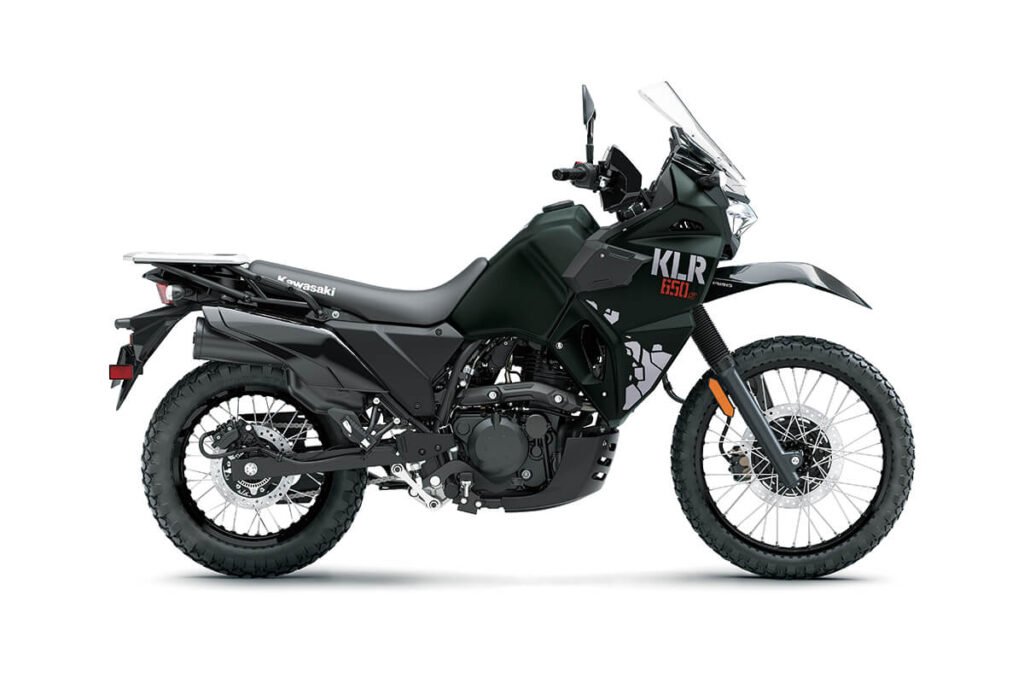
The 652cc single uses a counterbalancer to smooth out the worst vibration, runs on 87-octane, and carries a 15,000-mile valve inspection interval (Rider Magazine, 2022). That’s an ownership-friendly maintenance schedule. The tubular-steel semi-double cradle frame is heavy but easy to work on and durable enough for loaded overland use.
The 6.1-gallon tank combined with a real-world average of roughly 48 MPG (Fuelly, 2024) delivers a theoretical range close to 290 miles per fill – one of the longest in the segment at this price. The 21-inch front wheel and generous suspension travel handle gravel, dirt roads, and rough pavement without drama. Neither end is adjustable for compression damping, which limits setup flexibility on technical terrain.
Strengths and Limitations
The KLR650 earns its reputation on range, durability, and price. Its 6.1-gallon tank and efficient engine give it multi-state range on a fill. Simple mechanicals mean a KLR can be sorted with basic tools in remote places – a real consideration for anyone planning a long tour. Three trim levels cover different inseams and kit needs. The non-ABS entry price of $6,899 is hard to argue with in 2025.
The limitations are real, too. At 460 lb, it’s heavy for serious off-road use. The five-speed runs out of gear on long Interstate days. Electronics are minimal – no traction control, no riding modes, ABS only. Shorter riders will find the standard model’s 34.3-inch seat a stretch; the KLR650 S at 32.1 inches fixes that.
Who Should Buy the KLR650
The KLR650 fits riders who want a capable dual-sport without paying adventure-bike prices. Intermediate riders moving up from 300-400cc machines, commuters covering mixed terrain, and budget tourers who want to rack up miles without stressing over maintenance costs all land in its sweet spot.
It’s not a first bike – 460 lb requires some low-speed handling experience. And experienced riders chasing technical single-track or sport riding will find it too heavy and underpowered. For everyone between those poles, it’s one of the most rational buys in the segment.
Frequently Asked Questions
How much horsepower does the KLR650 make?
Kawasaki does not publish an official figure. Cycle World’s dyno recorded 36.9 rear-wheel hp on the 2023 KLR650 S (Cycle World, 2023). A separate 2022 model run yielded 34.6 rear-wheel hp (Top Speed, 2023). Real-world output sits in the 34-37 hp band across variants.
What is the KLR650’s top speed?
Approximately 90 mph, limited by gearing rather than power. Comfortable sustained highway cruising is more like 65-75 mph before vibration becomes intrusive. A 16-tooth front sprocket swap lowers rpm at speed and improves highway comfort.
How fast is 0-60 mph on the KLR650?
No official figure from Kawasaki. Independent estimates put 0-60 mph under 6 seconds (Top Speed, 2023). The accessible low-rpm torque means the bike feels punchy off the line relative to its power output.
What is the KLR650’s fuel economy?
Real-world owner data from Fuelly averages approximately 48.56 MPG (Fuelly, 2024). With the 6.1-gallon tank, that’s close to 290 miles of range per fill – one of the strongest range figures in the dual-sport class at this price.
What is the difference between the KLR650, KLR650 S, and KLR650 Adventure?
All three share the same 652cc engine. The S has a 32.1-inch seat height versus 34.3 inches on the standard, with revised suspension tune and repositioned shifter. The Adventure ABS adds factory side cases, fog lamps, and additional electrical outlets. Pricing runs from $6,899 (base non-ABS) to $8,199 (Adventure ABS) for 2025 (Kawasaki USA, 2025).
Is the KLR650 a good beginner bike?
It’s more suited to intermediate riders than true beginners. The 460 lb curb weight and 34.3-inch standard seat height require some low-speed handling experience. The KLR650 S, with its lower seat and softer suspension, is the more approachable option for newer riders ready to step up from smaller bikes.
Key Takeaways
- 34-37 rear-wheel hp based on third-party dyno data; no official Kawasaki figure.
- Top speed approximately 90 mph; highway comfort ceiling is 65-75 mph.
- 0-60 mph under 6 seconds based on independent estimates.
- 6.1-gallon tank and ~48 MPG average yields close to 290 miles of range.
- Three variants from $6,899 to $8,199 for 2025 cover seat height needs and trip-ready kit levels.
- Best fit: intermediate riders, budget tourers, commuters on mixed terrain.