Kawasaki Ninja H2R Top Speed & 0-60 Specs (2026)
TL;DR
- Kawasaki claims a top speed north of 240 mph (385+ km/h) for the H2R, with a 0-60 mph time under 2.5 seconds.
- The engine is a 998cc supercharged inline-four making a claimed 322 hp at 14,000 rpm with ram air.
- The 2026 Ninja H2R ABS carries an MSRP of $59,100 and is closed-course only, meaning it’s not street legal.
- Racer Kenan Sofuoğlu ran an H2R from 0 to 248.5 mph in 26 seconds on a closed public bridge in 2016, a widely cited real-world benchmark for the platform.
- This bike is built for experienced track riders and collectors, not commuting, touring, or anyone’s first liter bike.
How Fast Is the Kawasaki Ninja H2R’s Top Speed?
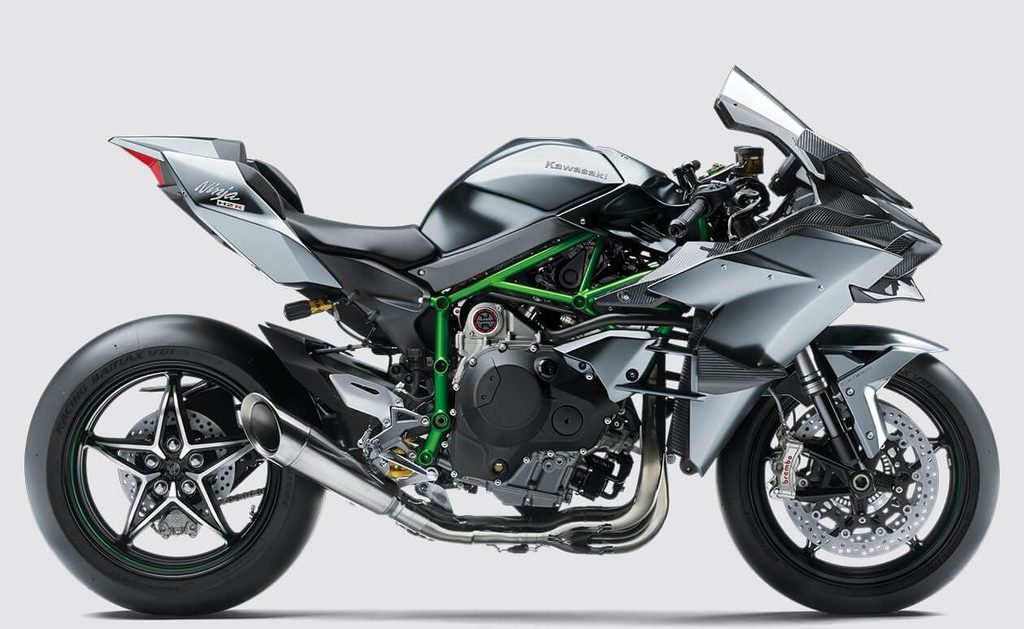
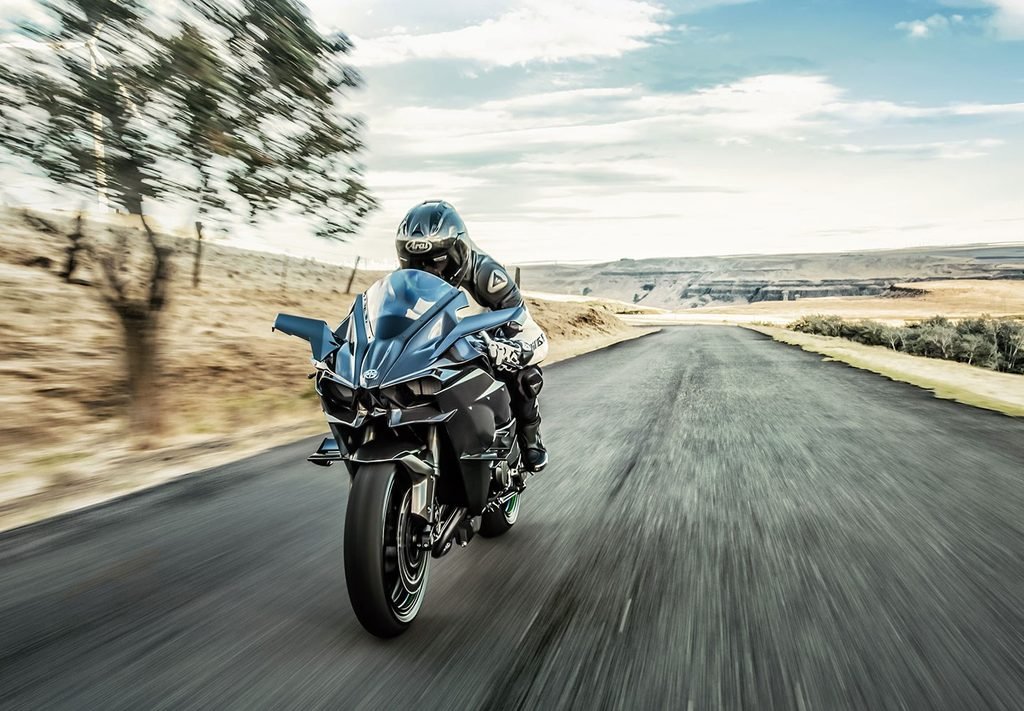
Kawasaki’s own claim for the 2026 H2R puts top speed above 240 mph, with some outlets citing figures as high as 248 mph based on real-world runs (Kawasaki, 2026). That number depends entirely on gearing, ram air pressure, and a professional rider on a long enough closed course.
The most famous data point isn’t a dyno figure. In June 2016, Turkish racer Kenan Sofuoğlu took a production H2R from a standing start to 400 km/h (248.5 mph) in 26 seconds on Turkey’s Osman Gazi Bridge, a run that’s still referenced as the closest thing to a real top-speed record this bike has.
Most owners will never see triple digits past 200 mph, since that kind of run needs a purpose-built venue, a professional rider, and conditions nobody’s replicating at a track day.
What’s the Kawasaki Ninja H2R’s 0-60 Time?
Kawasaki states the H2R accelerates from 0 to 60 mph in under 2.5 seconds. That’s quicker than most factory-stock superbikes and squarely in hypercar territory, a byproduct of 322 claimed horsepower running through a chassis that weighs just 476 lb wet.
The supercharger is doing the heavy lifting here. Unlike a naturally aspirated inline-four that has to build boost through rpm, the centrifugal supercharger spools with engine speed, so power comes on hard and stays flat rather than spiking in one narrow band. Combined with launch control and a slipper clutch, that’s what makes a sub-2.5-second 0-60 repeatable rather than a one-off stunt run.
Kawasaki Ninja H2R Full Specs
| Spec | 2026 Ninja H2R ABS |
|---|---|
| Engine | 998cc supercharged inline-four, DOHC |
| Horsepower | 322 hp @ 14,000 rpm (claimed, with ram air) |
| Torque | 121.5 lb-ft @ 12,500 rpm |
| 0-60 mph | Under 2.5 seconds (claimed) |
| Top speed | 240+ mph (claimed) |
| Wet weight | 476 lb |
| Seat height | 32.7 in (830 mm) |
| Front brakes | Dual 330mm discs, Brembo Stylema calipers |
| MSRP | $59,100 |
What’s Under the Hood: Engine and Supercharger
The H2R’s 998cc inline-four is supercharged, not turbocharged, using a centrifugal compressor built jointly with Kawasaki Heavy Industries’ turbine division. That heritage matters: KHI builds gas turbines and jet engines, and the H2R’s supercharger housing draws directly on that aerodynamics know-how.
Peak output lands at a claimed 322 hp at 14,000 rpm with ram air functioning, or roughly 310 hp without it (Cycle News, 2025). Torque peaks at 121.5 lb-ft at 12,500 rpm. Those numbers put the H2R well ahead of any naturally aspirated production superbike, including Kawasaki’s own ZX-10R, and they’re a big part of why the H2R can’t be street registered in the US.
That gap between static and ram-air output is worth remembering: 322 hp only shows up once the bike is moving fast enough to force air into the intake, so the number on a spec sheet isn’t what the engine makes sitting still on a dyno.
Chassis, Brakes, and Suspension Built for the Track
The H2R runs a tubular steel trellis frame rather than the aluminum perimeter frame most literbikes use, paired with a single-sided swingarm. Suspension is a fully adjustable 43mm inverted Kayaba AOS-II fork up front and an Öhlins TTX36 shock out back.
Braking comes from dual 330mm semi-floating discs squeezed by four-piston Brembo Stylema monoblock calipers up front, with a single 250mm disc and two-piston caliper at the rear.
Kawasaki’s lean-sensitive ABS, traction control, cornering management, and a bi-directional quickshifter all come standard, since a bike capable of 240+ mph on a straight needs every one of those systems working in the corners too.
Price and Availability for 2026
The 2026 Ninja H2R ABS carries an MSRP of $59,100, making it the most expensive bike in Kawasaki’s current lineup by a wide margin. Kawasaki opened customer special orders for the 2026 model year from September 2 through October 31, 2025, with production starting in February 2026.
It’s a limited-production run, not a standing catalog item you can walk into a dealership and buy off the floor. Kawasaki offers it in a single color for 2026, Mirror Coated Matte Spark Black, and every unit is closed-course only, meaning it ships without the equipment needed for street registration in the US.
For comparison, the 2017 H2R sold for $55,000, so the jump to $59,100 tracks close to inflation over that stretch rather than a dramatic price hike.
Who Actually Buys a Ninja H2R?
The H2R is built for track-day veterans, professional or semi-professional racers, and collectors who want the fastest production motorcycle Kawasaki has ever built. It is not a bike for new riders, commuters, or anyone whose first modification project is figuring out chain slack.
Riding one well takes real seat time on something with a fraction of this power. A rider who’s never managed wheelspin coming off a corner on a 600 has no business finding out what 322 hp does at full lean, and most H2R owners already have years of track days or club racing behind them before they order one.
If you want H2-family performance you can actually ride to work, the street-legal Ninja H2 ABS runs $32,700 for 2026 and gives up top-end and track-only hardware in exchange for a license plate and Kawasaki’s road-legal electronics package. The H2R is a different tool for a different job: closed-course speed runs and track sessions where 240 mph is the point, not a bragging number.
Frequently Asked Questions About the Kawasaki Ninja H2R
Is the Kawasaki Ninja H2R street legal?
No. The H2R is sold strictly for closed-course use and doesn’t come equipped with the lighting, mirrors, or emissions equipment needed for street registration in the US.
How much horsepower does the Ninja H2R make?
Kawasaki claims 322 hp at 14,000 rpm with ram air functioning, and roughly 310 hp without it. That’s produced by a 998cc supercharged inline-four.
What is the Ninja H2R’s actual top speed?
Kawasaki states a top speed above 240 mph for the 2026 model. The most cited real-world benchmark is Kenan Sofuoğlu’s 2016 run to 248.5 mph on a closed bridge in Turkey.
How much does a 2026 Ninja H2R cost?
The 2026 Ninja H2R ABS has an MSRP of $59,100, before destination charges, taxes, and dealer fees.
What’s the difference between the Ninja H2 and Ninja H2R?
The H2 is street-legal and detuned to roughly 240 hp, while the H2R is track-only and makes a claimed 322 hp with ram air. The H2R also uses racing slicks, a single-seat tail, and track-specific aero that the street H2 doesn’t get.